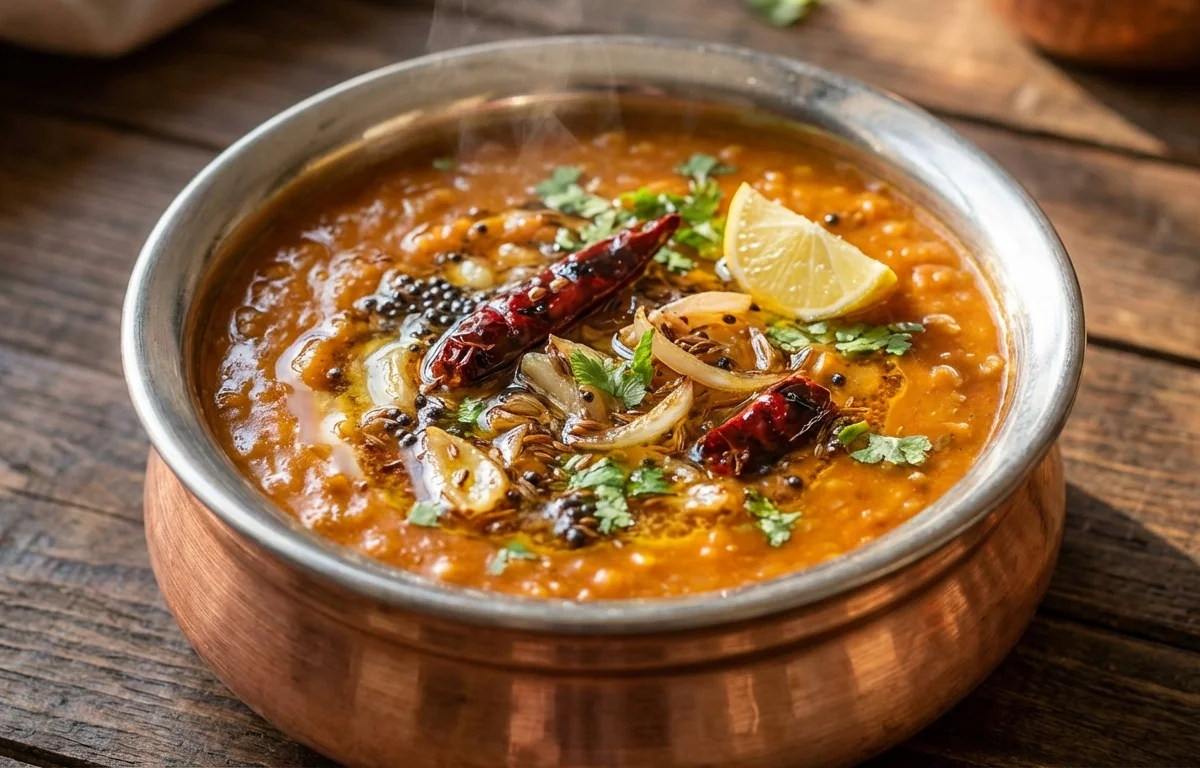
Masur Dal Tadka
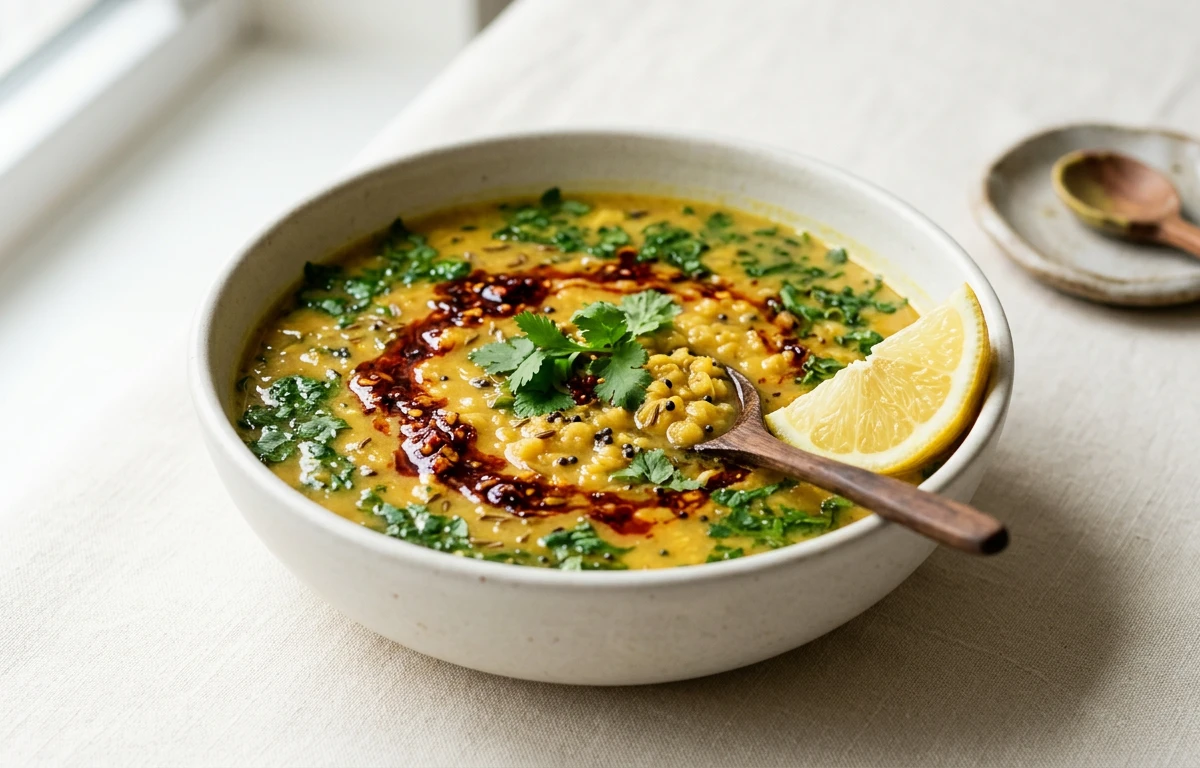
Earthy red lentils cook down into a light, comforting dal that comes alive with a simple tadka of cumin, garlic, and chili. It is easy enough for weeknights and pairs beautifully with rice or roti.
For 4 servings
- prep · ~5 min
Rinse the dal and chop the aromatics.
1.Rinse the masur dal in 2 to 3 changes of water until the water looks mostly clear.2.Finely chop the onion, tomatoes, garlic, and ginger.3.Slit the green chili and keep the coriander leaves ready for garnish. - pressure cook · ~15 min
Pressure cook the dal.
Add the masur dal, water, turmeric powder, and salt to a pressure cooker. Cook over medium heat for 2 whistles, then let the pressure release naturally.
TIPMasur dal cooks quickly, so do not overcook it or it can turn too pasty. - saute · ~10 min
Cook the onion and tomato base.
1.Heat oil in a pan over medium heat.2.Add the onion and cook until soft and light golden, about 4 to 5 minutes.3.Add the ginger, garlic, and green chili, and sauté for 1 minute until fragrant.4.Add the tomatoes, red chili powder, and garam masala, then cook until the tomatoes break down, about 4 minutes.TIPCook the tomatoes until they lose their raw taste; this gives the dal a fuller flavor. - simmer · ~5 min
Combine the dal with the base.
Open the cooker and whisk the dal lightly for a smoother texture. Pour it into the pan with the onion-tomato base, mix well, and simmer for 4 to 5 minutes. Add a splash of water if the dal looks too thick.
- temper · ~1 min
Make the tadka.
1.Heat ghee in a small pan over medium heat.2.Add cumin seeds and let them crackle for 20 to 30 seconds.3.Add asafoetida and swirl the pan for a few seconds.4.Pour the hot tadka over the simmering dal.TIPPour the tadka in right away while it is sizzling for the best aroma. - garnish
Finish with lemon juice and coriander leaves.
- serve
Serve hot with rice or roti.
What to keep in mind.
7 tips from the recipe — small details that make a real difference to the final dish.
- 1Do not fill the pressure cooker too high; masur dal foams and needs room to cook evenly.
- 2Lightly whisk the cooked dal, but do not puree it fully if you want a traditional soft-yet-textured consistency.
- 3Cook the onion only to light golden, not deep brown, so the dal stays delicate rather than heavy.
- 4Let the tomatoes turn pulpy and glossy before adding the dal; this removes raw acidity and deepens flavor.
- 5Add a splash of hot water while simmering if the dal tightens up; masur dal thickens quickly as it sits.
- 6Pour the sizzling cumin-ghee tadka over the dal immediately and cover for a minute to trap the aroma.
- 7Stir in lemon juice only after turning off the heat to keep its brightness fresh and sharp.
Adapt it for your goals.
Vegan
Replace the ghee in the tadka with oil for a fully plant-based version that still keeps the cumin and asafoetida aroma.
garlic heavyGarlic-heavy
Add a few extra chopped garlic cloves to the tadka for a sharper, more robust dal that pairs especially well with plain rice.
low oilLow-oil
Use less oil for the onion-tomato base and rely on the pressure-cooked lentils for body; good for a lighter everyday meal.
spinachSpinach
Stir in chopped spinach during the final simmer for extra greens and a slightly earthier, more filling dal.
Why this is on our healthy list.
Plant Protein and Fiber
Masur dal provides plant-based protein and fiber, making this dish satisfying and well-suited to a simple meal with rice or roti.
Gentle Everyday Comfort Food
The soft-cooked red lentils are easy to eat and the light consistency makes this dal a comforting option for regular home meals.
Aromatic Ingredients with Balance
Ginger, garlic, cumin, and coriander add flavor depth so the dish tastes rich without needing heavy cream or excess fat.
Frequently asked questions
Yes. Simmer the rinsed masur dal in a covered pot until soft, then proceed with the onion-tomato base and tadka as written.