Mochai Kottai Kuzhambu
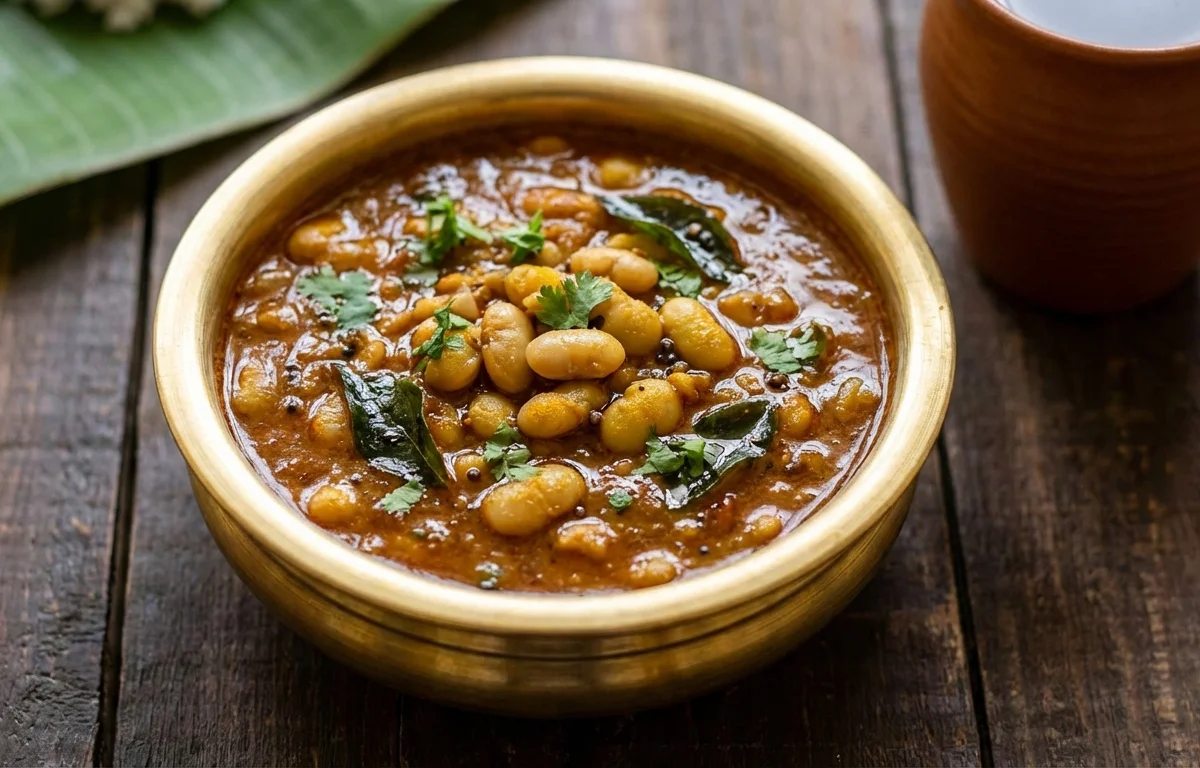
A rustic, tangy Tamizh Nadu-style field beans curry with a rich tamarind and coconut base. The field beans are soaked overnight and pressure-cooked until tender, then simmered in a freshly ground masala with aromatic spices. This hearty kuzhambu is packed with earthy flavors and pairs beautifully with steamed rice and a drizzle of sesame oil.
For 4 servings
- prep
Soak and prep the field beans.
Rinse the dried mochai kottai thoroughly. Soak in enough water to cover for at least 8 hours or overnight. Drain and set aside.
- prep · ~15 min
Extract tamarind pulp and prep masala ingredients.
Soak the tamarind in 0.5 cup warm water for 15 minutes. Squeeze well to extract pulp, discard the fiber, and set the tamarind water aside. Keep shallots, garlic, and tomatoes prepped.
- pressure cook · ~30 min
Pressure cook the field beans.
1.Add drained field beans to the pressure cooker with 2 cups water and salt.2.Close the lid and cook on medium heat for 5 to 6 whistles.3.Let the pressure release naturally. The beans should be soft but hold their shape.TIPNatural pressure release prevents the bean skins from bursting and keeps the kuzhambu texture creamy inside the bean. - saute · ~8 min
Sauté the masala base.
1.Heat 2 tsp oil in a heavy-bottomed pan over medium heat.2.Add mustard seeds, cumin seeds, and fenugreek seeds. Let them crackle.3.Add dried red chilies, halved shallots, and garlic cloves. Sauté until shallots turn translucent.4.Add chopped tomatoes and cook until soft and mushy.TIPDon't rush the tomatoes — cook until the oil starts to separate for the deepest flavor. - mix · ~2 min
Blend the masala paste.
1.Turn off the heat and transfer the sautéed shallot-tomato mixture to a blender.2.Add grated coconut, turmeric powder, red chili powder, and coriander powder.3.Grind to a smooth paste using a little water from the cooked beans. - simmer · ~12 min
Simmer the kuzhambu.
1.Pour the ground masala back into the same pan.2.Add the cooked field beans along with their cooking liquid.3.Stir in the tamarind pulp. Mix well and bring to a gentle boil.4.Adjust consistency with water if needed. Simmer for 10-12 minutes until the raw smell goes and the gravy thickens.TIPThe kuzhambu will thicken as it cools, so let it remain slightly pouring consistency when you turn off the heat. - temper · ~1 min
Make the final tempering.
1.Heat 1 tsp oil in a small tadka pan.2.Add mustard seeds and let them pop.3.Add curry leaves and asafoetida. Fry for 10 seconds until fragrant.4.Pour the tempering over the simmering kuzhambu and stir in. - simmer · ~5 min
Final simmer and rest.
Let the kuzhambu bubble gently for 2 more minutes after adding the tempering. Turn off the heat and let it rest for 5 minutes before serving.
TIPResting allows the flavors to meld. Mochai Kottai Kuzhambu tastes even better the next day.
What to keep in mind.
7 tips from the recipe — small details that make a real difference to the final dish.
- 1Soak the dried field beans for at least 8 hours to ensure even cooking and a creamy texture.
- 2Natural pressure release prevents the bean skins from bursting; do not quick-release.
- 3Cook the tomatoes until the oil separates for a deep, well-developed masala base.
- 4Use the starchy bean cooking water to grind the masala — it adds body and flavor.
- 5The kuzhambu thickens as it cools, so keep it slightly runny when you turn off the heat.
- 6Let the finished kuzhambu rest for 5 minutes (or overnight) for best flavor melding.
- 7For authentic taste, use cold-pressed sesame oil (nalla ennai) for both cooking and tempering.
Adapt it for your goals.
Low-oil
Reduce the oil for sautéing the masala to 1 tsp and skip the final tempering; instead, stir raw curry leaves and asafoetida into the simmering gravy. Ideal for those watching fat intake.
high proteinHigh-protein
Add 100 g of cubed paneer or pressed tofu along with the cooked beans. Paneer soaks up the tangy tamarind gravy beautifully, making the dish more filling for a main course.
veganVegan
The recipe is already vegan as written; simply ensure you use a vegan-friendly asafoetida (some brands contain wheat starch, which is fine for most, but check for additives if needed).
no coconutNo-coconut
Omit the grated coconut entirely and replace it with 2 tablespoons of roasted gram flour (pottukadalai flour) dissolved in water. This keeps the gravy thick and nutty without coconut, perfect for those with coconut allergies or preference.
spicierSpicier
Increase dried red chilies to 5 and add 1 slit green chili while sautéing the shallots. This gives the kuzhambu a fiery kick while keeping the tamarind-coconut base intact.
Why this is on our healthy list.
High in Plant Protein
Dried field beans are a rich source of plant-based protein, making this curry a hearty, satiating meal for vegetarians.
Rich in Dietary Fiber
Both the field beans and coconut provide significant fiber, promoting digestive health and steady energy release.
Good Source of Iron
Field beans and spices like coriander powder contribute iron; pairing with tamarind (vitamin C) enhances absorption.
Anti-Inflammatory Spices
Turmeric, fenugreek, and asafoetida are traditional anti-inflammatory ingredients that support immunity and digestion.
Low in Saturated Fat
This curry uses minimal sesame oil and coconut, keeping the saturated fat content moderate while delivering bold flavor.
Frequently asked questions
Yes, but skip the pressure cooking. Rinse and drain 1.5 cups of canned beans and add them directly to the simmering gravy. Reduce added salt accordingly.