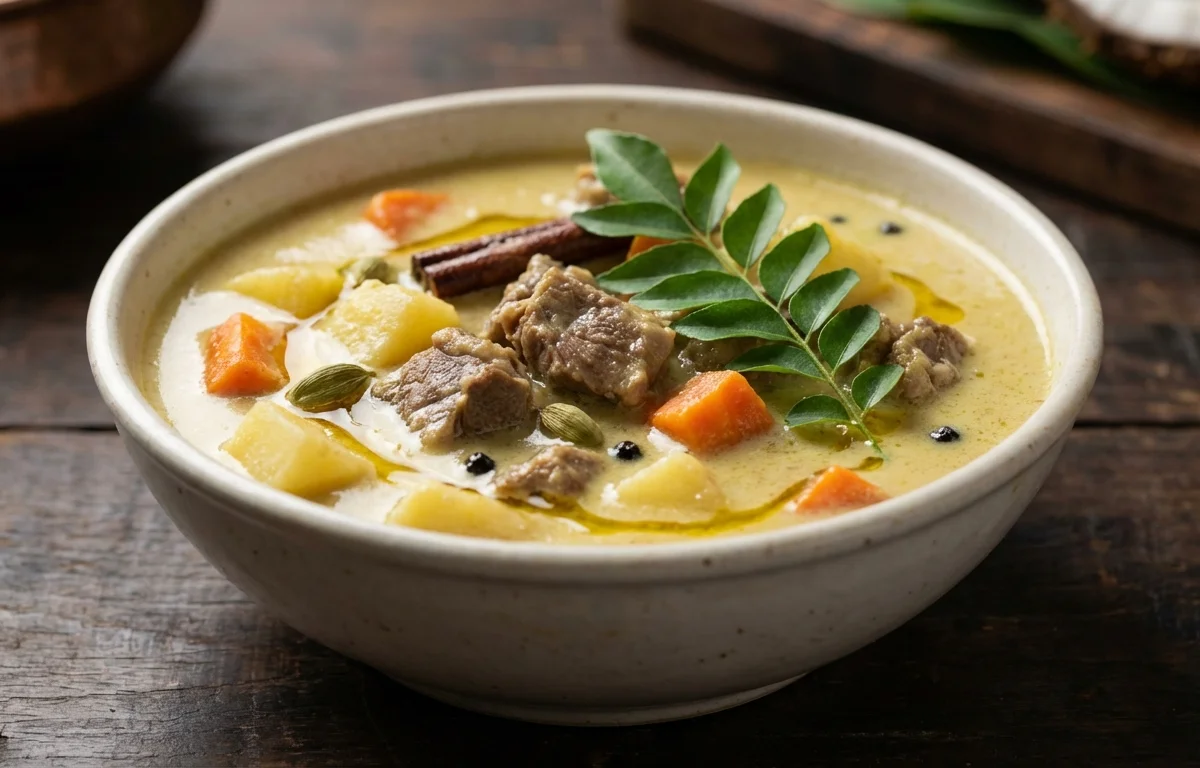
Mutton Stew
A gentle, comforting stew of tender mutton, potatoes, onions, and warm whole spices simmered in coconut milk. This South Indian style dish is mild, fragrant, and especially good with appam, idiyappam, or bread.
For 4 servings
- prep · ~10 min
Prepare the mutton and vegetables.
1.Clean the mutton pieces well and drain.2.Peel and cube the potatoes.3.Slice the onions, slit the green chilies, julienne the ginger, and slice the garlic. - pressure cook · ~30 min
Cook the mutton until tender.
Add the mutton, water, 0.25 tsp salt, and black pepper to a pressure cooker. Cook on medium heat for 20 to 25 minutes after the first whistle, until the meat is tender but not falling apart.
TIPBone-in mutton gives the stew better flavor and body. - saute · ~6 min
Cook the spices and onions.
1.Heat coconut oil in a pan over medium heat.2.Add cinnamon, cardamom, cloves, and curry leaves; cook for 30 seconds until fragrant.3.Add onion, green chili, ginger, and garlic.4.Cook until the onions turn soft and lightly translucent, 4 to 5 minutes.TIPDo not brown the onions deeply; this stew should stay pale and delicate. - simmer · ~15 min
Simmer the stew with potatoes.
Add the cooked mutton with its cooking liquid, potatoes, thin coconut milk, and the remaining 0.25 tsp salt. Simmer gently for 12 to 15 minutes until the potatoes are soft and the flavors blend.
- simmer · ~3 min
Finish with thick coconut milk.
Lower the heat and stir in the thick coconut milk. Warm the stew gently for 2 to 3 minutes without boiling, so the coconut milk stays smooth.
TIPOnce the thick coconut milk goes in, keep the heat low to prevent splitting. - rest · ~5 min
Let the stew rest for 5 minutes.
- serve
Serve hot with appam, idiyappam, or bread.
What to keep in mind.
7 tips from the recipe — small details that make a real difference to the final dish.
- 1Use bone-in mutton pieces of similar size so the meat cooks evenly and the broth gains more body.
- 2After pressure cooking, the mutton should be tender enough to pierce easily but still hold its shape in the stew.
- 3Keep the onions only lightly translucent; browned onions will darken the stew and change its delicate Kerala-style flavor.
- 4Cut the potatoes into medium cubes so they soften in the simmer without breaking down too early.
- 5Add thick coconut milk only at the end and never let the stew boil after that, or it may split.
- 6Let the stew rest for a few minutes before serving; the fat settles and the spice aroma mellows beautifully.
- 7This stew tastes even better after a few hours, so it is a great make-ahead dish for breakfast with appam.
Adapt it for your goals.
More-peppery
Increase black pepper and add a few extra slit green chilies for a warmer, sharper version that still stays true to the stew's gentle profile.
vegetable richVegetable-rich
Add carrots or green peas along with the potatoes for a slightly sweeter, heartier stew that pairs well with bread or idiyappam.
chickenChicken
Swap mutton for bone-in chicken if you want a lighter, faster-cooking stew with the same coconut-spice character.
thicker gravyThicker-gravy
Simmer the stew a little longer before adding thick coconut milk if you prefer a fuller, clingier gravy for appam.
Why this is on our healthy list.
Protein-Rich Main Dish
Mutton provides substantial protein, making this stew satisfying and helpful for a filling meal.
Warming Aromatics
Ginger, garlic, black pepper, and whole spices add depth of flavor while contributing traditional warming qualities.
Energy and Satiety
Potatoes and coconut milk make the stew comforting and sustaining, especially when served as a complete meal.
Frequently asked questions
Yes. Simmer the mutton covered on the stovetop until tender before continuing; it will take much longer than pressure cooking.