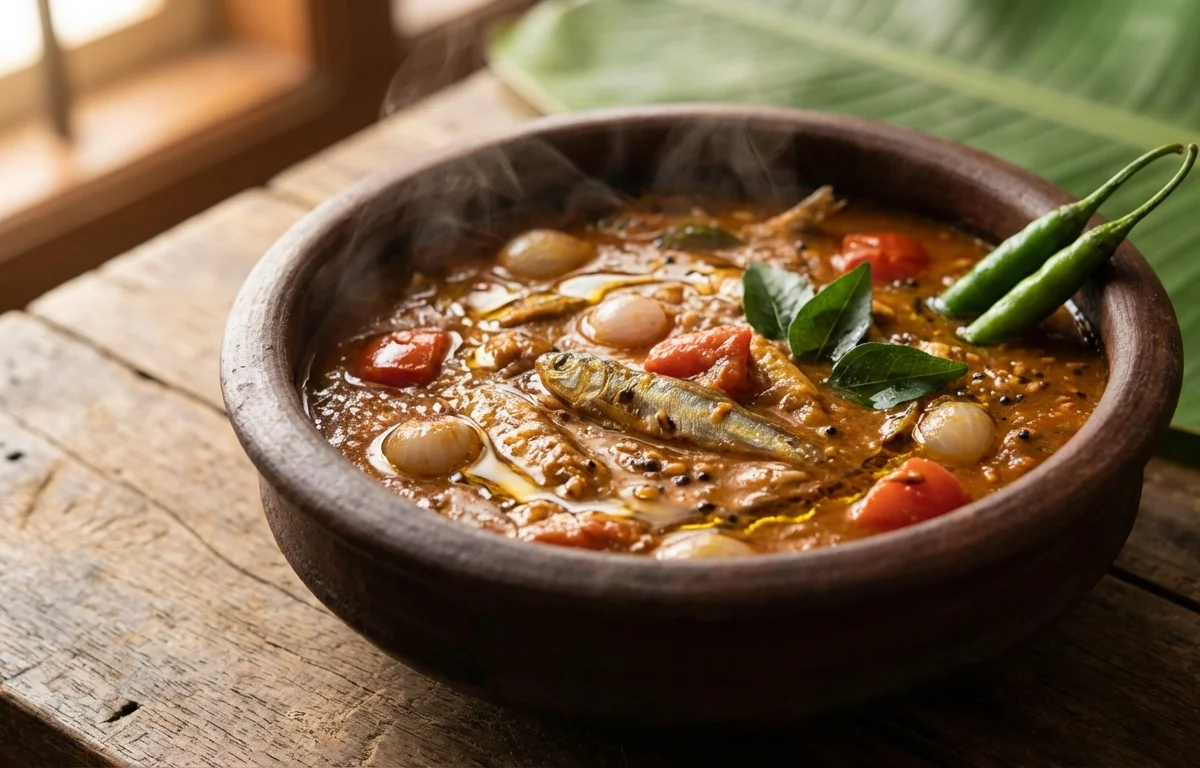
Nethili Meen Kuzhambu
A tangy Tamil-style fish curry made with tiny anchovies simmered in a tamarind-spiced gravy. It cooks quickly, tastes deeply savory, and pairs especially well with plain rice for a comforting coastal meal.
For 4 servings
- prep · ~15 min
Clean the fish and make the tamarind extract.
1.Rinse the nethili fish gently and drain well.2.Soak the tamarind in warm water for 15 minutes.3.Squeeze and strain the tamarind to make a smooth extract. - temper · ~1 min
Make the tempering.
1.Heat sesame oil in a clay pot or kadai over medium heat.2.Add mustard seeds and let them splutter.3.Add fenugreek seeds and curry leaves.4.Cook for a few seconds until fragrant.TIPKeep the fenugreek brief in the oil so it does not turn bitter. - saute · ~8 min
Cook the aromatics.
1.Add shallots, garlic, and green chili.2.Sauté until the shallots soften and turn lightly golden.3.Add chopped tomato and cook until soft and pulpy. - saute · ~1 min
Cook the spice base.
Add turmeric powder, red chili powder, coriander powder, black pepper, and salt. Mix well and cook for 30 seconds so the spices bloom without burning.
- simmer · ~10 min
Simmer the tamarind gravy.
Pour in the tamarind extract and remaining water. Bring to a gentle boil, then simmer for 8 to 10 minutes until the raw tamarind smell fades and the gravy slightly thickens.
- simmer · ~7 min
Add the fish and finish the curry.
Slide in the cleaned nethili fish and swirl the pot gently. Simmer for 5 to 7 minutes until the fish is just cooked and the curry smells rich and tangy.
TIPDo not stir hard after adding the fish because the small anchovies break easily. - rest · ~10 min
Let the curry rest for 10 minutes.
- serve
Serve hot with plain rice.
What to keep in mind.
7 tips from the recipe — small details that make a real difference to the final dish.
- 1Drain the cleaned nethili well before cooking so the gravy does not turn watery.
- 2Use a clay pot if possible; it helps the tamarind curry develop a deeper, rounded flavour.
- 3Keep the fenugreek in oil only for a few seconds, or the kuzhambu can taste bitter.
- 4Cook the tamarind gravy fully before adding fish; the raw sour smell should disappear first.
- 5After adding anchovies, swirl the pot instead of stirring so the tiny fish stay whole.
- 6Let the curry rest at least 10 minutes before serving; the fish absorbs the tamarind and spice better.
- 7This kuzhambu often tastes even better the next meal, but reheat very gently to avoid breaking the fish.
Adapt it for your goals.
Spicier
Add extra red chili powder or one more slit green chili for a hotter, more fiery coastal-style kuzhambu.
tomato forwardTomato-forward
Use an extra tomato for a slightly thicker, less sharply sour gravy with more body.
sardineSardine
Swap nethili with small sardines if anchovies are unavailable; simmer a little longer as the fish is meatier.
garlic richGarlic-rich
Increase the crushed garlic for a stronger, homestyle Tamil fish curry flavour that pairs especially well with rice.
Why this is on our healthy list.
Protein-Rich Fish Curry
Anchovies provide quality protein, making this curry filling while still feeling light compared with heavier meat gravies.
Made with Aromatic Spices
Garlic, turmeric, black pepper, and curry leaves add depth along with beneficial plant compounds common in South Indian home cooking.
Light, Tangy Gravy
The tamarind-based broth gives bold flavour without relying on cream or coconut milk, keeping the curry bright and less heavy.
Frequently asked questions
The anchovies cook quickly in about 5 to 7 minutes. They will turn opaque and tender; overcooking can make them break apart.