
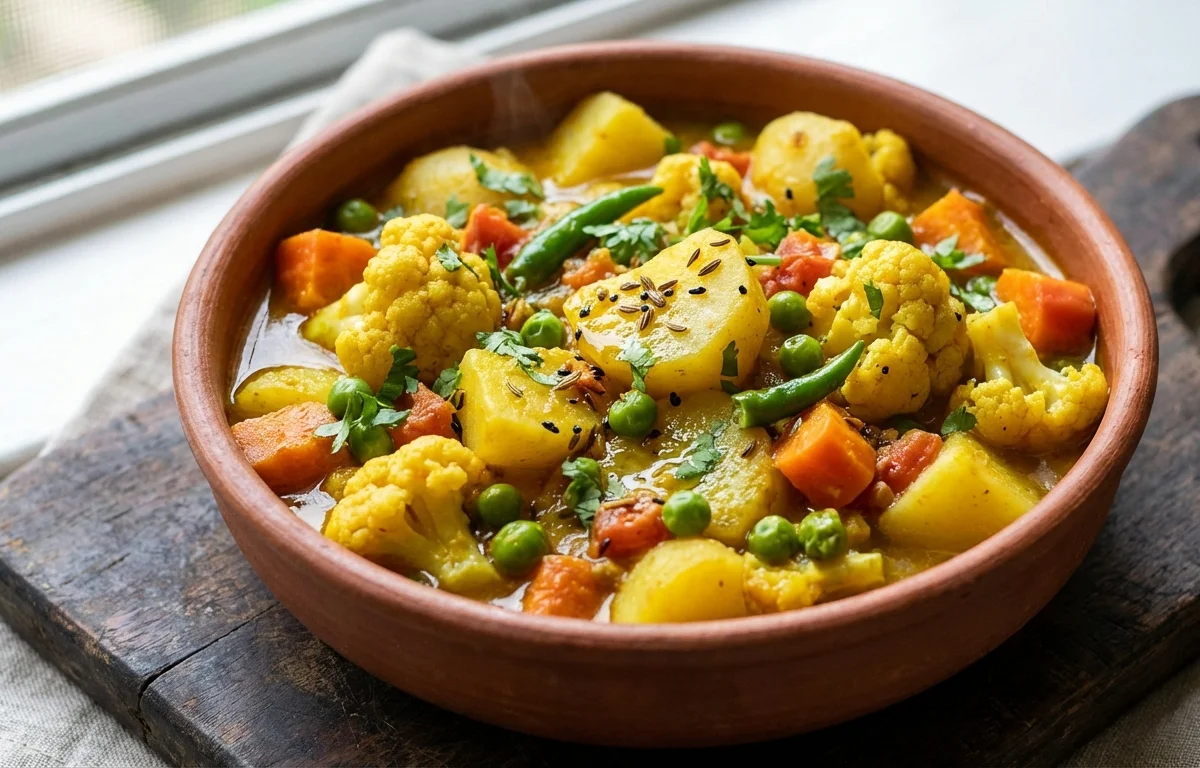
Niramish Torkari
A light Bengali mixed vegetable curry made without onion or garlic, with soft potatoes, cauliflower, peas, and a gentle warmth from ginger and whole spices. It is simple, homely, and especially good with luchi or steamed rice.
For 4 servings
- prep · ~10 min
Prepare the vegetables and spices.
1.Peel and cube the potato into medium pieces.2.Cut the cauliflower into small florets.3.Chop the tomato, grate the ginger, and slit the green chili.4.Measure the cumin powder, coriander powder, turmeric powder, red chili powder, sugar, and salt. - saute · ~6 min
Lightly fry the potato and cauliflower.
Heat mustard oil in a kadai over medium heat until it just begins to smoke lightly, then lower the heat. Add the potato and cauliflower and cook for 5 to 6 minutes until the edges turn lightly golden.
TIPThis quick frying helps the vegetables hold their shape in the curry. - temper · ~4 min
Make the spice base.
1.Push the vegetables to one side of the pan.2.Add bay leaf and cumin seeds to the oil and let them sizzle for 20 to 30 seconds.3.Add grated ginger and slit green chili and cook for 30 seconds.4.Add chopped tomato and cook until soft and pulpy, about 3 minutes. - saute · ~2 min
Cook the ground spices.
Add turmeric powder, red chili powder, cumin powder, coriander powder, sugar, and salt. Mix well with the tomato and vegetables, adding a splash of water so the spices do not catch at the bottom.
TIPKeep the heat low once the powders go in so the masala stays fragrant, not bitter. - simmer · ~12 min
Add peas and simmer the curry.
Add green peas and water, then stir well. Cover and cook on low to medium heat for 10 to 12 minutes, until the potato and cauliflower are tender and the gravy is light and slightly soupy.
- garnish · ~1 min
Finish with garam masala and ghee.
Sprinkle garam masala over the curry and drizzle in the ghee. Give it a gentle stir and cook uncovered for 1 minute.
- serve
Serve hot with luchi, roti, or steamed rice.
What to keep in mind.
7 tips from the recipe — small details that make a real difference to the final dish.
- 1Let the mustard oil smoke lightly before cooking to mellow its raw sharpness without losing its Bengali character.
- 2Lightly frying the potato and cauliflower first helps them stay intact during the simmer instead of turning mushy.
- 3Keep the cauliflower florets small and even so they cook through at the same pace as the potato cubes.
- 4Add a splash of water when the powdered spices go in; this prevents scorching and helps the masala coat the vegetables evenly.
- 5Stop simmering when the potatoes are just tender and the cauliflower still holds shape; this curry should be soft, not collapsed.
- 6Rest the curry for 5 minutes after adding ghee and garam masala so the finishing aromas settle into the light gravy.
- 7If using frozen peas, add them straight near the end of simmering so they stay bright and sweet.
Adapt it for your goals.
Jain-style
Skip the potato and add cubed raw banana or pumpkin instead, while keeping the onion-garlic-free spice profile gentle and sattvic.
low oilLow-oil
Reduce the mustard oil slightly and steam the vegetables briefly before adding; useful if you want a lighter everyday version.
no gheeNo-ghee
Finish with only garam masala and a few drops of mustard oil for a fully dairy-free version with a sharper Bengali edge.
winter mixed vegWinter-mixed-veg
Add carrots, flat beans, or cabbage with the cauliflower for a more seasonal Bengali niramish torkari platter.
Why this is on our healthy list.
Fiber-Rich Mixed Vegetables
Potato, cauliflower, peas, and tomato together make the dish filling and provide a good mix of plant fiber and everyday vegetable nutrients.
Gentle Digestive Spices
Ginger, cumin, and coriander bring warmth and aroma while keeping this light curry easier to eat with simple rice or luchi.
Plant-Based Everyday Dish
Most of the curry is built from vegetables and spices, making it a simple meat-free option for regular home meals.
Frequently asked questions
Yes, but the flavor will be less traditionally Bengali. Use a neutral oil if needed, then finish with ghee to recover some richness.


