
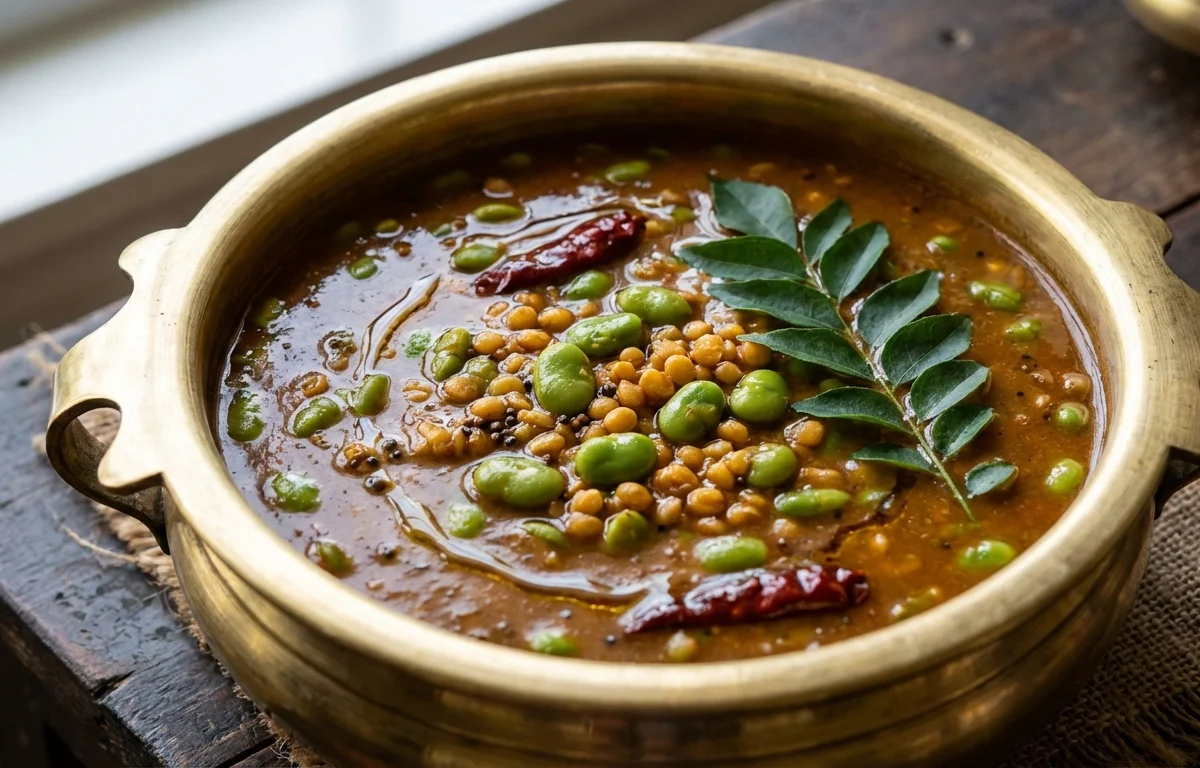
Pachai Mochai Kuzhambu
A rustic Tamil Nadu-style curry made with fresh field beans (pachai mochai) simmered in a tangy tamarind-laced gravy. Earthy coconut and warm spices give it bold, comforting flavor that tastes even better the next day — perfect with steamed rice.
For 4 servings
- prep · ~15 min
Soak the tamarind and prep the beans.
1.Soak 1 tbsp tamarind pulp in 0.5 cup warm water for 15 minutes. Squeeze and strain the pulp to extract tamarind juice. Set aside.2.Rinse the shelled field beans under cold water and drain.TIPFresh field beans cook quickly. If using dried mochai, soak them overnight and increase the pressure cooking time. - pressure cook · ~10 min
Pressure cook the field beans.
1.Add the rinsed field beans to a pressure cooker with 1 cup water and a tiny pinch of salt.2.Close the lid and cook on medium heat for 3 whistles.3.Let the pressure release naturally. The beans should be soft but hold their shape.TIPDon't discard the cooking water from the beans — it adds deep flavour to the gravy. - mix · ~1 min
Blend the coconut with spices to a smooth paste.
1.In a small blender, add the grated fresh coconut and 2 tbsp water.2.Blend until you get a very smooth, thick paste. Scrape down the sides if needed. - temper · ~2 min
Make the tempering.
1.Heat 2 tsp oil in a heavy-bottomed pan over medium heat until shimmering.2.Add 1 tsp mustard seeds and let them splutter completely.3.Add 1 tsp cumin seeds, 2 dried red chillies, 10 curry leaves, and 1 pinch of asafoetida. Fry until fragrant, about 30 seconds. - saute · ~8 min
Build the aromatic base.
1.Add the chopped onion, chopped garlic cloves, and slit green chillies to the pan.2.Sauté until the onions turn translucent and soft (3-4 minutes).3.Add the chopped tomatoes and cook until they turn mushy and oil begins to separate (4-5 minutes).4.Stir in turmeric powder, red chili powder, coriander powder, and cumin powder. Sauté for 30 seconds until the raw smell disappears. - simmer · ~10 min
Add the beans and simmer with tamarind.
1.Pour in the tamarind extract and let it bubble for 2 minutes to reduce the raw sourness.2.Add the cooked field beans along with their reserved cooking water.3.Pour in 1 additional cup of water to adjust consistency. Stir in the remaining salt.4.Bring to a gentle simmer and cook uncovered on low-medium heat for 8-10 minutes, letting the gravy thicken slightly.TIPThe kuzhambu should be slightly thin — it will thicken as it cools. Don't boil it down too much. - mix · ~2 min
Stir in the coconut paste and finish.
1.Lower the heat and gently stir the blended coconut paste into the simmering kuzhambu.2.Let it warm through for exactly 2 minutes — do not let it boil vigorously after adding coconut or the gravy may split.3.Turn off the heat. Taste and adjust salt if needed. - garnish · ~10 min
Garnish with coriander leaves and rest.
1.Sprinkle the chopped fresh coriander leaves on top.2.Let the kuzhambu rest for 10 minutes before serving to allow the flavours to meld.TIPThis curry always tastes deeper and richer after a short rest, and it's even better the next day.
What to keep in mind.
7 tips from the recipe — small details that make a real difference to the final dish.
- 1Use fresh pachai mochai when in season — frozen can be substituted but will be softer.
- 2Reserve the bean cooking water; it adds body and earthy flavor to the gravy.
- 3Do not boil the curry after adding coconut paste or it may curdle.
- 4Let the kuzhambu rest 10 minutes off heat for flavors to meld deeply.
- 5For a thicker gravy, mash a few cooked beans against the pot before simmering.
- 6Toast the dried red chilies and curry leaves in oil until fragrant to maximize tempering aroma.
- 7The curry thickens as it cools; keep it slightly thinner while hot.
Adapt it for your goals.
Vegan
This dish is already vegan — simply confirm you use vegan-friendly asafoetida (some brands contain starch, but all are plant-based).
low oilLow-oil
Reduce oil to 1 teaspoon and dry-roast the mustard seeds in a non-stick pan until they pop. The coconut paste will still provide richness.
high proteinHigh-protein
Add 100 g of cubed paneer or extra-firm tofu after step 6, simmering 2 extra minutes for a protein-packed meal.
jainJain
Omit onion and garlic, use asafoetida generously for allium-like flavor, and add a pinch of asafoetida during tempering instead.
Why this is on our healthy list.
Rich in Plant Fiber
Fresh field beans supply a good amount of dietary fiber, supporting digestion and helping you feel full longer.
Source of Plant-Based Iron
Field beans and tamarind both provide non-heme iron, which is better absorbed when paired with the vitamin C from tomatoes and green chilies in this dish.
Antioxidant Spice Blend
Turmeric, coriander, cumin, and curry leaves contribute polyphenols and curcumin that help fight oxidative stress.
Healthy Fats from Coconut
Fresh grated coconut adds medium-chain triglycerides (MCTs), a quick energy source that also aids in absorbing fat-soluble spices.
Frequently asked questions
Yes — soak dried mochai overnight and pressure cook for 5-6 whistles instead of 3. You'll need extra water in the gravy as dried beans absorb more liquid.


