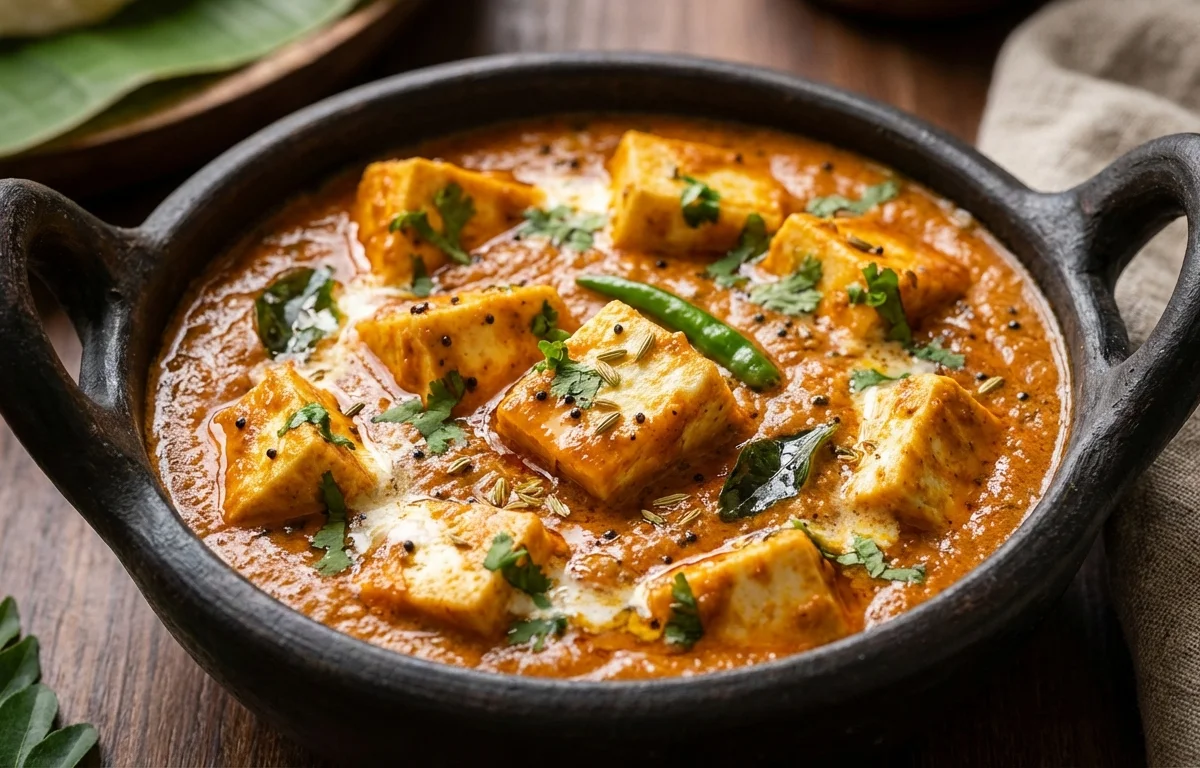
Palkatti Masala
Aromatic and tangy paneer curry from Tamil Nadu, where paneer is called 'palkatti'. This delightful dish features soft paneer cubes simmered in a rich, spiced onion-tomato gravy with a distinct South Indian flavor from fennel and curry leaves.
For 4 servings
Prepare Paneer and Cashew Paste
1.Soak 12 cashews in 1/4 cup of warm water for at least 15 minutes. This will help in making a smooth paste.2.Heat 1 tablespoon of oil in a non-stick pan over medium heat. Add the paneer cubes and shallow fry for 4-5 minutes, turning occasionally, until they are light golden on all sides. Remove from the pan and set aside.3.Grind the soaked cashews along with the soaking water into a very fine, smooth paste. Set aside.Sauté Aromatics and Onions
1.In the same pan, add the remaining 2 tablespoons of oil. Once the oil is hot, add 1 tsp of mustard seeds and let them splutter completely.2.Add 1 tsp of lightly crushed fennel seeds and the sprig of curry leaves. Sauté for about 30 seconds until fragrant.3.Add the finely chopped onions and sauté on medium heat for 6-8 minutes, until they turn soft and golden brown.4.Add the ginger-garlic paste and slit green chilies. Cook for another minute until the raw aroma disappears.Build the Gravy Base
1.Add the tomato puree to the pan. Cook for 5-7 minutes, stirring occasionally, until the puree thickens and you see oil separating from the sides of the masala.2.Reduce the heat to low. Add the turmeric powder, Kashmiri red chili powder, and coriander powder. Mix well and cook for 1 minute, being careful not to burn the spices.3.Stir in the prepared cashew paste. Cook for 2-3 minutes, stirring continuously, until it is well combined and the gravy thickens.Simmer and Finish
1.Gradually pour in 1 cup of water, stirring constantly to avoid lumps. Add salt to taste and mix well.2.Bring the gravy to a gentle boil over medium heat.3.Gently add the fried paneer cubes to the gravy. Stir to coat them evenly.4.Cover the pan, reduce the heat to low, and let it simmer for 5-7 minutes. This allows the paneer to absorb the flavors of the masala.5.Turn off the heat. Sprinkle the garam masala and chopped coriander leaves on top. Give it a final gentle stir.Rest and Serve
1.Let the Palkatti Masala rest, covered, for 5-10 minutes before serving. This helps the flavors to meld together.2.Serve hot with chapati, naan, parotta, or steamed rice.
What to keep in mind.
5 tips from the recipe — small details that make a real difference to the final dish.
- 1For extra soft paneer, soak the fried cubes in a bowl of warm salted water for 10 minutes before adding them to the gravy. Squeeze out the excess water before adding.
- 2Do not overcook the paneer in the gravy, as it can become tough and chewy.
- 3Using ripe, red tomatoes will give the gravy a vibrant color and a naturally sweet and tangy flavor.
- 4Lightly crushing the fennel seeds before adding them to the oil releases their essential oils and enhances their aroma.
- 5For a richer gravy, you can add 1-2 tablespoons of heavy cream or fresh malai at the end along with the garam masala.
Adapt it for your goals.
Vegan Version
Replace paneer with firm tofu (press and fry it similarly) and use oil instead of ghee to make a completely plant-based version.
With VegetablesWith Vegetables
Add 1/2 cup of green peas or diced bell peppers along with the tomato puree for extra nutrition and texture.
Coconut FlavorCoconut Flavor
For a different creamy texture, substitute the cashew paste with 1/4 cup of thick coconut milk. Add it at the very end, after turning off the heat, and stir gently. Do not boil after adding coconut milk.
Chettinad StyleChettinad Style
For a spicier, more complex flavor, add a pinch of black pepper powder and 1/4 tsp of star anise powder along with the other dry spices.
Why this is on our healthy list.
Rich in Protein
Paneer is an excellent source of high-quality protein, which is essential for muscle building, tissue repair, and keeping you feeling full and satisfied.
Source of Healthy Fats
Cashews provide monounsaturated fats, which are beneficial for heart health by helping to reduce bad cholesterol levels.
Aids Digestion
The inclusion of spices like fennel seeds and coriander powder is known in traditional medicine to help aid digestion and reduce bloating.
Rich in Antioxidants
Tomatoes are rich in lycopene, and spices like turmeric contain curcumin. These antioxidants help combat oxidative stress and inflammation in the body.
Frequently asked questions
'Palkatti' is the Tamil word for paneer or fresh cheese. 'Pal' means milk and 'katti' means solid or block. So, this dish is essentially Paneer Masala with a distinct South Indian flavor profile.