
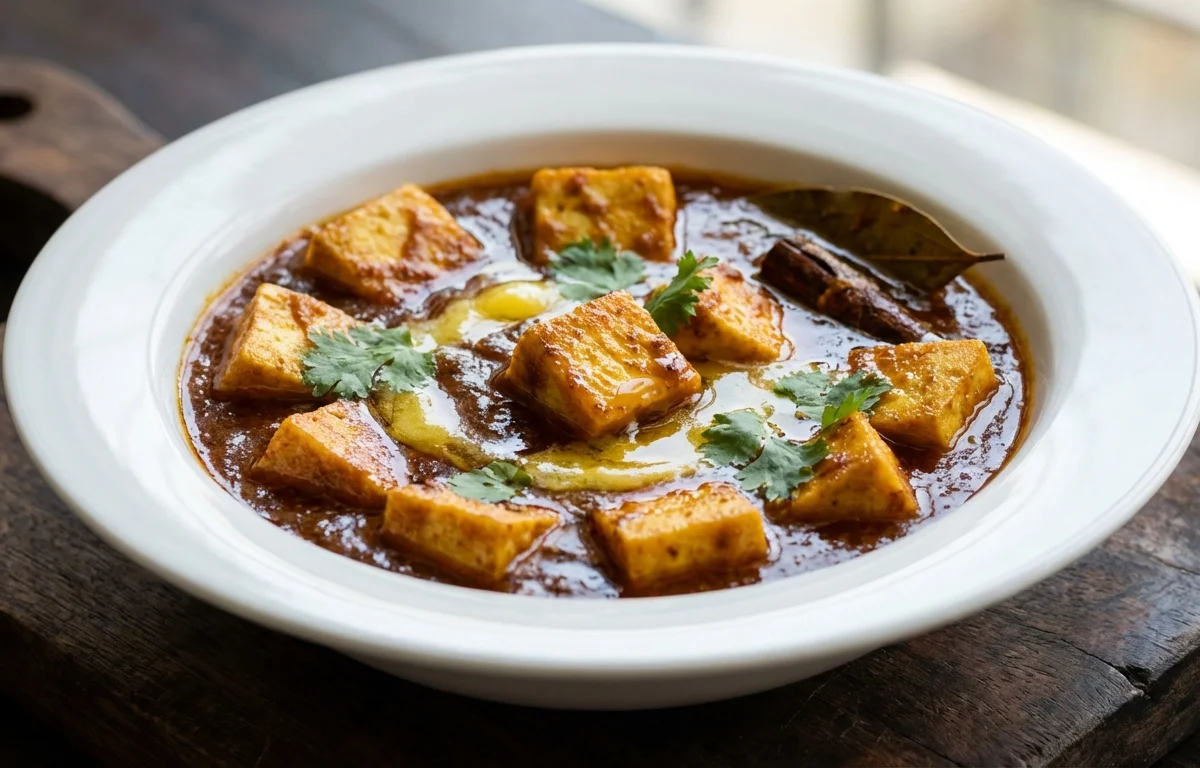
Paneer Kosha
Chunky paneer cubes slow-cooked in a deeply spiced, rich onion-tomato masala until the oil separates and the gravy clings to every piece. This Bengali-style vegetarian twist on the classic kosha mangsho is bold, aromatic, and perfect with luchi or steamed rice.
For 4 servings
- fry · ~5 min
Shallow-fry the paneer cubes.
1.Heat 1 tbsp mustard oil in a kadai over medium heat until it reaches smoking point, then reduce heat.2.Add paneer cubes in a single layer and fry until they turn light golden on all sides, about 2-3 minutes.3.Remove with a slotted spoon and set aside on a plate.TIPDon't overcrowd the pan — fry in batches so the paneer sears evenly without steaming. - temper · ~2 min
Temper the whole spices.
1.Add the remaining 2 tbsp mustard oil to the same kadai and let it heat up on medium flame.2.Add bay leaves, crushed cardamom, cinnamon stick, and cloves.3.Sauté until fragrant, about 30 seconds.TIPLet the spices sizzle but don't let them burn — medium-low heat is your friend here. - saute · ~15 min
Caramelize the onions.
1.Add the sliced onions and a pinch of salt to the pan.2.Sprinkle the sugar over the onions and stir well.3.Sauté on medium heat, stirring occasionally, until the onions turn a deep golden-brown, about 12-15 minutes.TIPThe sugar helps the onions caramelize faster and gives the kosha its signature deep color. Patience is key — don't rush this step. - saute · ~10 min
Build the masala base.
1.Add ginger paste and garlic paste to the caramelized onions. Sauté for 2 minutes until the raw smell disappears.2.Add the chopped tomatoes and cook until they soften completely and the oil begins to separate from the mixture, about 5-7 minutes.3.Lower the heat, add turmeric powder, red chili powder, cumin powder, and coriander powder. Stir continuously for 1 minute to bloom the spices without burning.TIPIf the spices stick to the pan, splash a tablespoon of water to deglaze. Burnt spices will make the gravy bitter. - simmer · ~12 min
Slow-cook the masala.
1.Take the pan off the heat and let it cool for 1 minute. Stir in the whisked yogurt vigorously to prevent curdling.2.Return to low heat and add the slit green chilies and salt.3.Pour in the hot water, stir well, and bring to a gentle simmer. Cover and cook on low heat for 10-12 minutes, stirring once halfway through, until the gravy thickens and oil specks appear on the surface.TIPAlways whisk the yogurt smooth and add it off the heat. This prevents it from splitting when it hits the hot masala. - simmer · ~7 min
Add paneer and finish cooking.
1.Gently fold the fried paneer cubes into the thickened gravy. Coat them well without breaking.2.Cover and simmer on low heat for another 5-7 minutes so the paneer absorbs the flavors of the masala.3.Sprinkle garam masala and drizzle ghee over the top. Give it a gentle stir.TIPDon't over-stir once the paneer is in — the cubes are delicate and can break easily. - garnish · ~5 min
Garnish with fresh coriander and serve hot.
Turn off the heat. Sprinkle chopped coriander leaves on top and let the dish rest for 5 minutes before serving. The gravy will continue to thicken as it cools slightly.
TIPA final drizzle of raw mustard oil on top right before serving adds an extra punch for those who love the Bengali touch.
What to keep in mind.
6 tips from the recipe — small details that make a real difference to the final dish.
- 1Mustard oil must be heated to its smoking point first to mellow its sharp bite.
- 2Fry paneer in batches to get a golden crust without overcrowding the pan.
- 3Caramelize onions slowly — the sugar helps but patience gives the deep color.
- 4Add yogurt off the heat and stir vigorously to prevent curdling in the hot masala.
- 5Let the oil separate on the surface before adding paneer — that's the kosha sign.
- 6Rest the dish for 5 minutes after cooking so the gravy clings to the paneer.
Adapt it for your goals.
Vegan
Replace paneer with extra-firm tofu (pressed and pan-fried) and swap yogurt for thick coconut or cashew cream. Use a neutral oil instead of ghee for a fully plant-based version.
high proteinHigh-protein
Add 200g of boiled chickpeas or chana along with the paneer for an extra protein boost without changing the gravy's character.
low oilLow-oil
Reduce mustard oil to 1 tbsp for frying paneer and 1 tbsp for the masala. Use a non-stick pan and add splashes of water to deglaze instead of oil.
jainJain
Skip onion and garlic — use asafoetida (hing) in the tempering and a paste of raw banana or ash gourd to build the masala body. Replace yogurt with cashew paste.
extra spicyExtra-spicy
Double the red chili powder and add 1 tsp of Kashmiri chili for color. Toss in 2 more slit green chilies during the simmer for fire-eaters.
Why this is on our healthy list.
High in Plant Protein
Paneer is a rich source of vegetarian protein, supporting muscle repair and satiety, especially when paired with grains like rice or luchi.
Rich in Anti-Inflammatory Spices
Turmeric, ginger, and garlic in the masala contain curcumin and other compounds known to reduce inflammation in the body.
Probiotic from Yogurt
The whisked yogurt adds live cultures that support gut health, though cooking reduces some potency — still beneficial enzymes remain.
Good Source of Calcium
Paneer provides a substantial amount of calcium, essential for bone health and teeth strength, especially in vegetarian diets.
Frequently asked questions
Yes, but you'll lose the pungent, nutty flavor that defines authentic Bengali kosha. If using neutral oil, add 1/2 tsp mustard seeds to the tempering for a hint.


