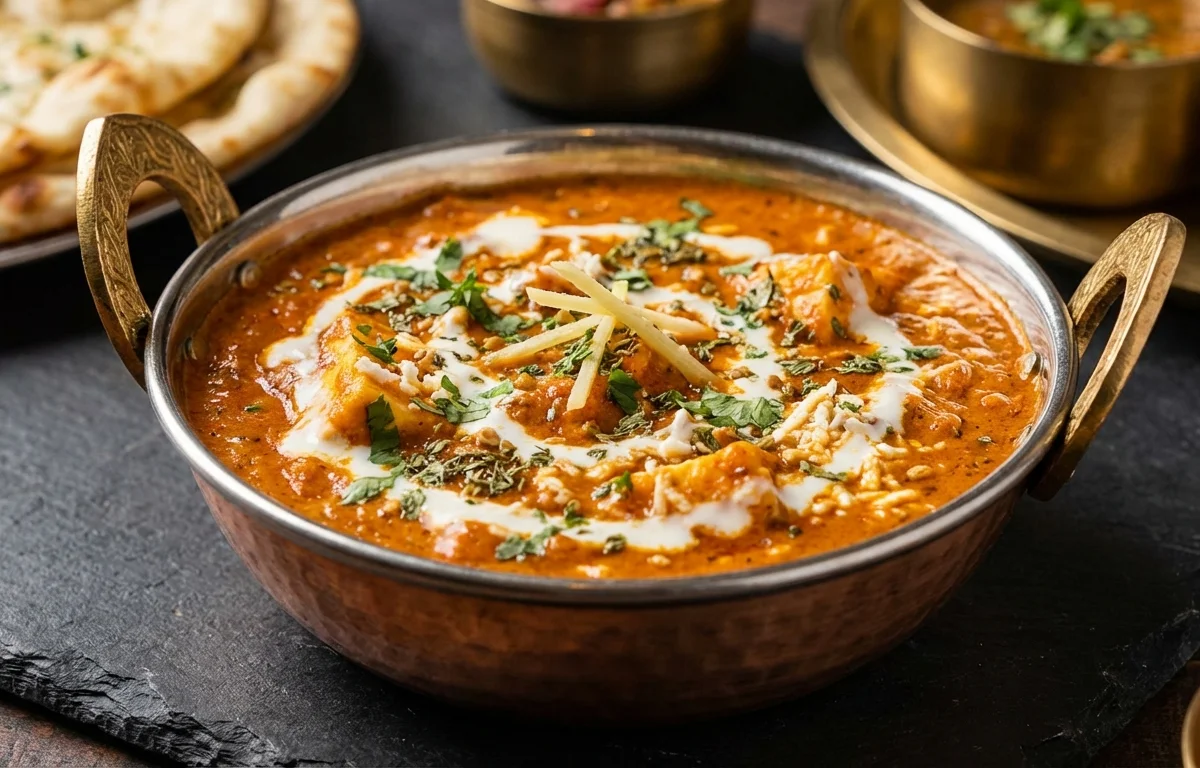
Paneer Lababdar
Paneer Lababdar is a rich North Indian curry with soft paneer cubes in a smooth onion-tomato gravy. Butter, cream, and warm spices give it a restaurant-style finish that pairs beautifully with naan or jeera rice.
For 4 servings
- prep · ~10 min
Soak the cashews and prep the vegetables.
1.Soak the cashews in warm water for 10 minutes.2.Slice the onions and chop the tomatoes, ginger, and garlic.3.Cut the paneer into medium cubes and keep it aside. - saute · ~15 min
Cook the onion and tomato base.
1.Heat oil and half the butter in a pan over medium heat.2.Add bay leaf and cumin seeds; cook until fragrant (20-30 seconds).3.Add onion, ginger, garlic, and green chili. Cook until the onions soften and turn light golden (6-8 minutes).4.Add tomato and cook until soft and pulpy (5-6 minutes).TIPCook the tomatoes until they lose their raw smell; this gives the gravy a sweeter, deeper flavor. - mix · ~5 min
Blend the gravy base.
Cool the onion-tomato mixture slightly, then blend it with soaked cashews into a smooth puree. Add a small splash of water if needed for easy blending.
- saute · ~8 min
Cook the puree with spices.
1.Heat the remaining butter in the same pan over low-medium heat.2.Pour in the puree and cook for 2 minutes, stirring often.3.Add red chili powder, turmeric powder, coriander powder, salt, and sugar.4.Cook until the masala thickens and looks glossy (5-6 minutes).TIPKeep the heat moderate after adding the puree so it does not splatter too much or catch at the bottom. - simmer · ~5 min
Add paneer and finish the curry.
1.Add water and mix well to make a thick gravy.2.Add paneer cubes and simmer gently for 3-4 minutes.3.Add kasuri methi, garam masala, and cream.4.Stir gently and cook for 1 more minute.TIPDo not boil the paneer for too long or it can turn chewy. - garnish
Garnish with coriander leaves.
- serve
Serve hot.
What to keep in mind.
7 tips from the recipe — small details that make a real difference to the final dish.
- 1Blend the onion-tomato-cashew base completely smooth for the signature silky lababdar texture.
- 2Let the tomato mixture lose its raw smell before blending, or the gravy will taste sharp instead of rich.
- 3Cook the pureed masala until it turns glossy and slightly leaves the sides of the pan for deeper flavor.
- 4Add paneer only at the end and simmer very gently, so the cubes stay soft rather than rubbery.
- 5Crush kasuri methi between your palms before adding to release its aroma into the finished curry.
- 6If using refrigerated paneer, soak the cubes in warm water for 10 minutes before adding to keep them tender.
- 7This gravy thickens as it stands, so loosen leftovers with a splash of hot water while reheating.
Adapt it for your goals.
Low-oil
Reduce butter and oil slightly and rely on the cashew puree for body; good if you want a lighter but still creamy curry.
veganVegan
Swap paneer for firm tofu, butter for oil, and cream for cashew cream or coconut cream for a dairy-free version.
jainJain
Skip onion and garlic, increase tomatoes and cashews, and use a little ginger and hing for a Jain-friendly gravy.
spicierSpicier
Add an extra green chili or a little more red chili powder if you prefer a sharper, hotter restaurant-style finish.
Why this is on our healthy list.
Good Protein from Paneer
Paneer adds satisfying dairy protein, making this curry more filling and substantial than a tomato-based gravy alone.
Antioxidants from Tomatoes
The tomato-rich base contributes antioxidants and brings brightness that balances the richer butter, cream, and cashews.
Healthy Fats from Cashews
Cashews give creaminess along with beneficial fats, allowing the gravy to feel luxurious without depending only on cream.
Frequently asked questions
Paneer gets firm if boiled too long. Add it only after the gravy is ready and simmer gently for just a few minutes.



.webp)