
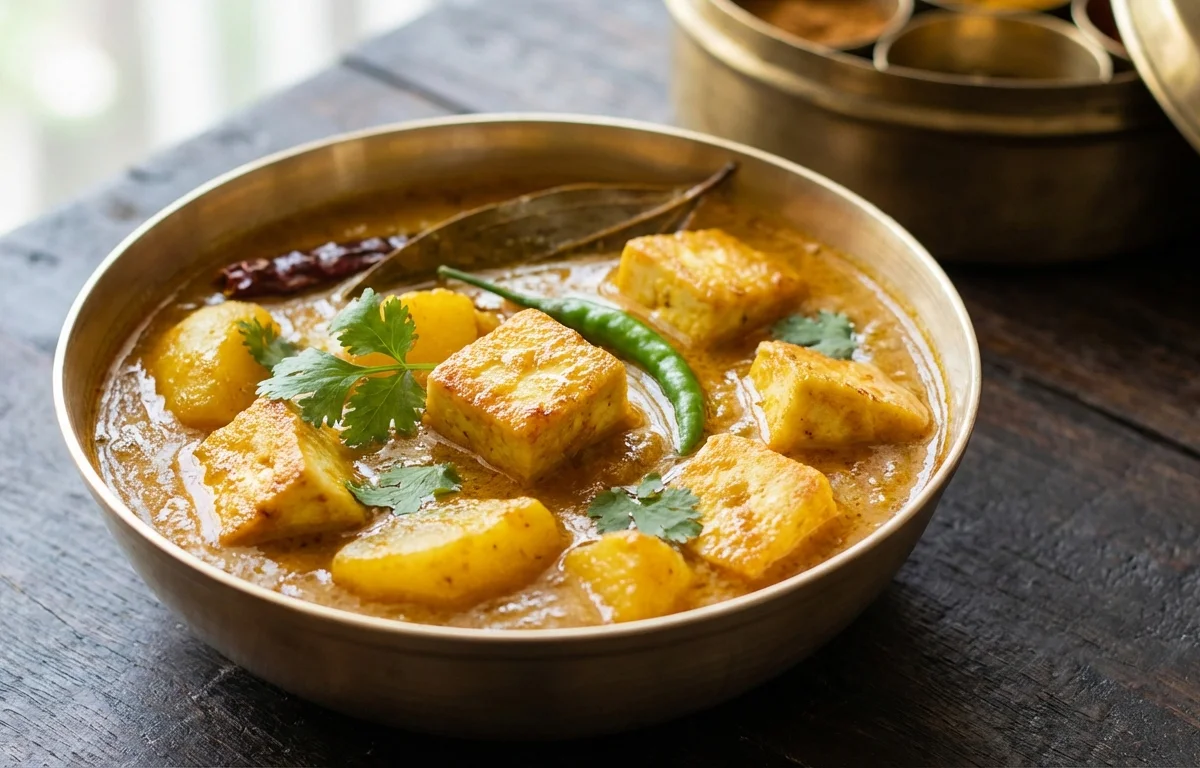
Paneer Torkari
A light Bengali-style paneer curry with potatoes, tomatoes, and gentle spices. The gravy stays simple and homey, letting the paneer soak up all the warmth of ginger, cumin, and a touch of ghee.
For 4 servings
- prep · ~10 min
Prep the paneer and vegetables.
1.Cut the paneer into medium cubes.2.Peel and cube the potatoes.3.Chop the tomatoes finely.4.Grate the ginger and slit the green chili. - fry · ~7 min
Lightly fry the paneer and potatoes.
1.Heat mustard oil in a kadai over medium heat.2.Add the paneer cubes and fry lightly for 1-2 minutes until pale golden. Remove and keep aside.3.In the same oil, add the potatoes and fry for 4-5 minutes until the edges turn light golden.4.Remove the potatoes and keep aside with the paneer.TIPKeep the paneer lightly fried only. Overfrying makes it rubbery. - saute · ~8 min
Cook the spice base.
1.Lower the heat slightly and add bay leaf and cumin seeds.2.When the cumin splutters, add ginger and green chili.3.Add the chopped tomatoes and cook until soft and pulpy, about 5-6 minutes.4.Add turmeric powder, red chili powder, cumin powder, coriander powder, salt, and sugar. Cook for 1-2 minutes until the masala smells fragrant.TIPIf the masala starts catching at the bottom, splash in a spoonful of water. - simmer · ~16 min
Simmer the torkari.
1.Return the potatoes to the kadai and mix well with the masala.2.Pour in the water and bring to a gentle simmer.3.Cover and cook for 10-12 minutes until the potatoes are tender.4.Add the paneer and simmer uncovered for 3-4 minutes so it absorbs the gravy. - garnish · ~2 min
Finish with ghee, garam masala, and cilantro.
Turn off the heat and stir in the ghee and garam masala. Scatter chopped cilantro over the top and let the curry stand for 2 minutes before serving.
- serve
Serve the paneer torkari hot.
What to keep in mind.
7 tips from the recipe — small details that make a real difference to the final dish.
- 1Heat the mustard oil until it just starts smoking, then lower the heat before frying; this mellows its raw sharpness.
- 2Fry the paneer only to a pale gold and remove quickly, or it will turn chewy in the final simmer.
- 3Keep the potato cubes similar in size so they finish cooking evenly in the light gravy.
- 4Cook the tomatoes down until jammy before adding water; this prevents a thin, raw-tasting broth.
- 5Add the paneer only after the potatoes are tender so the cubes stay soft and absorb flavor without breaking.
- 6Let the curry rest for 2 minutes after adding ghee and garam masala so the finish blooms properly.
- 7This torkari tastes even better after a short rest, so make it 30 minutes ahead if serving with roti or rice.
Adapt it for your goals.
No-onion-no-garlic
This recipe already fits a satvik-style approach; keep the ginger, cumin, and tomato prominent for a clean, gentle curry.
low oilLow-oil
Skip frying the paneer and only sear the potatoes lightly, then simmer both directly in the gravy for a lighter everyday version.
more jholMore-jhol
Add a little extra water for a thinner Bengali-style jhol that pairs especially well with steamed rice.
veganVegan
Replace paneer with firm tofu and finish with a few drops of mustard oil instead of ghee for a similar light curry profile.
Why this is on our healthy list.
Protein from Paneer
Paneer adds satisfying dairy protein, making the curry more filling than a potato-based vegetable dish alone.
Tomato and Ginger Goodness
Tomatoes and ginger bring plant compounds, freshness, and depth without relying on heavy cream or rich gravies.
Balanced Home-Style Curry
With a light tomato-based broth and gentle spicing, this dish is less heavy than many restaurant-style paneer curries.
Frequently asked questions
It was likely fried too long or simmered too hard. Keep the fry brief and add the paneer only near the end of cooking.



-curry.webp)
.webp)