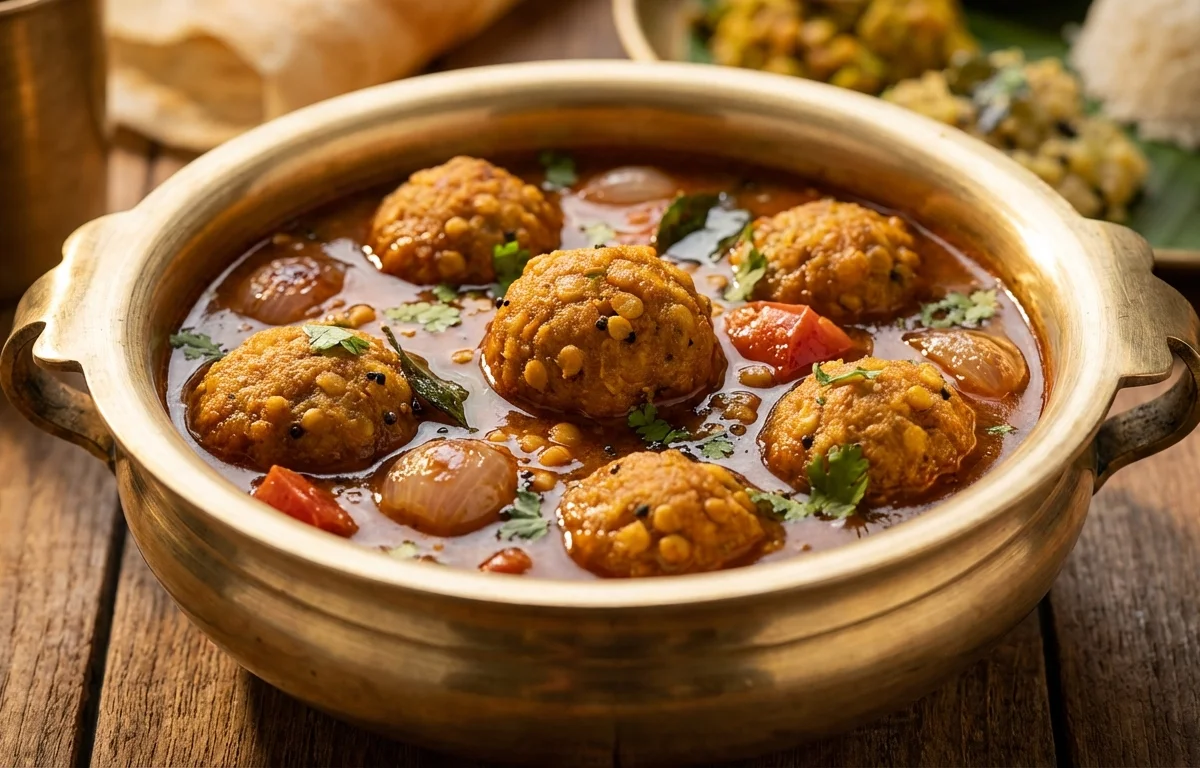
Paruppu Urundai Kulambu
Soft steamed lentil dumplings simmered in a tangy tamarind gravy make this Tamil classic deeply comforting. The urundai soak up the spiced kulambu beautifully and taste especially good with hot rice.
For 4 servings
- prep · ~120 min
Soak the lentils and make tamarind extract.
1.Wash the toor dal and chana dal well, then soak them in water for 2 hours.2.Soak the tamarind in a little warm water for 15 minutes.3.Squeeze and extract the tamarind pulp, then add enough water to make about 1.5 cups extract.TIPDrain the lentils very well before grinding so the urundai hold their shape. - mix · ~7 min
Grind the lentil mixture for the urundai.
1.Set aside 1 tablespoon chopped onion for the gravy.2.In a mixer, grind the soaked lentils with 2 dried red chilies, 2 garlic cloves, a few curry leaves, asafoetida, turmeric powder, and 0.25 tsp salt.3.Pulse to a coarse thick mixture without adding water.4.Mix in half of the remaining chopped onion by hand.TIPKeep the mixture coarse, not smooth, so the dumplings stay light instead of dense. - assemble · ~8 min
Shape the urundai.
Grease your palms lightly with a few drops of sesame oil and shape the lentil mixture into small lemon-sized balls. Arrange them on a greased plate with a little space between each one.
- steam · ~12 min
Steam the urundai until firm.
Steam the dumplings over medium heat for 10 to 12 minutes, until they look set and feel firm to the touch. Remove and let them cool slightly so they do not break in the kulambu.
TIPSteaming first keeps the dumplings from crumbling when they simmer in the gravy. - temper · ~2 min
Make the tempering for the kulambu.
1.Heat the remaining sesame oil in a kadai over medium heat.2.Add mustard seeds and let them splutter.3.Add fenugreek seeds, cumin seeds, the remaining 2 dried red chilies, and the remaining curry leaves.4.Add asafoetida and stir for a few seconds.TIPDo not let the fenugreek seeds darken too much or the gravy will taste bitter. - saute · ~6 min
Cook the onion and garlic base.
1.Add the remaining chopped onion and the reserved 1 tablespoon onion to the pan.2.Cook until soft and lightly golden, about 5 minutes.3.Add the remaining garlic and green chilies.4.Sauté for 1 minute until fragrant. - simmer · ~12 min
Build and simmer the kulambu.
1.Add sambar powder and coriander powder, then stir briefly on low heat.2.Pour in the tamarind extract and the remaining water.3.Add the remaining salt and jaggery.4.Bring to a boil, then simmer until the raw tamarind smell fades and the gravy thickens slightly, about 10 minutes.TIPKeep the spice powders moving in the pan so they do not scorch. - simmer · ~8 min
Add the urundai and cook gently.
Slide the steamed lentil dumplings into the simmering kulambu one by one. Cook on low heat for 6 to 8 minutes without stirring hard; swirl the pan gently so the dumplings absorb the gravy.
TIPAvoid vigorous stirring after adding the urundai or they may break apart. - garnish
Finish with cilantro.
- serve
Serve hot with rice.
What to keep in mind.
7 tips from the recipe — small details that make a real difference to the final dish.
- 1Drain the soaked dals thoroughly before grinding; extra moisture makes the urundai crack or flatten.
- 2Pulse the lentil mix coarse, not pasty, so the dumplings stay soft and slightly crumbly inside.
- 3Steam a small test ball first; if it splits, mix the batter a little more or shape tighter.
- 4Let the steamed urundai cool for a few minutes before adding to gravy so they hold together better.
- 5Simmer the tamarind gravy until the raw smell disappears before adding dumplings, or the kulambu will taste sharp.
- 6Once the urundai go in, swirl the kadai instead of stirring with a spoon to prevent breakage.
- 7This kulambu tastes even better after 20 to 30 minutes of resting, when the dumplings absorb the tamarind-spice gravy.
Adapt it for your goals.
Jain
Skip onion and garlic, increase asafoetida and curry leaves, and keep the tamarind-spice base bold for a Jain-friendly version.
spicierSpicier
Add extra green chili or a little more sambar powder if you want a hotter, sharper kulambu with more heat.
no jaggeryNo-jaggery
Leave out the jaggery for a more assertively tangy and savory gravy if you prefer a less rounded finish.
vegetable addedVegetable-added
Simmer small shallots, brinjal, or drumstick pieces in the gravy before adding the urundai for a heartier kulambu.
Why this is on our healthy list.
Protein-Rich Lentil Base
Toor dal and chana dal make this dish filling and naturally rich in plant protein, helping it feel substantial with rice.
Good Source of Fiber
The lentils, onions, tamarind, and spices contribute fiber, which supports satiety and makes the meal more balanced.
Lower-Fry Cooking Method
Because the urundai are steamed instead of deep-fried, the dish keeps a classic texture with less heaviness.
Digestive Spice Support
Cumin, asafoetida, garlic, curry leaves, and tamarind are traditional ingredients often used to make lentil dishes easier to digest.
Frequently asked questions
Usually the lentil mixture was too wet or too smooth, or the dumplings were stirred too much after adding. Grind coarse without water, steam until firm, and swirl the pan gently.