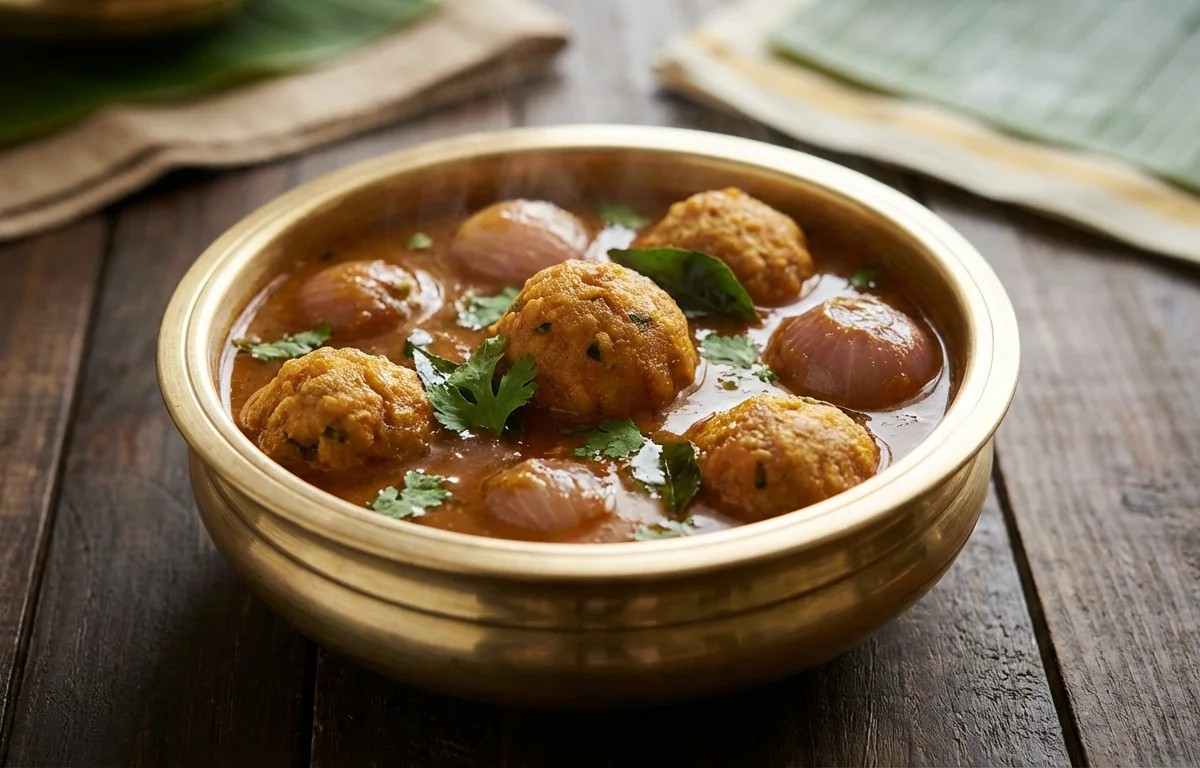
Paruppu Urundai Kuzhambu
A comforting Tamil Nadu kuzhambu with soft steamed lentil dumplings simmered in a tangy tamarind gravy. It has deep flavor from coconut, spices, and a simple tempering, and tastes especially good with hot rice.
For 4 servings
- prep · ~60 min
Soak the dals and prepare the tamarind.
1.Wash the chana dal and toor dal well.2.Soak both dals together in water for 1 hour, then drain completely.3.Soak the tamarind in a little warm water and squeeze out a thick extract.TIPDrain the soaked dals very well so the dumpling mixture stays coarse and holds its shape. - mix · ~5 min
Grind the lentil mixture for the urundai.
1.Add the drained chana dal, toor dal, 2 dried red chili, fennel seeds, asafoetida, and 0.25 tsp salt to a mixer jar.2.Pulse to a coarse mixture without adding much water.3.Transfer to a bowl and mix in a spoonful of chopped onion if you like a little texture.TIPKeep the mixture slightly coarse, not smooth, or the urundai can turn dense. - steam · ~12 min
Shape and steam the urundai.
1.Divide the lentil mixture into small lemon-sized balls.2.Place the balls on a greased steamer plate with a little space between them.3.Steam until firm and cooked through, about 10 to 12 minutes.TIPSteaming first helps the dumplings stay intact when they go into the kuzhambu. - saute · ~4 min
Make the coconut spice paste.
1.Heat 1 tsp sesame oil in a small pan.2.Add cumin seeds, black peppercorns, coriander seeds, and grated coconut.3.Cook for 1 to 2 minutes until fragrant without browning too much.4.Cool slightly, then grind with a little water to a smooth paste. - temper · ~2 min
Make the tempering for the kuzhambu.
1.Heat the remaining sesame oil in a kadai.2.Add mustard seeds and let them splutter.3.Add the remaining 2 dried red chili and curry leaves.4.Stir for a few seconds until fragrant.TIPUse medium heat here so the mustard cracks well and the chili does not burn. - saute · ~8 min
Cook the onion and tomato base.
1.Add the chopped onion and cook until soft and lightly golden.2.Add the chopped tomato, turmeric powder, and the remaining salt.3.Cook until the tomato breaks down and turns pulpy. - simmer · ~10 min
Simmer the tamarind gravy.
1.Pour in the tamarind extract and the remaining water.2.Bring the gravy to a gentle simmer.3.Cook for 8 to 10 minutes so the raw tamarind smell goes away. - simmer · ~9 min
Add the coconut paste and finish the kuzhambu.
1.Stir in the ground coconut spice paste and mix well.2.Simmer for 3 to 4 minutes until the gravy thickens slightly.3.Lower the heat and gently add the steamed urundai.4.Cook for 4 to 5 minutes so the dumplings absorb the gravy.TIPDo not stir too hard after adding the urundai or they may break. - garnish
Garnish with cilantro.
- serve
Serve hot with rice.
What to keep in mind.
7 tips from the recipe — small details that make a real difference to the final dish.
- 1Drain the soaked chana dal and toor dal thoroughly before grinding; extra moisture makes the urundai crack or flatten.
- 2Pulse the dal mix just until coarse and clumpy so the dumplings stay light instead of turning pasty and dense.
- 3Grease the steamer plate lightly and leave space between each urundai so steam circulates and cooks them evenly.
- 4The urundai are done steaming when they feel firm on top and no wet batter sticks to your finger.
- 5Let the tamarind gravy lose its raw smell fully before adding the coconut paste, or the kuzhambu will taste harsh.
- 6After adding the steamed dumplings, keep the kuzhambu at a gentle simmer and swirl the pan instead of stirring hard.
- 7This kuzhambu tastes even better after 20 to 30 minutes of resting, when the urundai soak up the tangy gravy.
Adapt it for your goals.
No-onion
Skip onion in both the urundai and gravy for a simpler temple-style version with cleaner tamarind-coconut flavors.
spicierSpicier
Add extra dried red chili or a few more peppercorns in the coconut paste if you want a hotter, more robust kuzhambu.
garlicGarlic
Saute a few garlic cloves with the onion for a deeper, homestyle flavor that pairs well with hot rice.
jainJain
Omit onion and asafoetida, and build the gravy with tomato, tamarind, coconut, and spices for a Jain-friendly adaptation.
Why this is on our healthy list.
Protein-Rich Lentils
Chana dal and toor dal make this dish filling and provide plant protein along with fiber for a satisfying meal.
Digestive Spice Support
Fennel, cumin, pepper, curry leaves, and asafoetida are traditional spices that add aroma and can make dal-based dishes feel easier to digest.
Balanced Satiety
The combination of lentils, coconut, and sesame oil gives the kuzhambu staying power, especially when served with rice.
Frequently asked questions
Usually the dal mixture was ground too smooth or too wet, or the dumplings were not steamed long enough. Keep the mixture coarse, drain the dals well, and add the urundai only after they are firm.