Patrode
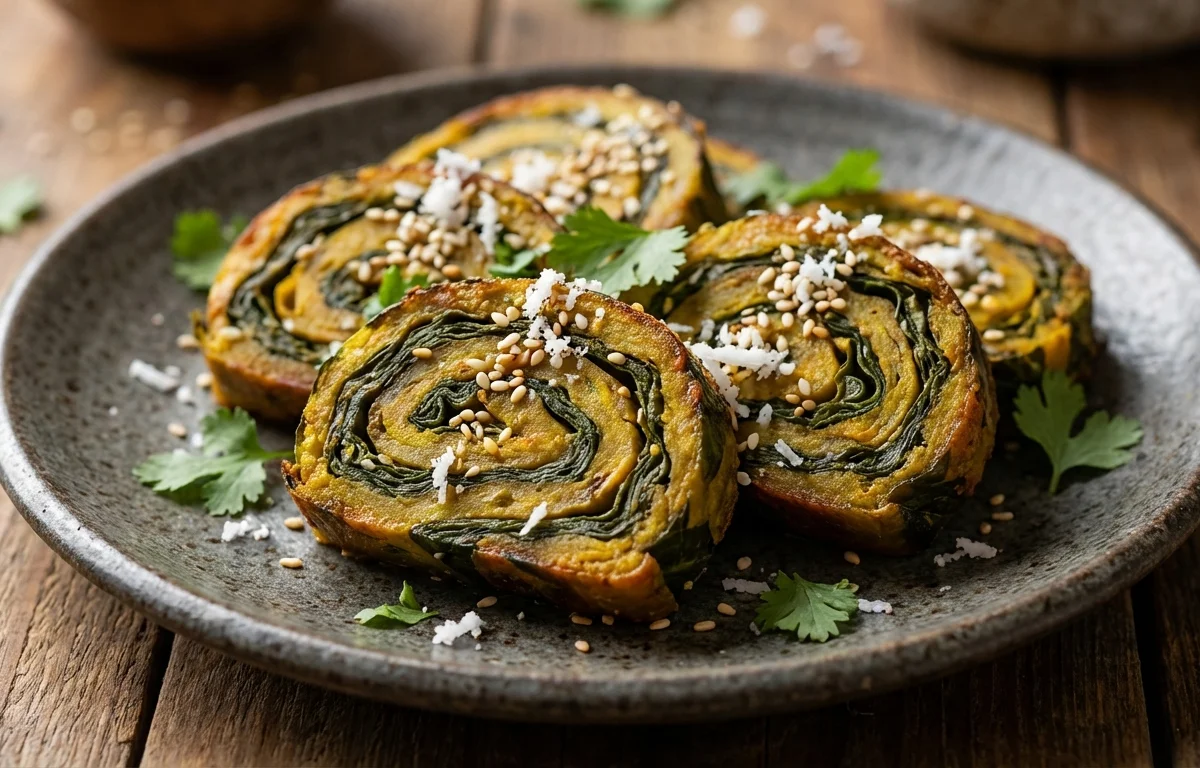
Tender colocasia leaves spread with a spiced, tangy gram flour paste, rolled into tight logs, and steamed to perfection. Once set, the rolls are sliced into pinwheels and given a smoky mustard seed and sesame tempering for a gorgeous snack or side dish from the Konkan coast.
For 4 servings
- prep · ~10 min
Prepare the colocasia leaves.
1.Wash the colocasia leaves thoroughly under running water.2.Lay each leaf shiny side down on a clean flat surface.3.Using a sharp knife, carefully scrape off the thick central vein without tearing the leaf.4.Pat the leaves completely dry and set aside.TIPScrape from the stem end toward the tip — the vein is easier to hold that way. - mix · ~5 min
Make the spiced gram flour paste.
1.In a large mixing bowl, combine besan, rice flour, tamarind paste, grated jaggery, ginger, green chili, turmeric powder, red chili powder, coriander powder, cumin powder, and salt.2.Add water gradually, whisking continuously, until you get a smooth, spreadable paste with a thick dropping consistency.3.Taste and adjust salt and tanginess.TIPThe paste should cling to a spoon without dripping — too thin and it'll ooze out of the rolls. - assemble · ~5 min
Layer and stack the leaves.
1.Place the largest leaf shiny side down. Spread a thin, even layer of paste all over it.2.Place a slightly smaller leaf on top with its shiny side down, aligning it so the gaps from the first leaf are covered. Spread more paste.3.Repeat with 2-3 more leaves, each time spreading paste between layers.TIPAlternating leaf orientation prevents paste from leaking when you roll. - assemble · ~2 min
Roll the stacked leaves tightly.
1.Fold the sides of the leaf stack inward by about an inch.2.Starting from the stem end, roll the stack tightly all the way to the tip, like a Swiss roll.3.Secure the roll by gently pressing the seam.TIPRoll as tight as you can — loose rolls may open during steaming. - steam · ~20 min
Steam the patrode rolls.
1.Grease the steamer plates lightly with oil.2.Place the rolls seam-side down on the steamer plate.3.Steam for 18-20 minutes until a knife inserted comes out clean.4.Remove and let the rolls cool for 5 minutes.TIPDon't overcrowd the steamer — leave space between rolls for steam to circulate. - prep · ~2 min
Slice the steamed rolls.
Once cooled enough to handle, use a sharp knife to slice each roll into thick pinwheels, about 1 cm thick.
TIPUse a serrated knife and a gentle sawing motion to get clean slices without squishing. - temper · ~5 min
Make the tempering.
1.Heat oil in a wide nonstick pan over medium heat.2.Add mustard seeds and let them splutter (30 seconds).3.Add cumin seeds and let them crackle briefly.4.Add asafoetida and white sesame seeds; sauté until sesame is golden (20 seconds).5.Add the sliced patrode pinwheels in a single layer and sauté for 1-2 minutes per side until lightly crisp.TIPDon't toss too much — the slices are delicate. Use a spatula to flip each piece individually. - garnish · ~1 min
Garnish with fresh coconut and coriander leaves.
Transfer the tempered pinwheels to a serving plate, sprinkle with freshly grated coconut and chopped coriander leaves. Serve hot.
What to keep in mind.
6 tips from the recipe — small details that make a real difference to the final dish.
- 1Scrape the central vein from stem to tip; it prevents tearing and keeps the leaf pliable.
- 2Let the paste rest for 5 minutes; rice flour absorbs liquid and firms up the consistency.
- 3Stack leaves with the largest at the bottom and alternate their orientation to seal gaps.
- 4Use a serrated knife with a gentle sawing motion to cut clean pinwheels without squishing.
- 5Steam rolls seam-side down so they hold their shape without unrolling.
- 6Temper over medium heat and flip slices individually; they are delicate when warm.
Adapt it for your goals.
Low-oil
Skip the final tempering and serve steamed patrode slices directly with a drizzle of lemon juice. Perfect for those cutting back on cooking oil.
jainJain
Replace onion-garlic flavors with extra asafoetida (hing) and omit the sesame seeds; use a pinch of black salt for depth. Complies with Jain dietary practices.
spicy peanut twistSpicy peanut twist
Add 2 tablespoons of roasted peanut powder to the gram flour paste. It adds crunch and a nutty flavor that complements the earthy leaves.
leaf swapLeaf swap
Replace colocasia leaves with large spinach or Malabar spinach leaves. The cooking time remains similar, though the flavor will be milder and more delicate.
Why this is on our healthy list.
Rich in Dietary Fiber
Colocasia leaves and chickpea flour both contribute fiber that aids digestion and promotes gut health.
Plant-Based Protein Source
Besan (chickpea flour) provides a good amount of plant protein, making patrode a satisfying vegetarian snack.
Packed with Antioxidants
The leaves contain polyphenols and flavonoids, while turmeric and coriander add more immune-supporting antioxidants.
Low Glycemic Impact Base
Rice flour and besan have a moderate glycemic index; combined with fiber-rich leaves, patrode can help stabilize blood sugar when eaten in moderation.
Frequently asked questions
Yes, but thaw them completely and pat dry before scraping the veins. Fresh leaves hold paste better and produce a firmer roll.



.webp)