Pineapple Rasam
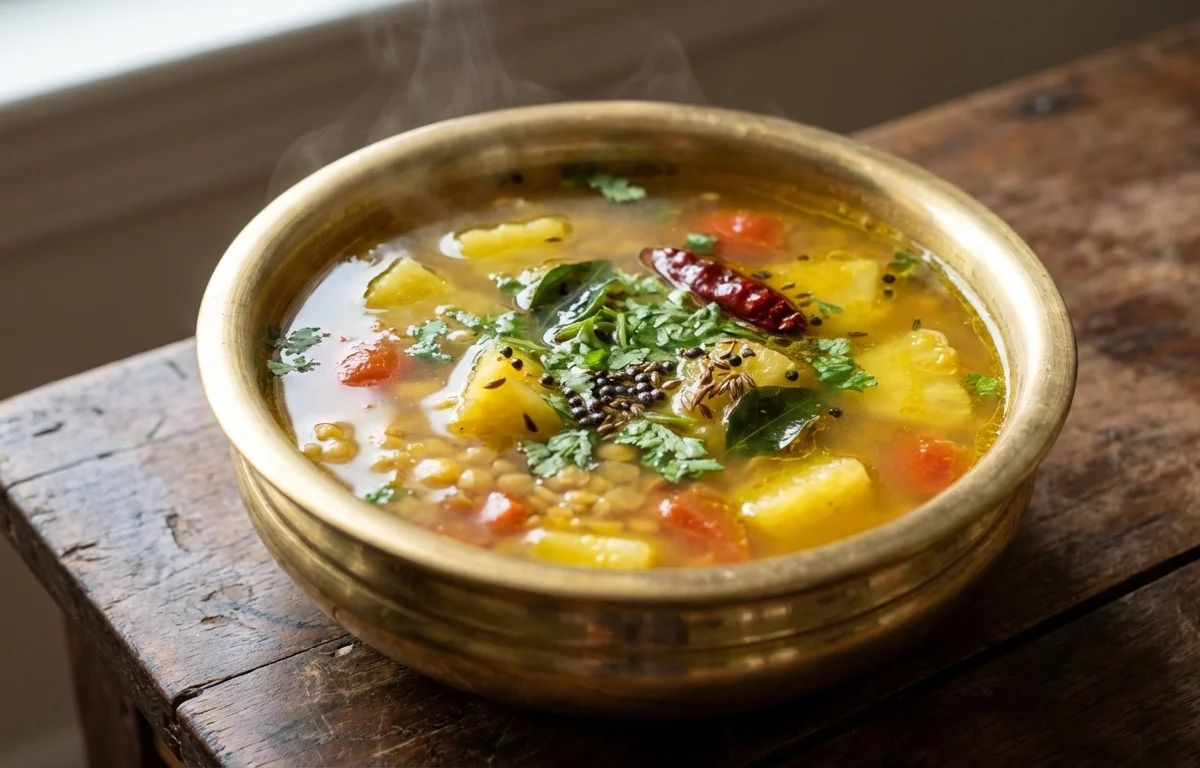
Sweet-tart pineapple gives this rasam a bright, refreshing twist while pepper, cumin, and garlic keep it comforting and savory. Light, aromatic, and easy to pair with rice or sip warm on its own.
For 4 servings
- prep
Crush the pepper, cumin, and garlic.
Coarsely crush the black peppercorns, cumin seeds, and garlic using a mortar and pestle. Keep the mixture slightly chunky for a more traditional rasam texture.
- boil · ~10 min
Cook the pineapple and tomato.
1.Add pineapple, tomato, turmeric powder, red chili powder, salt, tamarind paste, and water to a saucepan.2.Bring to a gentle boil over medium heat.3.Cook until the pineapple softens slightly and the tomato breaks down, about 8 to 10 minutes. - simmer · ~6 min
Add the crushed spice mixture and simmer.
Stir in the crushed pepper, cumin, and garlic. Simmer gently for 5 to 6 minutes until the rasam smells aromatic and the flavors come together.
TIPDo not boil hard after adding the crushed spices or the rasam can lose its fresh aroma. - temper · ~1 min
Make the tempering.
1.Heat ghee in a small pan over medium heat.2.Add mustard seeds and let them splutter.3.Add curry leaves and asafoetida, then cook for a few seconds until fragrant.TIPKeep the heat moderate so the mustard seeds pop without burning the curry leaves. - assemble
Pour the tempering into the rasam.
Add the hot tempering to the rasam and stir well. Let it sit for 1 to 2 minutes so the flavors settle together.
- garnish
Garnish with coriander leaves.
- serve
Serve hot.
Serve the pineapple rasam hot as a light soup or with steamed rice as part of a South Indian meal.
What to keep in mind.
7 tips from the recipe — small details that make a real difference to the final dish.
- 1Use ripe but firm pineapple so the pieces soften without turning stringy or mushy.
- 2Coarsely crush the pepper, cumin, and garlic instead of grinding smooth for a more traditional rasam body.
- 3Keep the rasam at a gentle simmer after adding the crushed spices; a hard boil dulls the fresh pepper-garlic aroma.
- 4Add the tempering while it is still sizzling hot so the ghee carries mustard and curry leaf flavor through the rasam.
- 5If your pineapple is very sweet, add a few extra drops of tamarind water to keep the rasam balanced.
- 6Let the rasam rest for 2 minutes after tempering before serving so the floating spices settle and the flavors round out.
- 7Reheat only until hot, not boiling, if making ahead; repeated boiling can make the fruit taste flat.
Adapt it for your goals.
Vegan
Replace ghee with coconut oil or sesame oil in the tempering for a fully plant-based rasam with a slightly different aromatic finish.
jaggery balancedJaggery-balanced
Add a tiny pinch of jaggery if the pineapple is underripe or extra tart; it rounds out the sourness without making the rasam dessert-like.
spicierSpicier
Increase black pepper and red chili slightly for a sharper, more warming rasam that pairs especially well with plain rice.
no garlicNo-garlic
Skip the garlic for a lighter version that still tastes full from cumin, pepper, curry leaves, and asafoetida.
Why this is on our healthy list.
Digestive Spice Support
Cumin, black pepper, asafoetida, and garlic are traditionally used in rasam to make a light, warming broth that feels easy to digest.
Fruit and Tomato Goodness
Pineapple and tomato bring natural sweetness, tartness, and plant compounds, making this a fresh alternative to heavier gravies.
Light Yet Satisfying
With a water-based broth, minimal fat, and bold spices, this rasam feels comforting and flavorful without being too heavy.
Frequently asked questions
Yes, but choose pineapple packed in juice rather than syrup, and reduce cooking slightly since canned fruit softens faster.