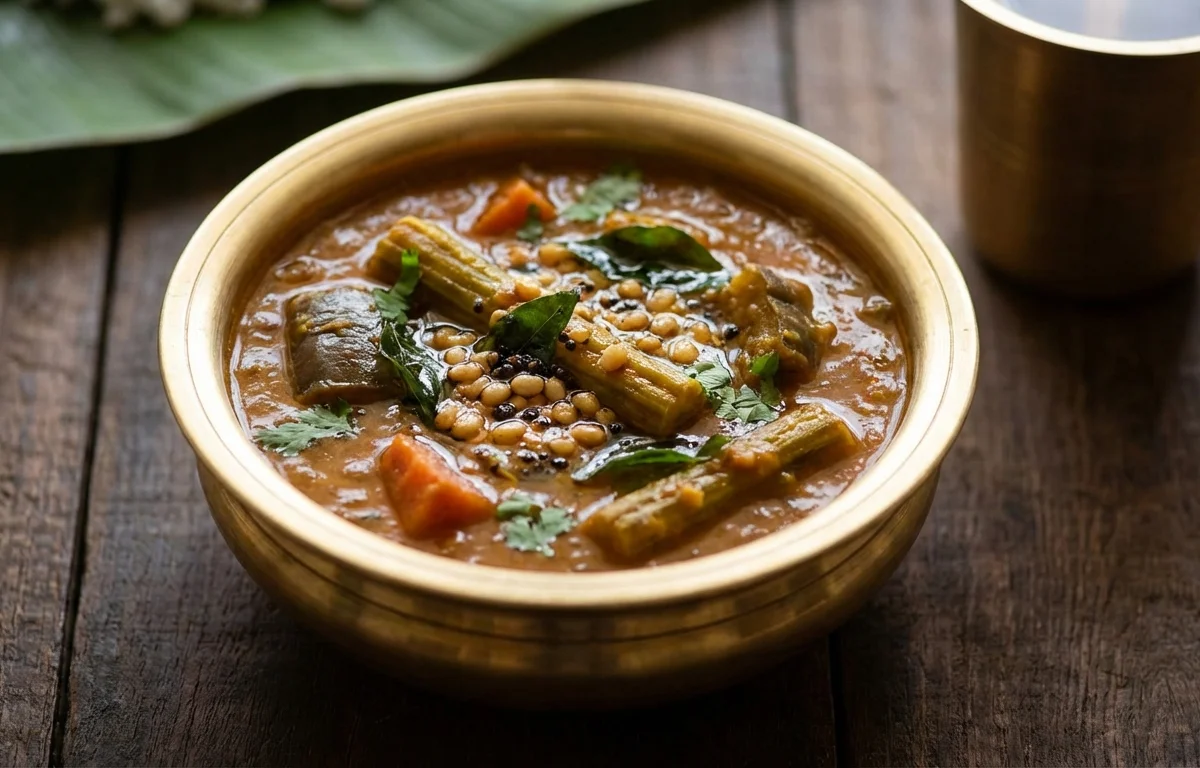
Poricha Kuzhambu
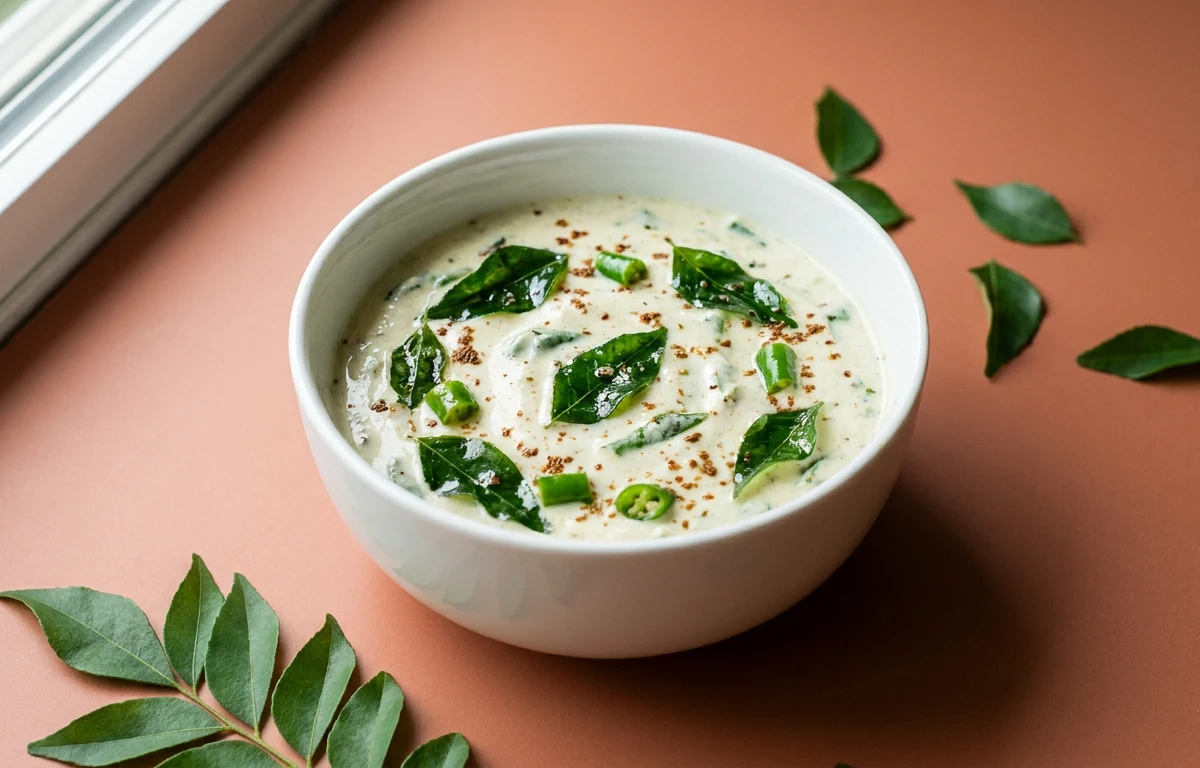
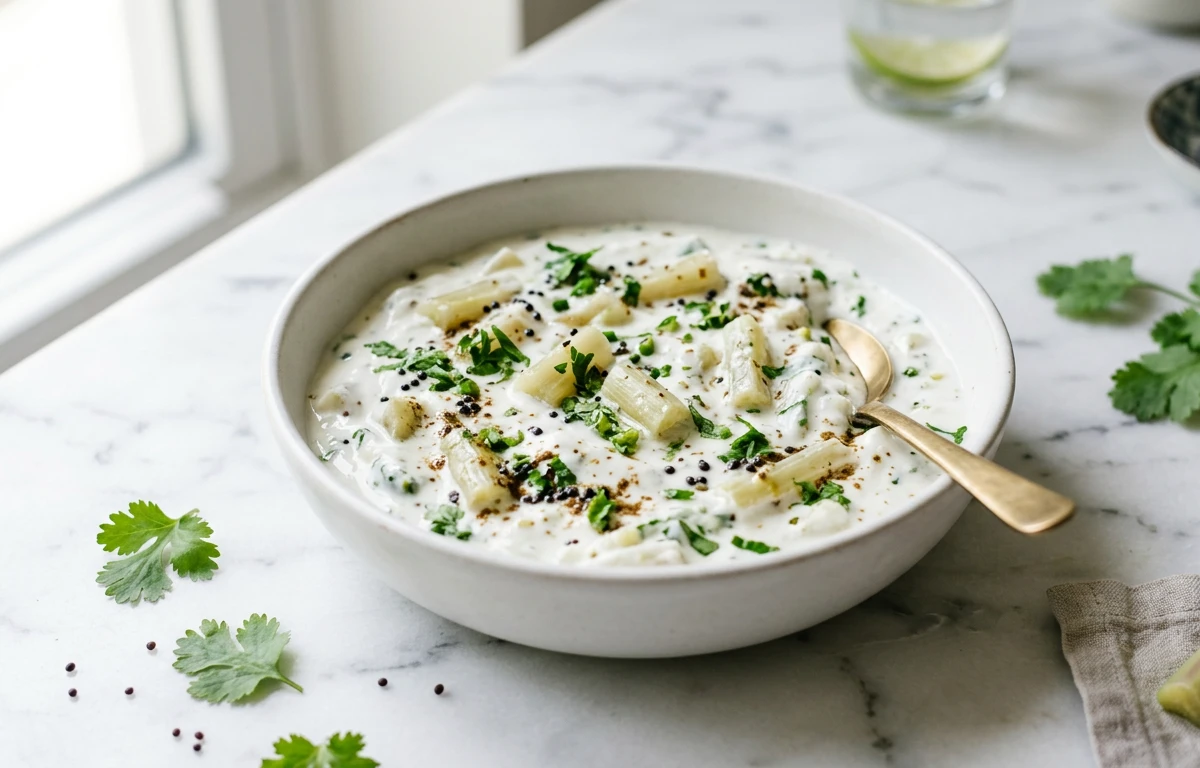
A homestyle Tamil kuzhambu with tender vegetables simmered in a lightly spiced coconut and lentil paste. It is comforting, mellow, and perfect with hot rice for an everyday South Indian meal.
For 4 servings
- prep · ~20 min
Prepare the vegetables and lentils.
1.Wash the ash gourd and cut it into small cubes.2.Wash the moong dal well and soak it in water for 15 minutes.3.Measure the coconut, spices, and tempering ingredients. - saute · ~3 min
Roast the ingredients for the paste.
1.Heat 1 tsp coconut oil in a small pan over low heat.2.Add toor dal, 0.5 tsp cumin seeds, black pepper, and dried red chili.3.Roast until the dal turns lightly golden and the spices smell fragrant.TIPKeep the heat low so the spices roast evenly without turning bitter. - mix · ~3 min
Grind the coconut paste.
Cool the roasted ingredients slightly, then grind them with the grated coconut, rice flour, and a little water to a smooth paste.
- boil · ~15 min
Cook the ash gourd and moong dal.
Add ash gourd, soaked moong dal, turmeric powder, salt, and 2.5 cups water to a pot. Bring to a boil, then cook until the ash gourd is tender and the dal is soft but not mushy.
TIPDo not overcook the ash gourd or it will break down too much in the kuzhambu. - simmer · ~7 min
Add the ground paste and simmer gently.
Stir the ground coconut paste into the cooked vegetables. Add the remaining water if needed and simmer on low heat until the kuzhambu thickens slightly and turns aromatic. Do not let it boil hard after adding coconut.
- temper · ~2 min
Make the tempering.
1.Heat the remaining 1 tsp coconut oil in a small pan.2.Add mustard seeds and let them splutter.3.Add urad dal, remaining 0.5 tsp cumin seeds, and curry leaves.4.Cook for a few seconds until the urad dal turns light golden. - assemble · ~1 min
Pour the tempering over the kuzhambu.
Pour the hot tempering over the simmering kuzhambu and mix gently. Cook for 1 minute so the flavors come together.
- serve
Serve hot with rice.
What to keep in mind.
7 tips from the recipe — small details that make a real difference to the final dish.
- 1Cut the ash gourd into even small cubes so it cooks through before the moong dal turns mushy.
- 2Roast the toor dal and spices only to light golden; darker roasting will make this mild kuzhambu taste bitter.
- 3Grind the coconut paste very smooth for the classic soft, velvety Poricha Kuzhambu texture.
- 4After adding the coconut paste, keep the heat low and avoid a rolling boil or the gravy can split and lose sweetness.
- 5If the kuzhambu looks thin, simmer a little longer before adding extra rice flour; ash gourd releases water as it cooks.
- 6Pour the tempering directly over hot kuzhambu and cover for a minute to trap the aroma of curry leaves and cumin.
- 7This tastes even better after 20 to 30 minutes of rest, when the pepper-cumin-coconut flavors settle into the dal.
Adapt it for your goals.
Mixed-veg
Replace ash gourd with chow chow, pumpkin, snake gourd, or a mix for a similar everyday Tamil kuzhambu with slightly different sweetness and texture.
no rice flourNo-rice-flour
Skip the rice flour for a looser, more traditional consistency if your coconut paste is thick enough on its own.
spicierSpicier
Add one extra dried red chili or a little more black pepper if you want a stronger kick while keeping the dish South Indian in character.
jainJain
This recipe is naturally close to Jain-friendly; just ensure the dried red chilies and other ingredients are prepared without forbidden additives.
Why this is on our healthy list.
Gentle Lentil Protein
Moong dal and toor dal add plant protein and make the kuzhambu more satisfying while keeping it light for an everyday meal.
Hydrating Vegetable Base
Ash gourd is a water-rich vegetable that makes this curry feel soothing and light compared with heavier gravies.
Digestive Spice Support
Cumin, black pepper, and curry leaves bring flavor along with traditional digestive support commonly valued in South Indian home cooking.
Frequently asked questions
Yes. Chow chow, yellow pumpkin, snake gourd, or even brinjal can be used, but adjust cooking time so the vegetable stays tender and not mushy.