
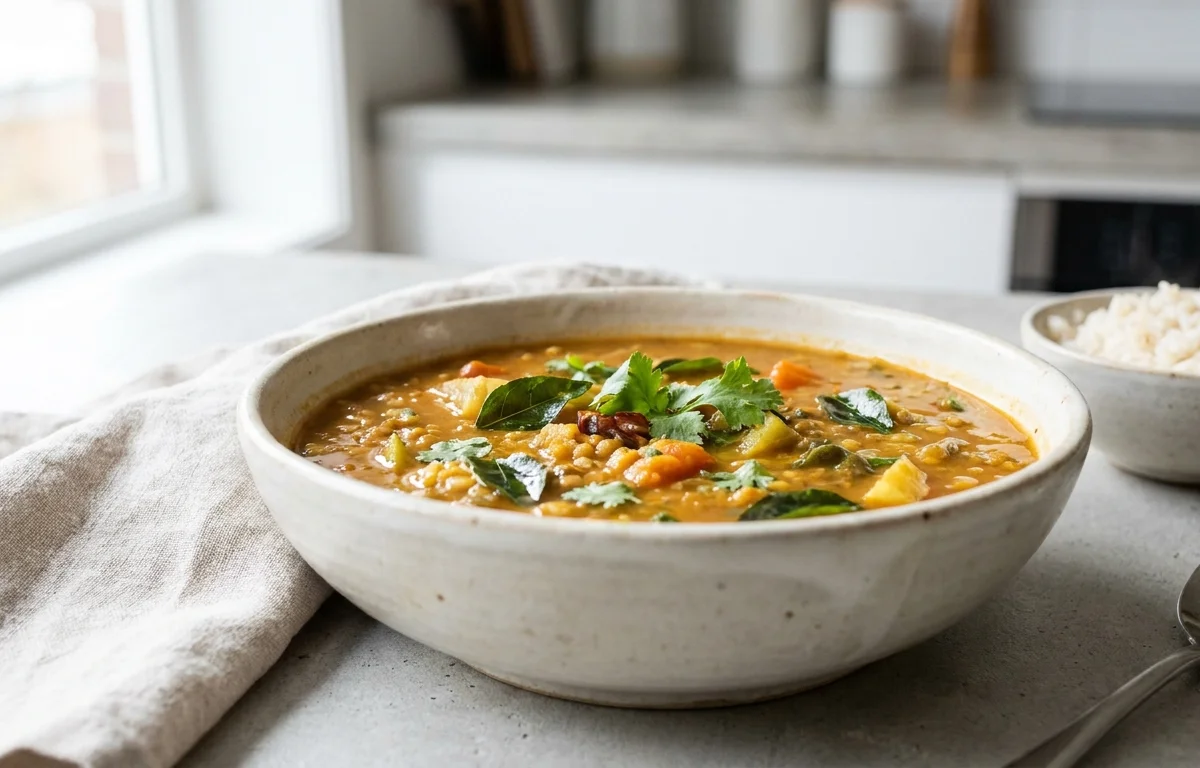
Sambar
A warm, tangy lentil stew loaded with soft vegetables and finished with a crackling mustard seed tempering. This South Indian staple is the heart of every meal, perfect spooned over fluffy rice or dunked with crispy dosas and idlis.
For 4 servings
- prep · ~15 min
Rinse and soak the toor dal.
Wash the toor dal in 2-3 changes of water until water runs clear. Soak in fresh water for 15 minutes, then drain.
- prep · ~10 min
Extract tamarind pulp.
Soak the tamarind in 0.5 cup warm water for 10 minutes. Squeeze well to extract all the pulp, then strain and discard the fibrous solids. Keep the tamarind water aside.
TIPSoaking tamarind in warm water makes the pulp extraction much faster and yields a thicker, more flavorful juice. - pressure cook · ~10 min
Pressure cook the dal.
1.Add drained toor dal, 1.5 cups water, and a pinch of turmeric to the pressure cooker.2.Close the lid and cook on medium heat until you hear 3 whistles.3.Allow the pressure to release naturally, then open the lid and whisk the dal smooth. - boil · ~12 min
Cook the vegetables with spices.
1.In the same cooker (over low heat), add 3 cups of water along with the chopped drumstick, carrot, pumpkin, eggplant, shallots, tomato, and green chili.2.Stir in turmeric, salt, and sambar powder. Mix well.3.Bring to a boil and cook until the vegetables are tender, about 10-12 minutes.TIPDo not overcook the eggplant or drumstick — they should be just fork-tender without turning mushy. - mix · ~7 min
Combine the mashed dal with the cooked vegetables.
Pour the whisked dal into the pot with the vegetables. Add the tamarind pulp water. Stir well and adjust the consistency with hot water if needed — sambar should be thinner than dal, easily drip off the ladle. Bring to a gentle simmer for 5-7 minutes to blend the flavors.
TIPAlways add the tamarind only after the vegetables are fully cooked. Adding it too early can stop the vegetables from softening properly. - temper · ~2 min
Make the tempering (tadka).
1.Heat oil in a small pan over medium heat until it shimmers.2.Add mustard seeds and let them pop completely (15-20 seconds).3.Add cumin seeds, fenugreek seeds, and broken dried red chili. Fry until fragrant, about 10 seconds.4.Add crushed garlic and sauté until lightly golden (30-40 seconds).5.Add asafoetida and curry leaves. Swirl the pan until curry leaves crisp up, about 15 seconds.6.Immediately pour the sizzling tempering over the simmering sambar, standing back as it may sputter.TIPGarlic should turn pale gold, not brown. Dark garlic makes the sambar taste bitter. - simmer · ~5 min
Simmer to meld the flavors.
Let the sambar simmer for 2-3 minutes after adding the tadka. The aroma of roasted spices and garlic will perfume the stew. Turn off the heat and cover to rest for 5 minutes.
TIPThe resting period after cooking is crucial — it allows the tamarind and spices to fully settle into the lentils. - garnish
Garnish with chopped coriander leaves and serve hot.
What to keep in mind.
8 tips from the recipe — small details that make a real difference to the final dish.
- 1Soak tamarind in warm water for faster extraction and thicker pulp.
- 2Cook vegetables just until fork-tender to avoid mushy drumstick and eggplant.
- 3Add tamarind pulp only after vegetables are fully cooked to prevent them from hardening.
- 4Whisk the pressure-cooked dal smooth before adding to the vegetables for a silky texture.
- 5Let the sambar rest for 5 minutes after the tadka to allow flavors to meld fully.
- 6Use freshly crushed garlic in the tempering for a pungent, aromatic finish.
- 7Adjust the final consistency with hot water — sambar should be thinner than dal.
- 8Stored sambar thickens overnight; thin with a splash of hot water while reheating.
Adapt it for your goals.
Low-oil / Light
Reduce oil in tadka to 1 tsp and skip the garlic for a lighter version that still retains the essential mustard seed and curry leaf aroma.
High ProteinHigh-Protein
Add 1/2 cup of cooked chana dal or masoor dal along with toor dal for a protein boost that also adds a nutty, earthy flavor.
Jain (No Onion Garlic)Jain (No Onion-Garlic)
Omit shallots and garlic; use asafoetida generously in the tadka to mimic the savory depth, making it suitable for Jain dietary restrictions.
VeganVegan
This recipe is already vegan; ensure store-bought sambar powder has no added dairy or animal products, and use any neutral oil instead of ghee.
Vegetable ForwardVegetable-Forward
Swap pumpkin and eggplant for okra, bottle gourd (lauki), or radish for a seasonal twist that changes the texture and sweetness profile.
Why this is on our healthy list.
Rich in Plant Protein
Toor dal provides a substantial source of plant-based protein, essential for muscle repair and satiety in a vegetarian diet.
Packed with Dietary Fiber
Lentils and vegetables like drumstick and pumpkin offer soluble and insoluble fiber, supporting digestion and stable blood sugar levels.
Loaded with Antioxidants
Turmeric, curry leaves, and tamarind contribute curcumin and polyphenols that help combat oxidative stress and inflammation.
Excellent Source of Beta-Carotene
Carrot and pumpkin are rich in beta-carotene, which the body converts into vitamin A for healthy vision and immunity.
Supports Gut Health
Fermentable fibers in lentils and vegetables act as prebiotics, promoting a healthy gut microbiome.
Low in Saturated Fat
With minimal oil (2 tsp) and no butter or cream, this dish is naturally low in saturated fat, supporting heart health.
Frequently asked questions
Simmer uncovered for 5-10 minutes to reduce the liquid, or mash a portion of the cooked dal with a spoon to release more starch and thicken the stew naturally.


