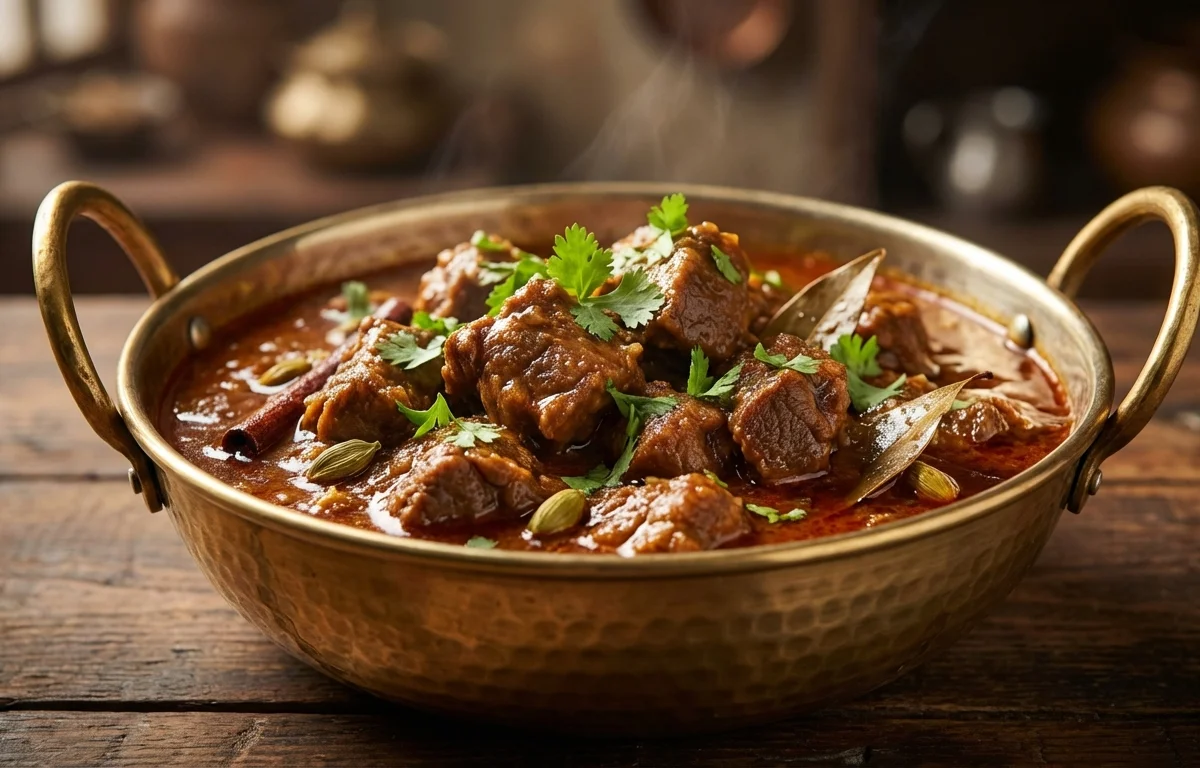
Seyal Mutton
A rustic Tamil-style mutton curry where tender pieces of meat are cooked with onions, tomatoes, coconut, and bold spices until the masala clings beautifully to every bite. Rich, peppery, and perfect with rice or parotta.
For 4 servings
- prep · ~7 min
Grind the coconut masala.
1.Heat a small pan over medium heat.2.Add grated coconut, fennel seeds, and black pepper.3.Roast lightly for 2-3 minutes until fragrant without darkening.4.Cool slightly, then grind with a little water to a smooth paste.TIPKeep the coconut pale; if it browns too much, the curry will taste toasty instead of fresh and spicy. - pressure cook · ~30 min
Cook the mutton until tender.
1.Place mutton, 1 tbsp ginger-garlic paste, turmeric powder, 0.25 tsp salt, and 1 cup water in a pressure cooker.2.Mix well and close the cooker.3.Pressure cook on medium heat for 20-25 minutes until the mutton is tender.4.Let the pressure drop naturally and keep the cooked mutton with its stock aside. - saute · ~15 min
Cook the onion and tomato base.
1.Heat oil in a wide pan over medium heat.2.Add cinnamon, cloves, and curry leaves; cook for 20-30 seconds.3.Add sliced onions and green chili, then sauté until the onions turn golden, 6-8 minutes.4.Add the remaining ginger-garlic paste and cook for 1 minute.5.Add tomatoes and cook until soft and pulpy, 4-5 minutes.TIPLet the onions turn properly golden for deeper flavor and better color. - saute · ~5 min
Add the spices and coconut paste.
1.Add coriander powder, red chili powder, and the remaining 0.25 tsp salt.2.Mix for 20 seconds on low heat.3.Add the ground coconut paste and cook until the raw smell fades, 3-4 minutes. - simmer · ~12 min
Finish the seyal mutton.
1.Add the cooked mutton along with its stock to the pan.2.Mix well so the masala coats the meat evenly.3.Simmer uncovered on medium-low heat for 10-12 minutes until the gravy thickens and clings to the mutton.TIPSeyal mutton is best when it is not watery; cook until the masala sits thickly around the meat. - garnish
Garnish with cilantro.
- serve
Serve hot with rice, dosa, or parotta.
What to keep in mind.
7 tips from the recipe — small details that make a real difference to the final dish.
- 1Use a wide pan for the final simmer so the stock reduces faster and the masala clings to the mutton.
- 2If your mutton is from an older goat, add a few extra minutes in the pressure cooker before finishing in the masala.
- 3Do not brown the coconut while roasting; pale coconut keeps the curry tasting fresh, peppery, and Tamil-style.
- 4Cook the onions to a true golden stage before adding tomatoes, or the final seyal will taste flat and pale.
- 5Simmer uncovered at the end and stir often once it thickens to prevent the coconut masala from catching at the bottom.
- 6This curry tastes even better after a short rest, as the pepper, fennel, and meat stock settle into the masala.
- 7Store leftovers refrigerated and reheat gently with a splash of water so the thick masala loosens without splitting.
Adapt it for your goals.
Spicier
Increase black pepper and green chili for a hotter, more pepper-forward version that leans into the rustic Tamil profile.
dry styleDry-style
Reduce the stock during the final simmer until nearly all moisture evaporates for a thicker mutton roast-style seyal.
bonelessBoneless
Use boneless mutton for easier serving, though bone-in pieces give a richer stock and deeper flavor.
coconut milkCoconut-milk
Replace the ground coconut paste with thick coconut milk for a smoother, softer gravy with less texture.
Why this is on our healthy list.
Protein-Rich Main Dish
Mutton provides substantial protein, making this curry filling and useful as a hearty main alongside rice or parotta.
Aromatic Spice Support
Ginger, garlic, black pepper, fennel, and curry leaves add strong flavor while bringing traditional digestive spice elements to the dish.
Naturally Thickened Curry
Fresh coconut thickens the gravy without relying on refined flour or packaged thickeners.
Frequently asked questions
It should be tender enough to pierce easily with a fork but not falling apart completely, since it cooks a bit more during the final simmer.