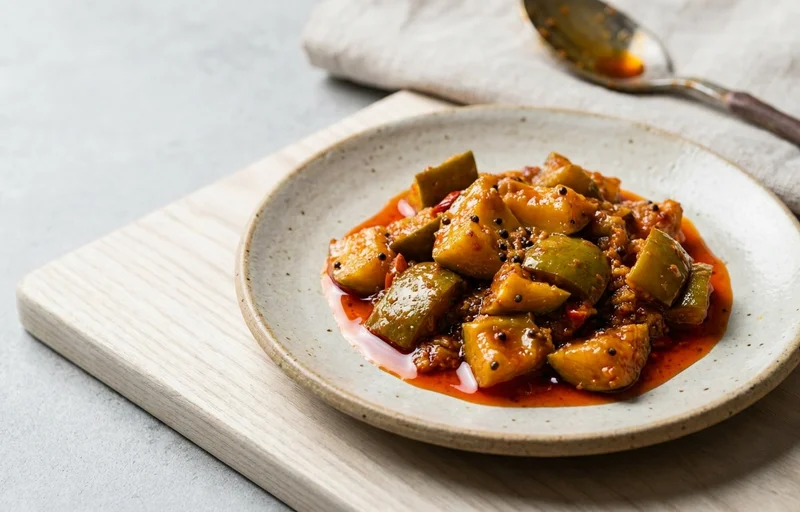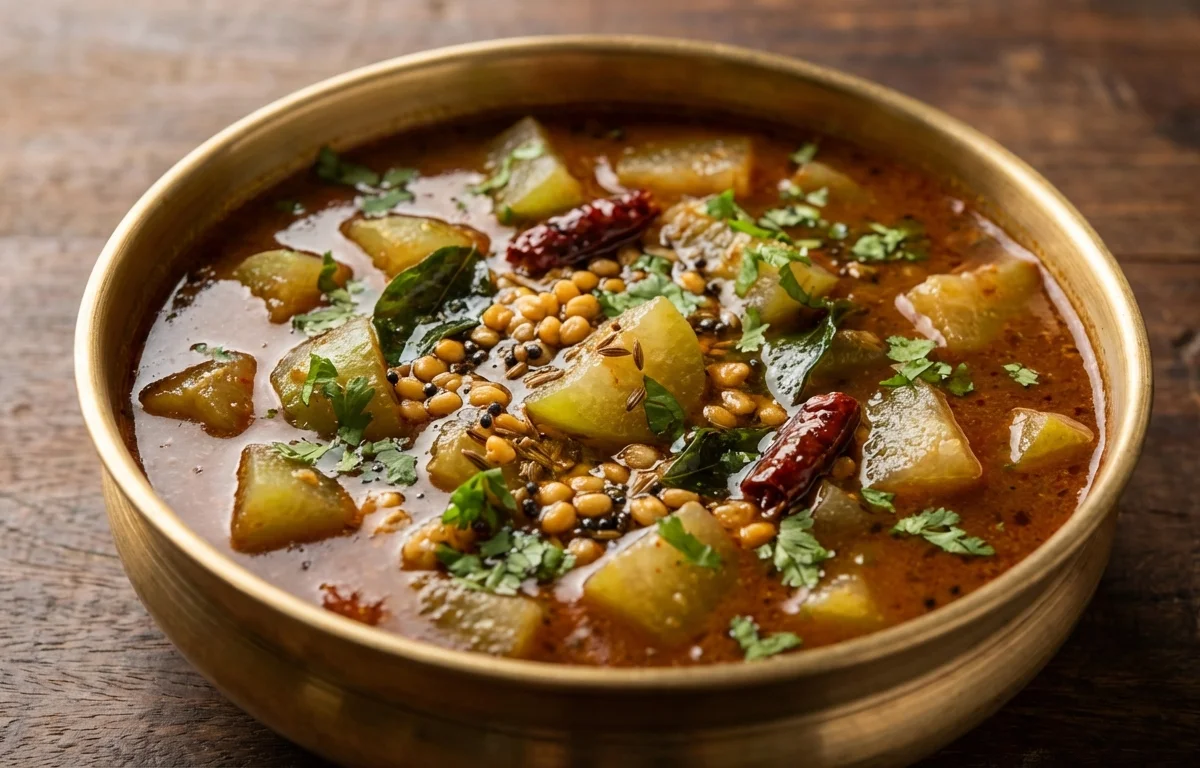
Sorakaya Pulusu
A comforting Andhra-style bottle gourd stew with tamarind, onion, and gentle spices. It cooks into a light tangy gravy that pairs beautifully with hot rice and makes a simple everyday meal feel special.
For 4 servings
- prep · ~15 min
Prepare the tamarind and vegetables.
1.Soak the tamarind in a little warm water for 10 minutes.2.Squeeze well and strain to get a smooth tamarind extract.3.Peel the bottle gourd, remove seeds if mature, and cut into medium cubes.4.Slice the onion, chop the tomato, slit the green chilies, and crush the garlic. - temper · ~2 min
Make the tempering.
1.Heat oil in a pot over medium heat.2.Add mustard seeds and let them splutter.3.Add cumin seeds, fenugreek seeds, dried red chili, and curry leaves.4.Cook for a few seconds until fragrant.TIPKeep the heat moderate once the fenugreek goes in so it does not turn bitter. - saute · ~8 min
Cook the onion and tomato base.
1.Add onion and sauté until lightly soft, about 3 to 4 minutes.2.Add green chilies and crushed garlic, then cook for 1 minute.3.Add tomato and cook until it turns soft and pulpy.4.Stir in turmeric powder, red chili powder, and coriander powder. - simmer · ~15 min
Simmer the bottle gourd in the gravy.
1.Add the bottle gourd cubes and mix well with the masala.2.Pour in the tamarind extract and water.3.Add salt and jaggery, then bring the pot to a gentle boil.4.Cover and cook until the bottle gourd is tender and the pulusu tastes balanced, about 12 to 15 minutes.TIPBottle gourd releases water as it cooks, so keep the gravy slightly loose at first. - garnish
Garnish with cilantro.
- serve
Serve hot with rice.
What to keep in mind.
7 tips from the recipe — small details that make a real difference to the final dish.
- 1Choose a tender bottle gourd; mature pieces can stay stringy even after simmering.
- 2Keep the fenugreek to just a pinch and temper it on medium heat so the pulusu does not turn bitter.
- 3Add the tamarind extract only after the onion-tomato base softens well, so the gravy tastes rounded instead of sharp.
- 4Cut the bottle gourd into even medium cubes so they cook through at the same time without turning mushy.
- 5Start with a slightly loose gravy because bottle gourd releases water as it cooks.
- 6Taste at the end and adjust with a touch more jaggery or tamarind to get the classic Andhra sweet-tangy balance.
- 7This pulusu tastes even better after 20 to 30 minutes of resting, once the bottle gourd absorbs the tamarind gravy.
Adapt it for your goals.
No-garlic
Skip the garlic for a simpler, sattvic-style version that still keeps the tangy tamarind and curry leaf flavor.
spicierSpicier
Add one extra green chili or a little more red chili powder if you prefer a sharper Andhra-style heat.
with moong dalWith-moong-dal
Add a small amount of cooked moong dal for a slightly heartier pulusu with a softer, thicker texture.
jainJain
Omit onion and garlic, and rely on tomato, green chili, tamarind, and tempering for a lighter but flavorful version.
Why this is on our healthy list.
Hydrating Vegetable Base
Bottle gourd is a water-rich vegetable, making this stew feel light and soothing while still being filling with rice.
Gentle, Lower-Oil Cooking
The recipe uses only a small tempering of oil, so most of the body comes from vegetables and simmering rather than heavy fat.
Plant Ingredients with Digestive Spices
Cumin, fenugreek, curry leaves, garlic, and tamarind bring traditional flavor along with ingredients commonly used in everyday digestive cooking.
Frequently asked questions
It should turn tender enough to pierce easily with a spoon or knife, but the cubes should still hold their shape in the gravy.




.webp)