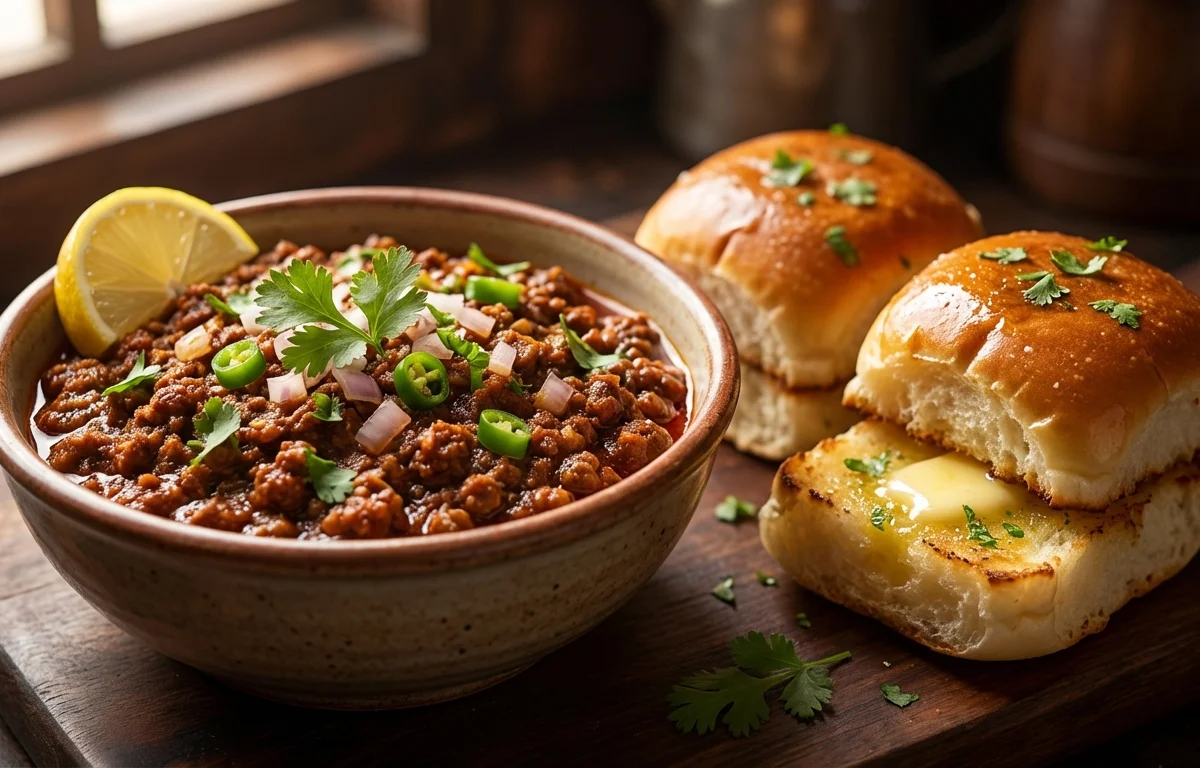
Soya Keema Pav
Spicy, crumbly soya granules cooked with onions, tomatoes, and warm spices until rich and hearty — a vegetarian twist on the classic keema pav. Piled into soft, butter-toasted dinner rolls with a squeeze of lime and fresh onion, it's soul-satisfying street food right from your kitchen.
For 4 servings
- prep · ~12 min
Soak the soya granules.
1.Bring 4 cups of water to a rolling boil in a saucepan.2.Add the dried soya granules to the boiling water and turn off the heat.3.Soak for 10 minutes, then drain in a colander.4.Rinse under cold water and squeeze out all excess moisture.TIPSqueezing out all the water is essential — wet granules make a mushy keema. - saute · ~11 min
Cook the aromatics.
1.Heat oil in a heavy-bottomed pan over medium heat.2.Add cumin seeds and let them splutter for 30 seconds.3.Add chopped onions and sauté until deep golden brown, about 7 to 8 minutes.4.Add ginger-garlic paste and slit green chilies. Sauté for 1 minute until the raw smell disappears.5.Add chopped tomatoes and stir well.TIPPatience here builds flavour — don't rush the browning of the onions. - simmer · ~7 min
Spice and cook the tomato masala.
1.Sprinkle turmeric powder, red chili powder, coriander powder, and cumin powder over the tomato mixture.2.Add salt and mix well.3.Cover and cook on low heat for 5 to 7 minutes until tomatoes soften and oil begins to separate. - saute · ~6 min
Add soya granules to the masala.
1.Add the squeezed soya granules to the pan.2.Stir well to coat the granules evenly with the masala.3.Sauté on medium-high heat, stirring frequently, for 5 minutes until the mixture looks dry and slightly toasted.TIPDry roasting the soya in the masala deepens the keema-like texture and absorbs all the spice flavours. - mix · ~1 min
Finish the keema.
Turn off the heat. Sprinkle garam masala, add fresh lemon juice and chopped coriander leaves. Mix gently.
- fry · ~3 min
Toast the pav.
1.Slice each pav horizontally without separating completely.2.Spread butter on the inner sides.3.Toast on a hot griddle or tawa, cut-side down, until golden and crisp, about 1 to 2 minutes per side. - assemble · ~2 min
Assemble the Soya Keema Pav.
1.Place two butter-toasted pav on each plate.2.Generously stuff each pav with the hot soya keema mixture.3.Top with a sprinkle of raw chopped onion.4.Serve immediately with a lemon wedge on the side.
What to keep in mind.
6 tips from the recipe — small details that make a real difference to the final dish.
- 1Squeeze soya granules thoroughly to avoid a watery, mushy keema.
- 2Brown the onions deeply for a richer, more complex masala base.
- 3Dry-roast the soya in the masala until it looks slightly toasted for a meaty texture.
- 4Use a heavy-bottomed pan to prevent the masala from sticking and burning.
- 5Toast the pav in butter on a hot tawa until golden and crisp for the best bite.
- 6Add garam masala only after turning off the heat to preserve its aromatic oils.
Adapt it for your goals.
High-protein
Add 1/2 cup of crumbled paneer or cooked chickpeas along with the soya granules for an extra protein boost. Ideal for post-workout meals or anyone looking to increase protein intake without meat.
veganVegan
Replace butter with a neutral oil or vegan butter for toasting the pav. The keema itself is already vegan. Perfect for those following a plant-based diet.
nut freeNut-free
This recipe is naturally nut-free as written. Serve as-is for a safe option for those with nut allergies.
gluten freeGluten-free
Serve the keema with gluten-free pav or flatbreads (like rice flour roti or gluten-free buns). Soya granules are naturally gluten-free, so the keema filling is safe.
Why this is on our healthy list.
High in Plant Protein
Soya granules (textured vegetable protein) are a complete plant protein, providing all essential amino acids, making this dish an excellent meat substitute.
Rich in Dietary Fiber
Onions, tomatoes, and soya granules contribute fiber that supports healthy digestion and helps maintain stable blood sugar levels.
Low in Saturated Fat
This vegetarian keema uses minimal oil and no animal fats, keeping saturated fat low while delivering bold, satisfying flavors.
Packed with Antioxidants
Spices like turmeric, cumin, and coriander powder are rich in antioxidants that help reduce inflammation and support overall wellness.
Frequently asked questions
Yes, but boil the chunks for 10 minutes then pulse them in a food processor until crumbly, similar to the texture of granules.