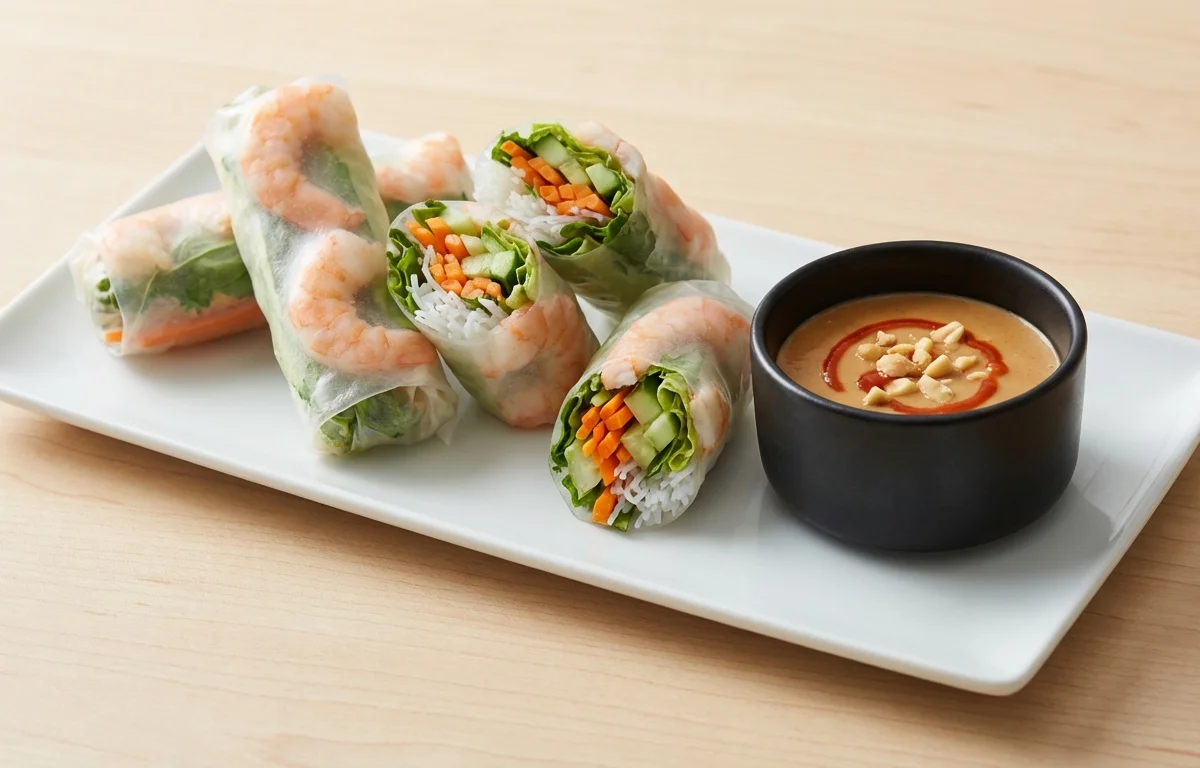
Spring Rolls with Peanut Sauce
Fresh, vibrant rice paper rolls stuffed with crisp vegetables, soft vermicelli noodles, and fragrant herbs. Paired with a creamy, savory peanut dipping sauce that has just the right balance of sweet, salty, and tangy. No cooking required except boiling water for the noodles — these come together in under 30 minutes for a light lunch or impressive appetizer.
For 4 servings
- prep · ~10 min
Prep all vegetables and herbs.
1.Julienne the carrot into thin matchsticks (2-3 inches long).2.Seed the cucumber, then julienne into thin matchsticks.3.Thinly slice the red bell pepper into long strips.4.Wash and dry the lettuce leaves, mint, and cilantro.TIPKeep prepped vegetables chilled in the fridge while you cook the noodles — cold veggies make for crisp, refreshing rolls. - boil · ~4 min
Cook the rice vermicelli.
1.Bring 4 cups of water to a rolling boil.2.Add a pinch of salt and the dried vermicelli.3.Boil for 3 to 4 minutes until tender but still firm.4.Drain and rinse under cold water to stop cooking.TIPDon't overcook the noodles — they should still have a slight bite. Rinsing in cold water stops them from turning mushy. - mix · ~3 min
Make the peanut dipping sauce.
1.In a small bowl, combine peanut butter, soy sauce, lime juice, rice vinegar, maple syrup, and minced garlic.2.Whisk until smooth and well combined.3.Add warm water 1 tablespoon at a time, whisking until the sauce is pourable but still creamy.4.Add a pinch of salt and whisk once more.TIPThe sauce thickens as it sits. If making ahead, thin with a little warm water just before serving to get the right dipping consistency. - assemble · ~8 min
Soften the rice paper and fill.
1.Pour warm water into a large shallow bowl.2.Dip one rice paper wrapper into the water for 5 to 8 seconds until just pliable.3.Lay the softened wrapper flat on a clean, damp cutting board.4.Place a lettuce leaf on the bottom third of the wrapper.5.Top with a small handful of vermicelli, a few strips of carrot, cucumber, bell pepper, and a few mint and cilantro leaves.TIPDon't over-soak the rice paper — it should still have a little firmness when you take it out. It continues softening as you add the filling. - assemble · ~7 min
Roll the spring rolls tightly.
1.Fold the bottom edge of the wrapper up and over the filling.2.Fold in both sides tightly toward the center.3.Roll forward firmly but gently until the roll is sealed.4.Repeat with remaining wrappers and filling.TIPKeep finished rolls covered with a barely damp kitchen towel to prevent them from drying out while you work on the rest. - serve · ~1 min
Slice and serve with peanut sauce.
1.Use a sharp knife to cut each roll in half diagonally.2.Arrange on a platter cut-side up.3.Serve immediately with the peanut dipping sauce on the side.TIPFor the cleanest cut, wipe the knife blade between each slice — this prevents the rice paper from tearing.
What to keep in mind.
6 tips from the recipe — small details that make a real difference to the final dish.
- 1Julienne all vegetables to a uniform thickness so they roll evenly without bulging.
- 2Keep the lettuce leaf centered at the bottom third of the wrapper to avoid tearing when folding.
- 3For extra crunch, add a thin slice of mango or jicama alongside the bell pepper.
- 4Pat cooked vermicelli completely dry with a clean towel to prevent soggy rolls.
- 5Taste a small dab of peanut sauce before serving; adjust salt or lime to balance sweet-salty-tangy.
- 6Assembled rolls can be stored in an airtight container lined with a damp paper towel for up to 4 hours.
Adapt it for your goals.
High-protein
Add sliced cooked shrimp, grilled chicken breast, or extra-firm tofu strips for a more filling meal that still stays light and refreshing.
veganVegan
This recipe is already vegan if you use maple syrup instead of honey — the peanut sauce is naturally dairy-free.
nut freeNut-free
Replace peanut butter with sunflower seed butter or tahini and omit the peanuts in the sauce to make these rolls safe for nut-allergic guests.
Why this is on our healthy list.
Rich in Vitamin A
Carrots provide beta-carotene, supporting healthy vision and immune function.
Low in Saturated Fat
The peanut sauce uses natural nut butter without added oils, and the rolls contain only fresh vegetables and rice noodles.
Hydrating Ingredients
Cucumber and lettuce contribute high water content, making these rolls refreshing and light.
Frequently asked questions
You likely soaked them too long — dip each wrapper for only 5 to 8 seconds and let it finish softening on the damp board.