Tamate ka Kut
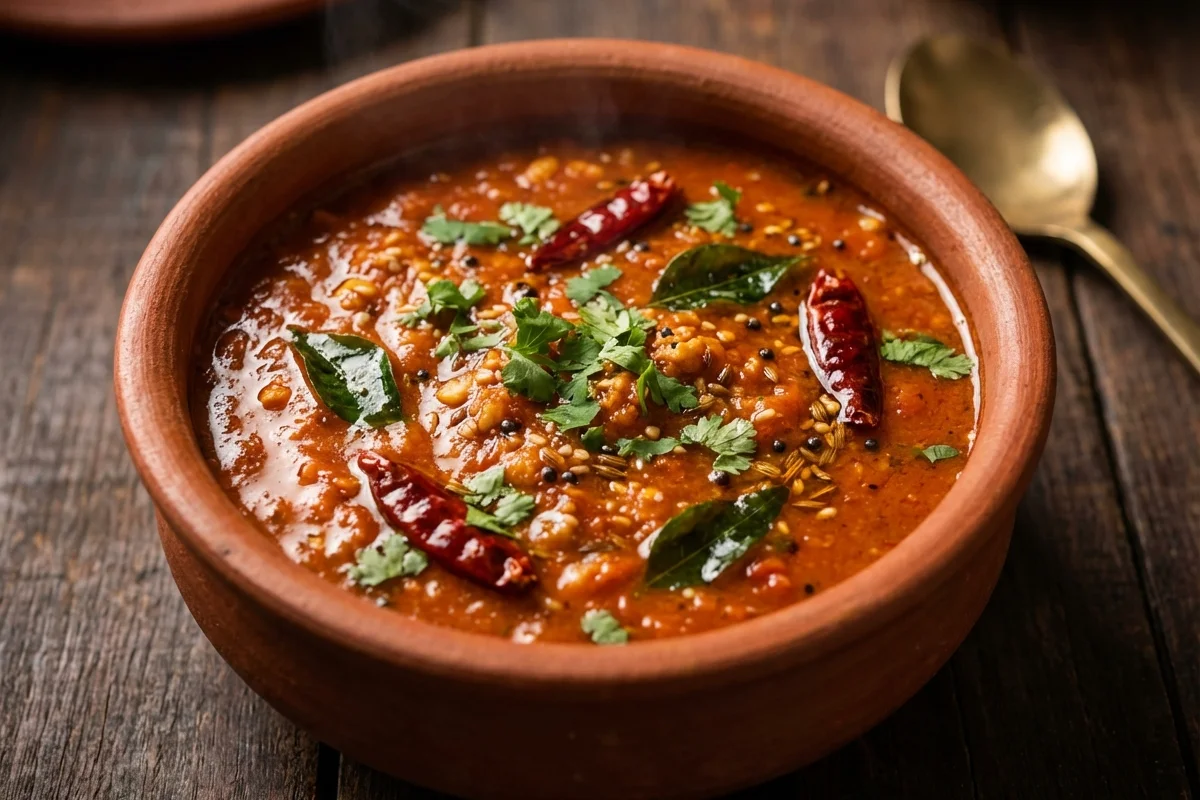
A simple hill-style tomato curry with a lightly tangy, spiced gravy thickened with roasted sesame and peanuts. This Kumaoni home classic is comforting, bold, and especially good with steamed rice or mandua roti.
For 4 servings
- roast · ~4 min
Roast the sesame and peanuts.
1.Heat a small dry pan on low heat.2.Add sesame seeds and roast until lightly fragrant and pale golden, about 1 minute.3.Add peanuts and roast until crisp and nutty, about 2 to 3 minutes.4.Cool slightly, then grind them to a coarse powder.TIPKeep the heat low so the sesame does not turn bitter. - saute · ~5 min
Cook the base.
1.Heat mustard oil in a pan until it just starts to smoke lightly, then reduce the heat.2.Add cumin seeds and let them sizzle for a few seconds.3.Add garlic and green chili, then sauté for 30 to 40 seconds.4.Add chopped tomato and mix well. - saute · ~7 min
Season and soften the tomatoes.
1.Add turmeric powder, red chili powder, coriander powder, and salt.2.Cook the tomatoes on medium heat, stirring often, until they turn soft and pulpy.3.Mash the tomatoes lightly with the back of the spoon as they cook.TIPCook until the raw tomato smell is gone for the best flavor. - simmer · ~5 min
Add the nut-seed powder and simmer.
Stir in the roasted sesame-peanut powder and add water. Mix until smooth, then simmer for 4 to 5 minutes until the kut thickens to a spoon-coating consistency.
- garnish
Finish with coriander leaves.
- serve
Serve hot with steamed rice or roti.
What to keep in mind.
7 tips from the recipe — small details that make a real difference to the final dish.
- 1Roast the sesame only to pale golden; darker seeds can make the kut taste bitter.
- 2Let the mustard oil smoke lightly first to mellow its raw sharpness before tempering cumin.
- 3Mash the tomatoes as they soften so the gravy turns rustic and naturally thick.
- 4Grind the roasted peanuts and sesame coarsely, not to a paste, for better body and texture.
- 5Add the nut-seed powder only after the tomatoes are fully pulpy, or the gravy can taste raw.
- 6If the kut thickens too much on standing, loosen it with a splash of hot water before serving.
- 7This tastes even better after a short rest, when the tangy tomato and nutty flavors settle together.
Adapt it for your goals.
Jain
Skip garlic and use a pinch more cumin and green chili for a simpler but still punchy tomato gravy.
low oilLow-oil
Use less mustard oil and add a spoonful of water while sautéing; good if you want a lighter everyday version.
spicierSpicier
Increase green chili or red chili powder for a sharper heat that stands up well to rice and mandua roti.
smoother gravySmoother-gravy
Blend the cooked tomatoes before adding the sesame-peanut powder if you prefer a less rustic texture.
Why this is on our healthy list.
Tomato-Rich Dish
Tomatoes bring natural acidity and are a good source of plant compounds associated with a colorful, vegetable-forward meal.
Healthy Fats and Texture
Sesame seeds and peanuts contribute satisfying fats and make the curry filling without needing cream or butter.
Plant-Based Protein Boost
Peanuts and sesame add some plant protein, making this simple tomato curry more sustaining with rice or roti.
Frequently asked questions
Yes. Increase the sesame slightly or use only sesame for thickening, though the curry will be a bit less rich and rounded.