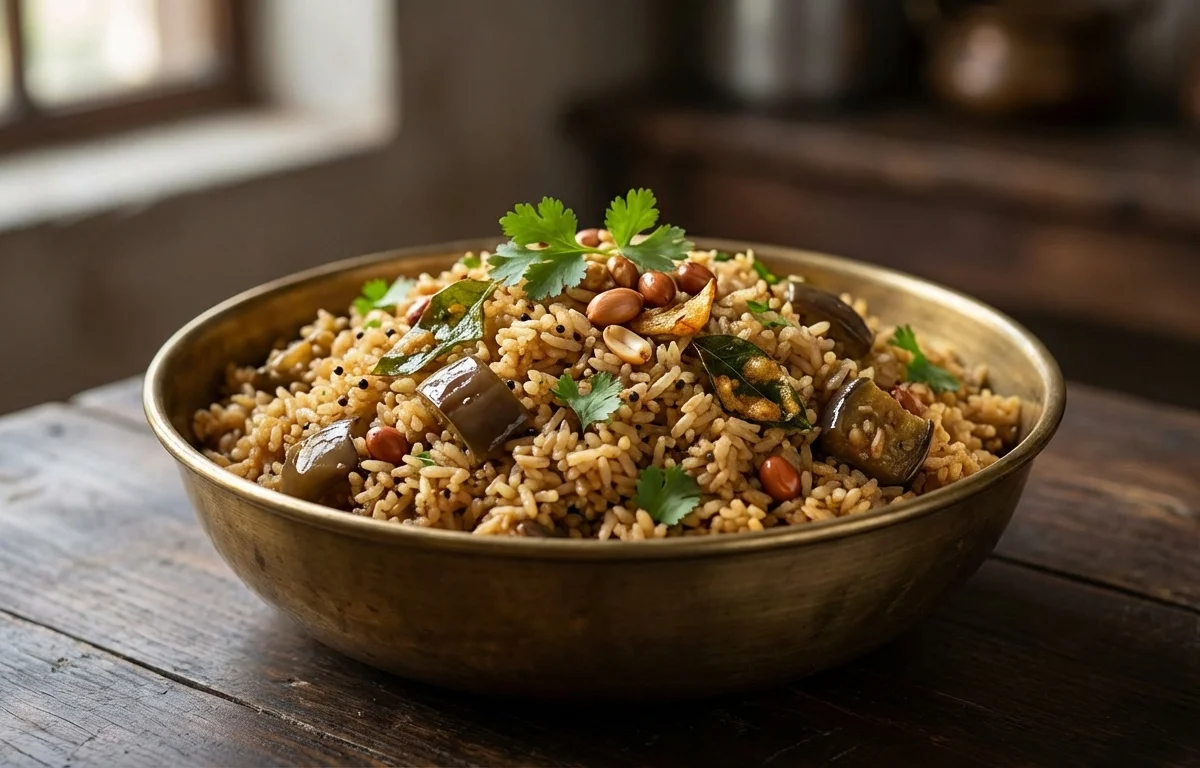
Vangi Bath
A fragrant Karnataka-style rice dish where tender eggplant is cooked with tamarind, spices, and peanuts, then mixed through fluffy rice. It is savory, gently tangy, and perfect as part of a simple lunch with raita or papad.
For 4 servings
- prep · ~20 min
Soak the rice and cut the eggplant.
1.Rinse the rice well until the water runs mostly clear.2.Soak the rice in fresh water for 20 minutes, then drain.3.Cut the eggplant into medium cubes and keep it ready.4.Slice the onion thinly and chop the cilantro. - boil · ~15 min
Cook the rice until fluffy.
Bring 2.5 cups water to a boil with half of the salt. Add the drained rice, cook until just done, then spread it on a plate or tray to cool so the grains stay separate.
TIPDo not overcook the rice. Slightly firm grains hold up better when mixed with the masala. - roast · ~7 min
Roast the spices for the vangi bath powder.
1.Heat a small pan over low to medium heat.2.Add peanuts, chana dal, urad dal, coriander seeds, cumin seeds, sesame seeds, dried coconut, dried red chili, and fenugreek seeds.3.Roast until the dals turn golden and the mixture smells nutty, stirring often.4.Cool completely, then grind to a coarse powder.TIPKeep the heat moderate so the coconut and spices do not burn. - temper · ~6 min
Make the tempering.
1.Heat oil in a wide pan over medium heat.2.Add mustard seeds and let them splutter.3.Add curry leaves and asafoetida.4.Add the sliced onion and cook until soft and lightly golden. - saute · ~12 min
Cook the eggplant with tamarind and spices.
1.Add the eggplant to the pan and mix well with the onion.2.Add turmeric powder, red chili powder, and the remaining salt.3.Stir in tamarind paste, jaggery, and 0.5 cup water.4.Cover and cook until the eggplant is soft but still holds its shape.TIPStir gently so the eggplant cooks evenly without turning mushy. - mix · ~4 min
Add the spice powder and rice.
1.Sprinkle the ground vangi bath powder over the cooked eggplant mixture.2.Cook for 1 minute so the powder loses its raw edge.3.Add the cooled rice and fold gently until all the grains are evenly coated. - rest · ~5 min
Cover and rest for 5 minutes.
- garnish
Garnish with cilantro.
- serve
Serve the vangi bath warm.
What to keep in mind.
6 tips from the recipe — small details that make a real difference to the final dish.
- 1Spread the cooked rice out while still warm so steam escapes and the grains do not clump when mixed.
- 2Keep the roasted spice mixture coarse, not very fine, so the vangi bath gets texture from peanuts, dal, and sesame.
- 3Cut the eggplant into evenly sized cubes so it softens at the same rate and does not collapse unevenly.
- 4Cook the tamarind-jaggery mixture until the raw tamarind smell fades before adding rice.
- 5Rest the mixed rice for 5 to 10 minutes before serving so the masala fully coats and flavors the grains.
- 6If making ahead, store the rice and brinjal masala separately and combine just before serving for the best texture.
Adapt it for your goals.
Low-oil
Use less oil, dry-roast the spice ingredients carefully, and cook the eggplant covered with a splash more water for a lighter version.
no onionNo-onion
Skip the onion for a simpler, more traditional temple-style feel; the tamarind-spice powder still gives plenty of flavor.
extra peanutExtra-peanut
Add more peanuts or a spoon of roasted peanut powder if you like a richer, nuttier Karnataka-style vangi bath.
milletMillet
Replace rice with cooked little millet or foxtail millet for a heartier grain and a different texture.
Why this is on our healthy list.
Fiber From Eggplant
Eggplant adds fiber and bulk to the dish, making the rice meal feel more balanced and satisfying.
Plant-Based Protein Boost
Peanuts, chana dal, urad dal, and sesame contribute plant protein along with texture and richness.
Spice-Driven Flavor
Coriander, cumin, curry leaves, turmeric, and tamarind bring strong flavor, so the dish tastes full without needing heavy sauces.
Frequently asked questions
Usually the rice was overcooked, too hot when mixed, or the eggplant was stirred too much. Cook the rice just until done, cool it well, and fold gently.