Varan Phal
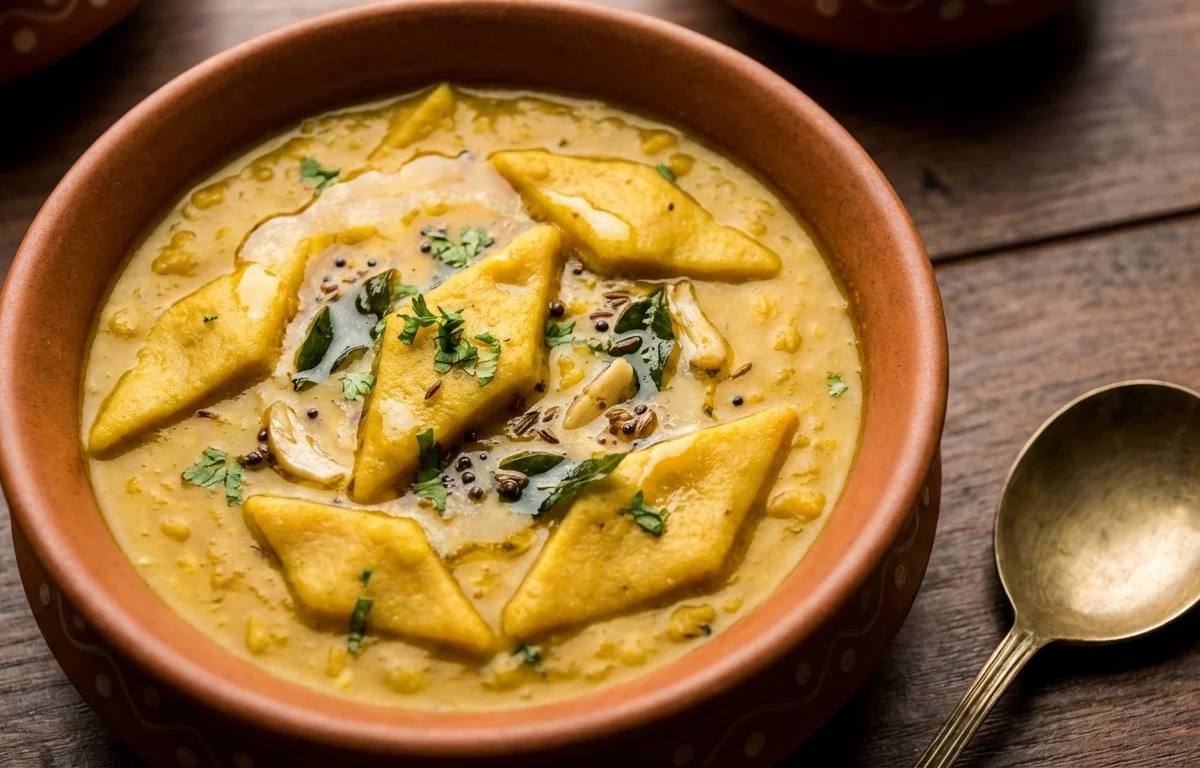
A comforting Maharashtrian one-pot dish where soft wheat flour dumplings simmer in a lightly spiced toor dal. It is simple, filling, and full of home-style flavor with ghee, peanuts, and a touch of jaggery.
For 4 servings
- pressure cook · ~25 min
Cook the dal until soft.
1.Add toor dal, 4 cups water, turmeric powder, and peanuts to a pressure cooker.2.Cook on medium heat for 4 whistles until the dal turns soft and mashable.3.Let the pressure release naturally, then open and lightly mash the dal.TIPA soft dal base helps the wheat dumplings cook evenly and gives the dish its silky texture. - knead · ~15 min
Knead the dough for the phal.
Mix whole wheat flour, oil, and half of the salt in a bowl. Add water little by little and knead into a firm but smooth dough. Cover and rest for 10 minutes.
- prep · ~8 min
Roll and cut the phal pieces.
1.Divide the dough into 2 portions.2.Roll each portion into a medium-thin circle on a lightly floured surface.3.Cut into small diamonds or squares so they cook quickly in the dal.TIPDo not roll the dough too thick or the pieces will stay doughy in the center. - temper · ~2 min
Make the tempering.
1.Heat ghee in a large pot over medium heat.2.Add mustard seeds and let them splutter.3.Add cumin seeds, asafoetida, curry leaves, and green chili.4.Cook for a few seconds until fragrant. - simmer · ~7 min
Season the dal and bring it to a simmer.
Pour the cooked dal into the pot with the tempering. Add the remaining salt, jaggery, and tamarind paste. Mix well and bring to a gentle simmer. Add a little more water if the dal looks too thick.
- boil · ~15 min
Cook the phal in the simmering dal.
1.Drop the cut dough pieces into the simmering dal one by one.2.Stir gently so they do not stick to each other.3.Cook uncovered on low heat until the pieces are soft and cooked through.TIPStir only once or twice after adding the dough pieces so they keep their shape. - garnish
Garnish with coriander leaves.
- serve
Serve hot in katoris.
What to keep in mind.
7 tips from the recipe — small details that make a real difference to the final dish.
- 1Mash the cooked toor dal lightly, not fully smooth, so the phal stay suspended instead of sinking into a thin broth.
- 2Keep the wheat dough firmer than chapati dough; a soft dough can break apart once it hits the simmering dal.
- 3Cut the phal into small, even diamonds so they cook through at the same rate and don't turn gummy at the edges.
- 4Bring the dal to a gentle simmer before adding the dough pieces; a hard boil can tear the phal and make the pot starchy.
- 5Drop the phal in one by one and stir only once or twice, otherwise the pieces can clump or lose their shape.
- 6If the dish thickens on standing, loosen it with hot water and simmer briefly, because the phal and dal keep absorbing liquid.
- 7This tastes even better after a short rest of 10 minutes, which lets the jaggery, tamarind, and tempering settle into the dal.
Adapt it for your goals.
Vegan
Replace ghee with peanut oil or another neutral oil for a fully plant-based version that still suits the dish's rustic flavor.
spicierSpicier
Add extra slit green chilies or a pinch of red chili powder in the tempering if you want a sharper, hotter dal.
peanut freePeanut-free
Skip the peanuts if needed for allergy concerns; the dal will still be hearty, just slightly less nutty and textured.
garlic temperingGarlic-tempering
Add a few sliced garlic cloves to the tempering for a more robust everyday version with deeper savory notes.
Why this is on our healthy list.
Protein-Rich Comfort Meal
Toor dal and peanuts add plant protein, making this one-pot dish more sustaining than a plain flour-based meal.
Good Fiber From Dal and Wheat
Whole wheat flour and split pigeon peas provide fiber that helps make the dish filling and satisfying.
Balanced Sweet-Tangy Seasoning
The small amount of jaggery and tamarind adds complexity, so the dish feels flavorful without relying on heavy masalas.
Digestive Tempering Elements
Cumin, asafoetida, curry leaves, and ginger-free light tempering are traditionally used to make lentil dishes feel easier to enjoy.
Frequently asked questions
They will look slightly puffed, lose any raw floury look, and feel soft but not mushy when pressed with a spoon.



.webp)