The apple is the fruit we never think twice about — which is exactly why it’s underrated. It’s crisp, portable, endlessly available, and quietly one of the best-behaved carbohydrates you can put in your body. The catch is small but real: almost everything good about an apple lives in the part people are tempted to throw away.
↑ A whole apple, skin on — where most of the fiber and polyphenols live.
WHAT THIS ARTICLE COVERS
- 01The whole-fruit advantage
- 02Apple nutrition facts
- 03The macro breakdown
- 04Why the skin matters
- 05One of the lowest-GI foods
- 06Apple vs. apple juice
- 07The smart way to eat one
- 08What apples are good for
- 09What to pair an apple with
- 10Eat freely — or be mindful?
- 11Three recipes to start with
- 12Frequently asked questions
The whole-fruit advantage
An apple is roughly 86% water, with the rest made up almost entirely of carbohydrate — and that carbohydrate behaves remarkably well. Its sugar is locked inside a sturdy cell structure and bound up with fiber, so it’s released slowly. Eat the same sugar as juice and the story changes completely.
That’s the theme of this whole profile: an apple is a near-perfect snack as long as you eat it whole, skin and all. Peel it, juice it, or cook it down to sauce and you progressively strip away the very things that make it good.
IN ONE LINE
A whole apple is a low-glycemic, high-fiber hit of vitamin C and polyphenols — most of which live in the skin, so eat it unpeeled.
Apple nutrition facts
Here’s what one medium apple — about 182 grams, eaten with the skin — provides.
The standout numbers are the fiber and the glycemic load. At 4.4 grams of fiber and a glycemic load of about 6, a medium apple is one of the gentlest carbohydrate snacks you can choose — which is why dietitians reach for it so often.
The macro breakdown
Like most fruit, an apple is essentially a carbohydrate food with trace protein and fat. What sets it apart is the ratio inside those carbs: a meaningful slice is fiber, not sugar.
76%
Sugars · ~19 g
Mostly fructose, held inside the fruit’s cell walls so it’s released slowly.
17%
Fiber · ~4.4 g
Soluble pectin plus insoluble fiber — much of it concentrated in the skin.
7%
Other · ~1.5 g
Small amounts of starch, organic acids and the polyphenols that fight browning.
WORTH KNOWING
About a third of an apple’s fiber is pectin — a soluble fiber that forms a gel in your gut, slows digestion, and feeds beneficial bacteria.
Why the skin matters
It’s tempting to peel an apple, especially for kids — but the peel is where much of the value sits. The skin holds a large share of the apple’s fiber and the overwhelming majority of its polyphenols, the plant compounds linked to the fruit’s antioxidant activity. Peel the apple and you throw a lot of that away along with the fiber that keeps its sugar in check.
The single best thing you can do with an apple is the easiest: leave the skin on. That one habit decides whether you’re eating a high-fiber snack or just sweetened water.
— Dr. Lena Hoff, RD
One of the lowest-GI foods
Glycemic index (GI) ranks how fast a food raises blood sugar on a 0–100 scale: under 55 is low, 56–69 medium, 70+ high. A whole apple lands around 36 — genuinely low, and lower than almost every other common fruit. Put it alongside everyday foods and the contrast is striking.
GLYCEMIC INDEX · WHOLE APPLE vs. COMMON FOODS
An apple is one of the lowest-GI everyday foods
Apple (whole)
whole fruit
LOW
Orange
whole fruit
LOW
Banana (ripe)
whole fruit
LOW
White bread
refined
HIGH
Cornflakes
refined
HIGH
SCALE 0–90
04590
Glycemic load — which accounts for portion — tells the same story even more strongly: a medium apple’s GL is only about 6, comfortably low. In practice, a whole apple is one of the safest carbohydrate snacks for steady energy.
Apple vs. apple juice
Here’s where most of the damage happens. A whole apple and a glass of apple juice can contain similar sugar, but they behave like two different foods. Juicing removes the fiber and ruptures the cell structure, so the sugar arrives fast and free. The fix is simple: eat apples, don’t drink them — and pair them with a little fat or protein.
BLOOD-SUGAR RESPONSE
Whole, juiced, or paired — three different curves
Apple juice on an empty stomach
Whole apple, eaten alone
Whole apple + nut butter or cheese
The smart way to eat one
An apple needs almost no instructions — but these few habits get you the most from it.
01
Always eat the skin.
It carries much of the fiber and nearly all of the polyphenols. Give it a rinse and bite in — peeling is the one thing that genuinely lowers an apple’s value.
02
Choose whole over juice or sauce.
A whole apple beats juice every time, and beats most applesauce too. If you do buy sauce, choose unsweetened.
03
Pair it with fat or protein.
A few nuts, a spoon of nut butter, or a slice of cheese turns an apple into a balanced, lasting snack and softens the blood-sugar response even further.
04
Keep it cold and cut it late.
Apples are crispest chilled. If you slice ahead, a squeeze of lemon keeps the cut surface from browning thanks to its vitamin C.
05
Use tart apples for cooking.
Firmer, tart varieties hold their shape and need less added sugar when baked — let the fruit’s own sweetness do the work.
What apples are good for
01
Supports heart health
Apples are rich in soluble fiber and flavonoids, both associated with healthier cholesterol levels and cardiovascular health in large population studies.
4.4 g
fiber
02
Steady, low-glycemic energy
With a GI around 36 and a glycemic load near 6, an apple delivers carbohydrate without the spike-and-crash of refined snacks.
GI 36
low
03
Feeds your gut
The pectin in apples is a prebiotic soluble fiber — it forms a gel in the gut and acts as food for beneficial bacteria.
~1.5 g
pectin
04
Hydration and vitamin C
An apple is about 86% water and supplies a useful dose of vitamin C, which supports immune function and helps the body absorb iron.
~86%
water
05
Naturally filling
Fiber, water and the simple act of chewing make a whole apple surprisingly satisfying for its calorie count — a genuinely useful snack when you’re hungry between meals.
95
calories
What to pair an apple with
Apple’s clean sweetness and acidity make it one of the most pairing-friendly fruits. Adding fat or protein turns it into a proper snack and keeps energy steady.
Eat freely — or be mindful?
Three recipes to start with
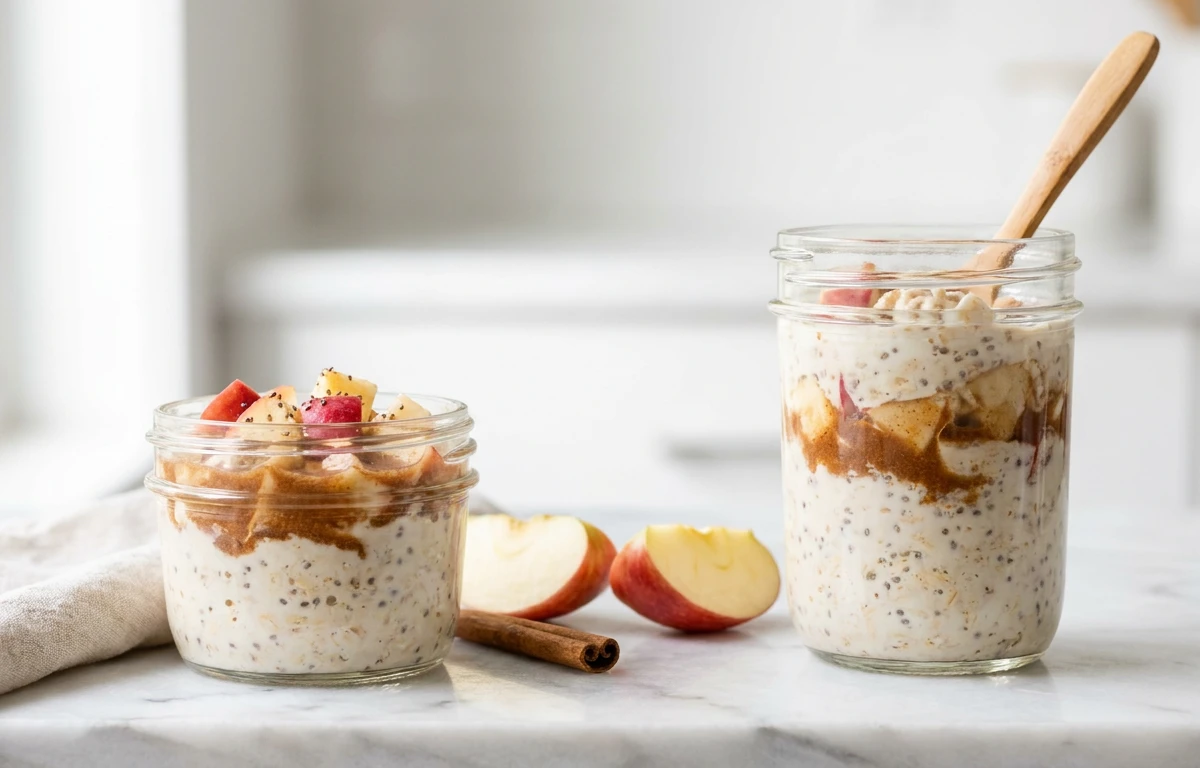
Three easy ways to eat an apple well — each leaning on the fruit’s own sweetness so you add little or no sugar.

Want low-GI snacks like this built into your week?
Our meal planner pairs fruit with protein and fibre for steady energy, with portions and macros calculated and a single grocery list at the end.
Build my weekly plan →One more thing
Eating well is rarely about willpower. It’s about having a short list of dinners you actually want to eat. Pick two from this list. Make them next week. The rest will follow.
If you want these on autopilot, our weekly meal planner can drop the picks above into your calendar with one click and build a single grocery list from the merged ingredients.
FREQUENTLY ASKED QUESTIONS
Frequently asked questions
Do apples really spike blood sugar?
A whole apple barely does — its GI is around 36 and its glycemic load about 6, both low. Apple juice is a different matter: stripped of fiber, its sugar is absorbed fast. Eat apples whole and you get steady energy.
Should I peel apples?
No. The skin holds much of the fiber and nearly all of the polyphenols. Peeling removes the most valuable part — just rinse the apple and eat it whole.
Can people with diabetes eat apples?
Generally yes. A whole apple is low-GI and a sensible choice in normal portions, especially paired with protein or fat such as nuts or cheese. Fit it to your own targets and check with your care team.
Is apple juice as healthy as a whole apple?
No. Juicing removes the fiber and ruptures the fruit’s structure, so the sugar behaves much more like a soft drink. A whole apple is far better — treat juice as an occasional treat.
How many apples a day is fine?
One to two apples a day fits easily into a healthy diet. They’re high in fructose, so people with sensitive (FODMAP) guts may find large amounts uncomfortable.
METHODOLOGY
How this article was created
Built using verified nutrition databases, culinary research, and traditional cooking knowledge — every claim is cross-referenced against the sources listed in the article.
· USDA data· Culinary research· Quality reviewed
Read our methodology →TRANSPARENCY
About this content
Articles are curated using trusted food databases (USDA FoodData Central, IFCT), culinary literature, and dietary guidelines, then structured by our editorial team for clarity, accuracy, and usefulness.
· Verified data sources· Culinary research· Quality reviewed
Read our editorial policy →RELATED RECIPES
Cook from this article
EXPLORE OUR MEALS
Meals that fit this article

AMERICAN · 1677 CAL
Almonds with Sliced Apple + supplement + iron

MEDITERRANEAN · 809 CAL
Greek Yogurt with Berries Almonds and Granola + supplement + iron

GENERAL_HEALTHY · 705 CAL
Banana with Peanut Butter Pregnancy + supplement + iron

MODERN · 982 CAL
Hummus with Crudits and Pita with Fresh Orange Snack + supplement + iron
TAGGED
KEEP READING