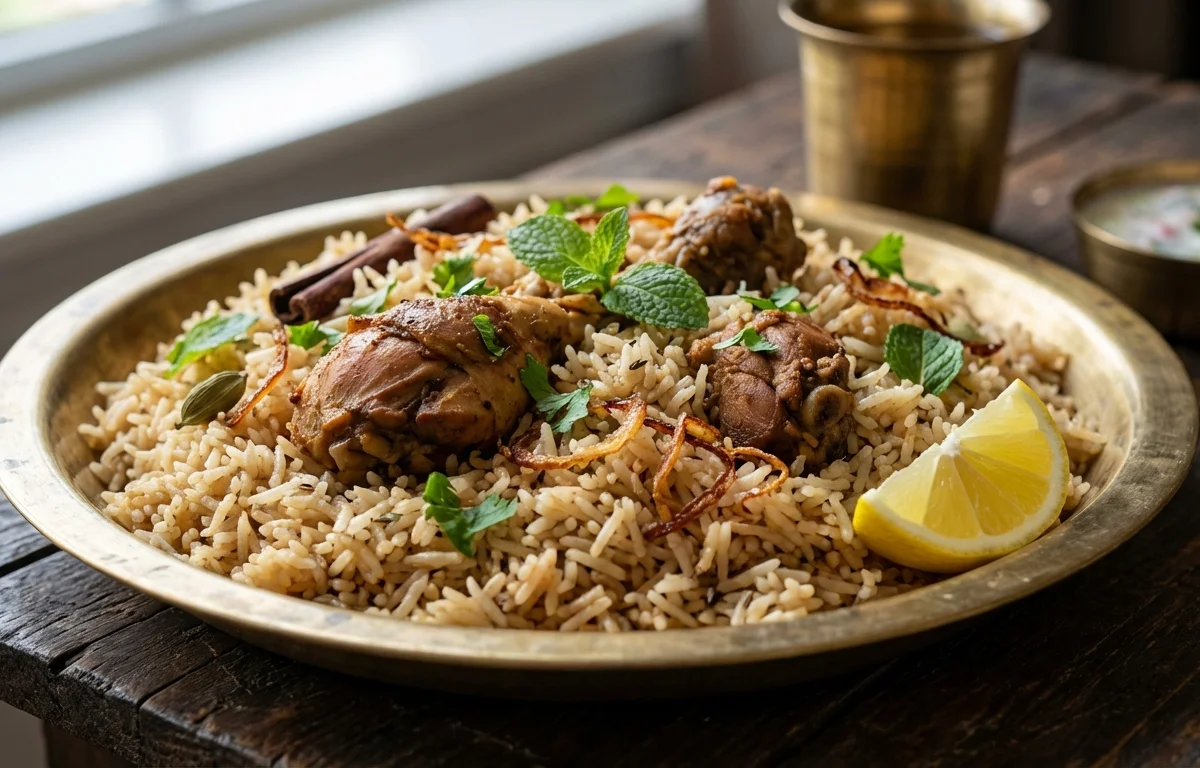
Ambur Chicken Biryani
Fragrant Seeraga samba rice cooked with chicken, curd, mint, and a red chili-spice paste gives this Tamil Nadu biryani its signature depth. It is lighter than many richer biryanis, with bold flavor in every spoonful.
For 4 servings
- prep · ~30 min
Soak the rice and make the chili paste.
1.Wash the seeraga samba rice until the water runs mostly clear.2.Soak the rice in fresh water for 30 minutes, then drain.3.Soak the dried red chili in warm water for 10 minutes.4.Grind the softened red chili with a little soaking water to a smooth paste.TIPSeeraga samba rice cooks faster than basmati, so do not soak it longer or it can turn soft. - saute · ~11 min
Cook the whole spices and onions.
1.Heat oil and ghee in a heavy pot over medium heat.2.Add cinnamon, cloves, green cardamom, and bay leaf and cook until fragrant, about 30 seconds.3.Add the sliced onion and cook until soft and lightly golden, 8 to 10 minutes.4.Add the slit green chili and stir for 30 seconds.TIPDo not deeply brown the onions; Ambur biryani gets its flavor from a softer, masala-rich base. - saute · ~8 min
Build the chicken masala.
1.Add the ginger-garlic paste and cook until the raw smell fades, about 1 minute.2.Add the red chili paste and cook for 2 minutes, stirring often.3.Add the chopped tomato and cook until soft and pulpy, 4 to 5 minutes.4.Add the chicken and salt, then mix well so the pieces are coated. - simmer · ~15 min
Simmer the chicken with yogurt and herbs.
1.Add the whisked yogurt and mix well.2.Add the mint and coriander leaves and stir to combine.3.Cover and cook the chicken on medium-low heat until it is about three-quarters done and releases its juices, 12 to 15 minutes.4.Stir once or twice to keep the masala from catching at the bottom.TIPKeep the heat gentle after adding yogurt so it blends smoothly into the masala. - boil · ~5 min
Add water and bring the pot to a boil.
Pour in the water and lemon juice, then bring everything to a lively boil. Taste the liquid and adjust only if needed before adding the rice.
- boil · ~8 min
Cook the rice in the masala.
Add the drained rice and stir gently once. Cook uncovered over medium heat until most of the liquid is absorbed and the rice rises to the surface, 6 to 8 minutes.
TIPStir only once after adding the rice to keep the grains from breaking. - rest · ~25 min
Cover and cook on dum.
Reduce the heat to very low, cover the pot tightly, and cook for 15 minutes. Turn off the heat and let the biryani rest, still covered, for 10 minutes more.
TIPA tight lid traps steam and finishes the rice evenly without making the biryani wet. - serve
Fluff the biryani and serve hot.
Open the pot, gently fluff from the sides with a flat spoon, and serve the Ambur chicken biryani hot.
What to keep in mind.
7 tips from the recipe — small details that make a real difference to the final dish.
- 1Use a heavy-bottomed pot so the yogurt-chicken masala does not scorch during the simmer.
- 2Cook the onions only to light golden; dark onions will push the biryani toward a sweeter, heavier flavor.
- 3If your dried red chilies are very hot, remove some seeds before grinding to keep the heat balanced.
- 4Make sure the chicken is only about three-quarters cooked before the rice goes in, so it finishes perfectly on dum.
- 5Taste the boiling liquid before adding rice; the broth should taste slightly salty since the rice will absorb it.
- 6Once the rice is added, avoid repeated stirring or the delicate seeraga samba grains can turn mushy.
- 7Resting the biryani after dum is essential; it lets the grains firm up and the masala settle evenly.
Adapt it for your goals.
Low-oil
Reduce the oil slightly and rely on the chicken's own juices plus a smaller spoon of ghee for a lighter but still aromatic biryani.
extra spicyExtra-spicy
Add a couple more dried red chilies to the paste or one more slit green chili if you want a fiercer Ambur-style heat.
muttonMutton
Swap chicken for bone-in mutton, but cook the meat much longer before adding rice since mutton needs more time to become tender.
bonelessBoneless
Use boneless chicken for easier serving, but reduce the initial simmer slightly so the pieces do not overcook on dum.
Why this is on our healthy list.
Protein-Rich Main Dish
Chicken and yogurt make this biryani filling and help turn it into a substantial one-pot meal.
Herb-Forward Flavor
Mint and coriander add freshness and aroma, helping balance the heat and richness of the spiced chicken.
Moderate Fat Profile
Compared with richer biryanis heavy on fried onions or large amounts of ghee, this version uses a relatively restrained mix of oil and ghee.
Frequently asked questions
You can, but the texture and classic Ambur character will change. Basmati usually needs different water and cooking timing, so watch it closely.