Anjal Gassi
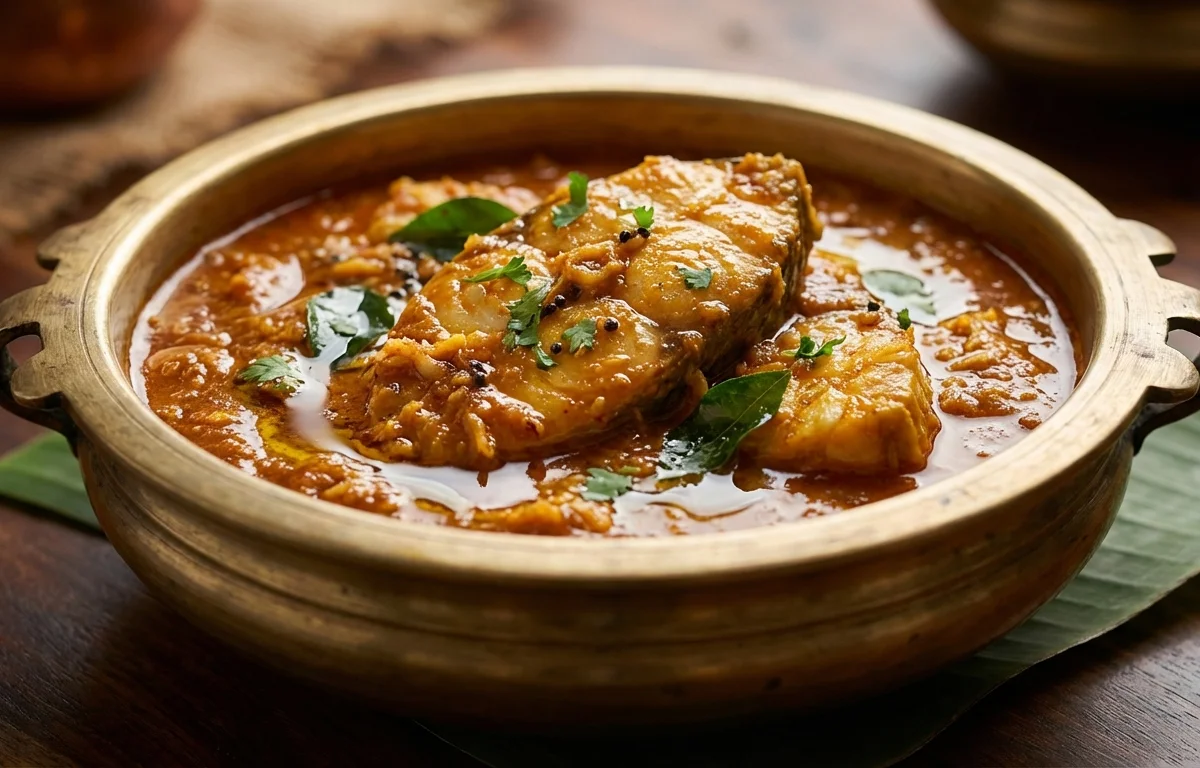
A coastal Mangalorean fish curry made with seer fish simmered in a smooth coconut and red chili gravy. It is gently tangy from tamarind, deeply spiced, and perfect with neer dosa or steamed rice.
For 4 servings
- prep · ~15 min
Prep the fish and tamarind.
1.Wash the seer fish and pat it dry.2.Rub the fish with a little of the salt and the turmeric meant for marinating.3.Set it aside for 15 minutes.4.Soak the tamarind in a little warm water and keep it ready.TIPHandle the fish gently so the pieces stay whole while simmering. - saute · ~4 min
Roast the spices and aromatics.
1.Heat 1 tsp oil in a pan over medium heat.2.Add dried red chili, coriander seeds, cumin seeds, black peppercorns, and fenugreek seeds.3.Roast for 1 to 2 minutes until fragrant without darkening too much.4.Add onion and garlic, and cook until lightly softened.TIPKeep the heat moderate because burnt fenugreek turns the curry bitter. - mix · ~3 min
Grind the masala.
Cool the roasted mixture slightly, then grind it with grated coconut, tamarind, the turmeric meant for the masala, and 1 cup water to a smooth paste.
- boil · ~6 min
Bring the curry base to a boil.
Pour the ground masala into a wide pan. Add the remaining water and the rest of the salt, then bring it to a gentle boil over medium heat, stirring so the coconut does not catch at the bottom.
- simmer · ~8 min
Cook the fish in the gravy.
Slide the fish pieces into the bubbling curry in a single layer. Add the remaining oil, cover loosely, and simmer for 6 to 8 minutes until the fish is just cooked and the gravy thickens slightly.
TIPDo not stir with a spoon after adding the fish; swirl the pan gently instead. - rest · ~5 min
Rest the curry before serving.
Turn off the heat and let the curry sit for 5 minutes so the fish absorbs the masala and the flavors settle.
- serve
Serve the Anjal Gassi hot.
What to keep in mind.
7 tips from the recipe — small details that make a real difference to the final dish.
- 1Pat the seer fish dry before marinating so the turmeric and salt cling well and the pieces stay firm in the curry.
- 2Roast the chilies and fenugreek only until fragrant; if they darken too much, the gassi will taste bitter instead of deep and rounded.
- 3Grind the coconut masala very smooth for the classic silky Mangalorean gravy, adding water little by little as needed.
- 4Use a wide pan and place the fish in a single layer so each piece cooks evenly without breaking.
- 5Once the fish goes in, avoid stirring with a ladle; gently swirl the pan to keep the steaks or chunks intact.
- 6Simmer only until the fish turns opaque and flakes lightly, since seer fish can become dry if cooked longer.
- 7This curry tastes even better after a short rest, and the gravy often deepens in flavor after a few hours in the fridge.
Adapt it for your goals.
Low-oil
Skip the final drizzle of oil and sauté the masala in less oil for a lighter curry that still keeps the coconut-chili character.
prawnPrawn
Replace seer fish with prawns for a quicker-cooking coastal version with a sweeter seafood flavor.
extra tangyExtra-tangy
Increase the tamarind slightly if you like a sharper, more assertive sour edge to cut through the rich coconut gravy.
bonelessBoneless
Use thick boneless seer fish chunks if you want easier serving and less risk of the fish breaking while simmering.
Why this is on our healthy list.
Protein-Rich Main Dish
Seer fish provides satisfying protein, making this curry filling and well suited for a complete meal with rice or dosa.
Contains Beneficial Spices
Coriander, cumin, pepper, turmeric, garlic, and fenugreek add flavor along with plant compounds commonly valued in traditional cooking.
Naturally Dairy-Free
The gravy gets its body from fresh coconut rather than cream or yogurt, which suits people avoiding dairy.
Frequently asked questions
Yes, but thaw it fully, drain off excess moisture, and pat it very dry before marinating so the gravy does not get watery.