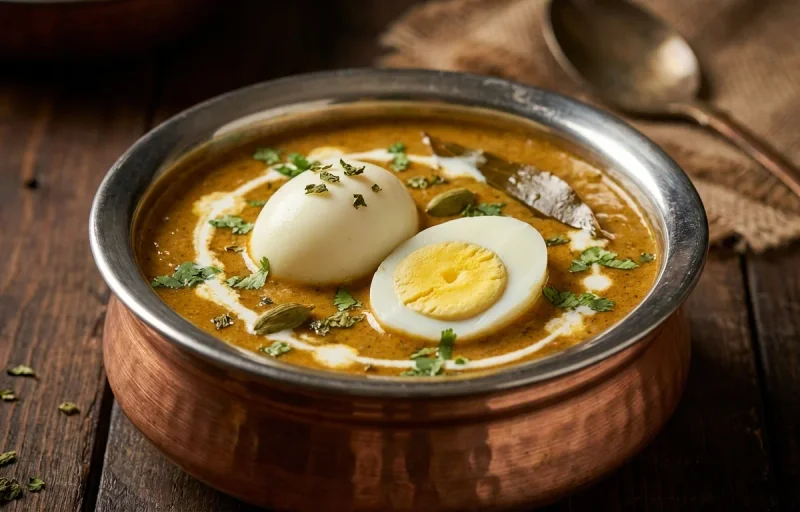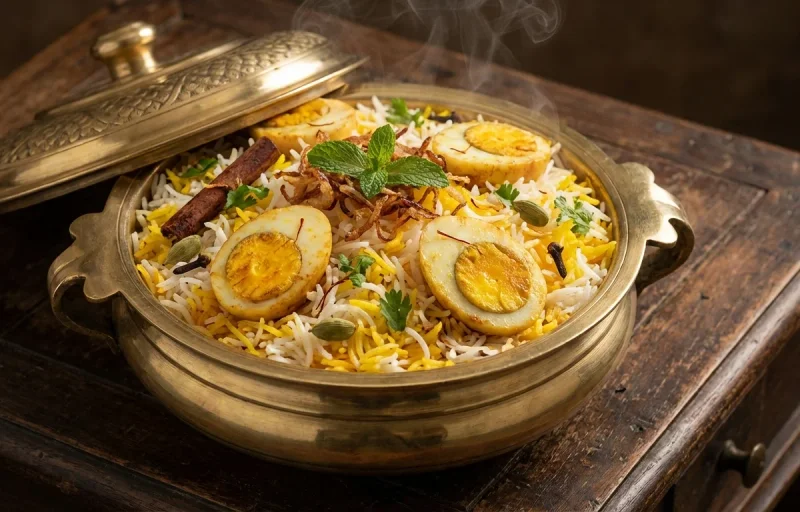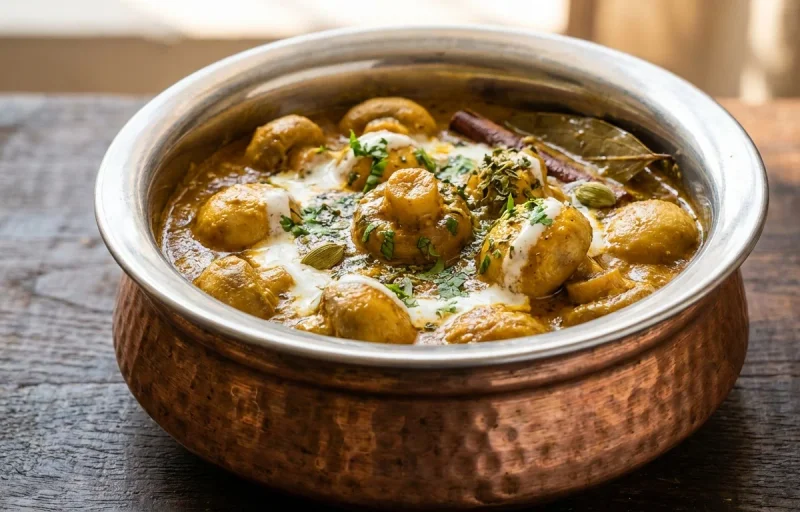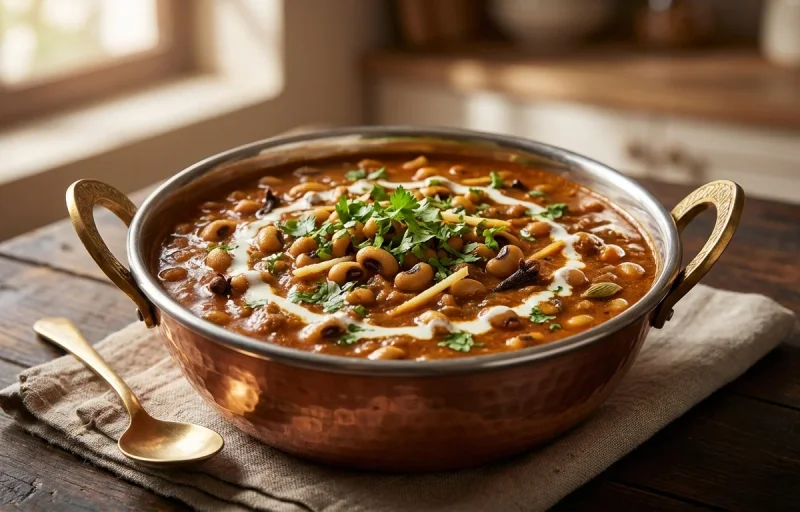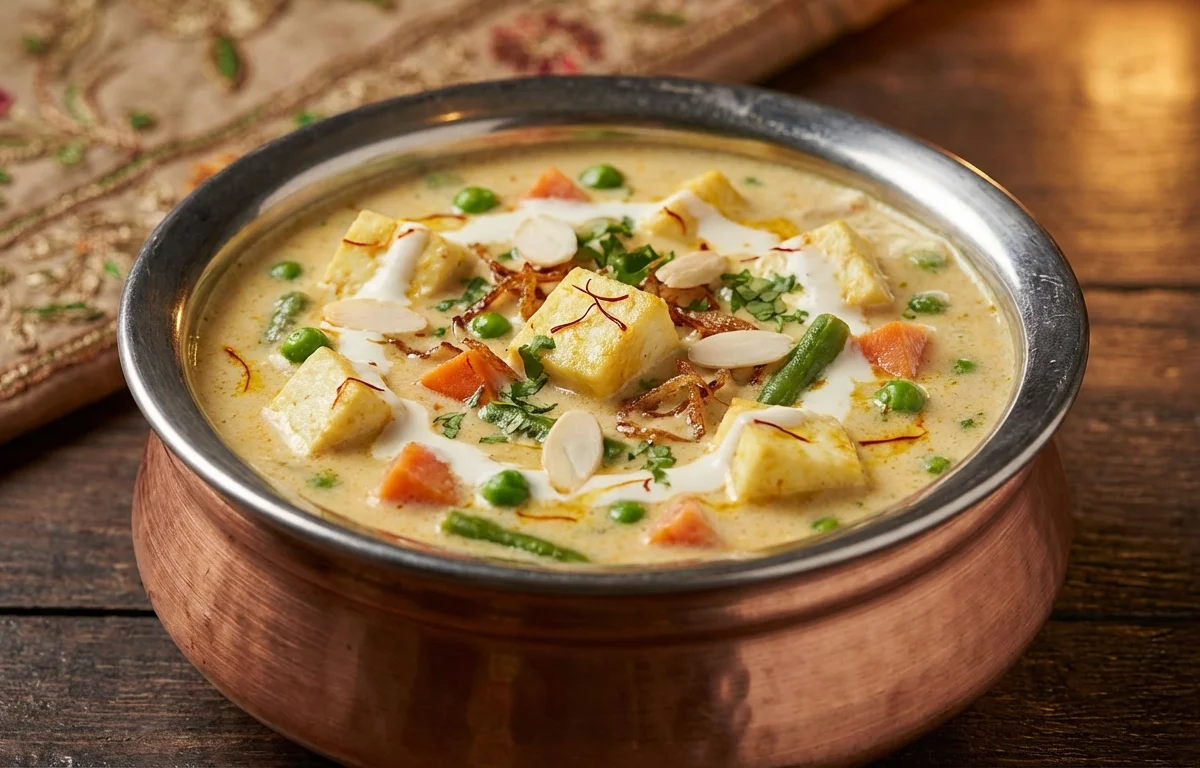
Awadhi Vegetable Korma
A rich, luxurious Awadhi-style vegetable curry where mixed vegetables are gently simmered in a velvety yogurt-based gravy infused with whole spices, aromatic rose water, and saffron. Slow-cooked on dum for a delicate, melt-in-your-mouth texture that pairs beautifully with naan or steamed rice.
For 4 servings
- prep · ~15 min
Soak nuts and prepare the cashew-poppy seed paste.
1.Soak cashews and poppy seeds in warm water for 15 minutes.2.Drain and grind to a smooth, fine paste using 2-3 tbsp fresh water.3.Soak saffron strands in 1 tbsp warm milk in a small bowl. Set aside. - prep · ~3 min
Blanch and prepare the vegetables.
1.Blanch cauliflower florets, diced carrots, and green beans in boiling water for 2 minutes.2.Drain immediately and refresh under cold water to stop cooking. Set aside.3.Whisk yogurt in a bowl until completely smooth with no lumps.TIPRefreshing in cold water locks in the color and keeps vegetables firm for the slow cook. - fry · ~3 min
Shallow fry the paneer and set aside.
1.Heat 1 tsp ghee in the pan over medium heat.2.Add paneer cubes and lightly fry until golden on all sides (2-3 minutes).3.Remove paneer and set aside on a plate.TIPDon't over-fry the paneer — you want a light golden color, not a hard crust. - temper · ~1 min
Make the tempering with whole spices.
1.Heat the remaining ghee in the same heavy-bottomed pan over medium heat.2.Add cumin seeds and let them crackle for 10 seconds.3.Add bay leaf, cinnamon stick, crushed cardamom, and cloves. Sauté until fragrant (30 seconds).TIPMedium heat is key — high heat burns the whole spices and makes them bitter. - saute · ~6 min
Build the aromatic onion base.
1.Add sliced onions to the pan and sauté until soft and translucent (4-5 minutes).2.Add minced garlic and julienned ginger. Sauté until raw smell disappears (1 minute).3.Add slit green chilies and cook for another 30 seconds.TIPCook the onions slowly — browning them too fast will change the color and flavor of the white gravy. - saute · ~3 min
Cook the spice powders and cashew paste.
1.Lower the heat to its lowest setting.2.Add turmeric powder, coriander powder, and red chili powder. Stir continuously for 20 seconds.3.Add the cashew-poppy seed paste and sauté for 2 minutes, stirring constantly.TIPKeep the heat low when adding spice powders — they burn easily and turn bitter. - simmer · ~3 min
Incorporate the yogurt into the gravy.
1.Remove the pan from heat and let it cool for 1 minute.2.Add the whisked yogurt one tablespoon at a time, stirring continuously to blend.3.Return pan to low heat and simmer gently for 2 minutes, stirring occasionally.TIPTake the pan off the heat before adding yogurt — this prevents curdling and keeps the gravy silky. - simmer · ~15 min
Add vegetables and simmer in the gravy.
1.Add the blanched vegetables, green peas, and fried paneer to the pan.2.Pour in 0.5 cup water and add salt. Stir gently to combine.3.Bring to a gentle simmer, cover with a tight lid, and cook on low heat for 12-15 minutes. - simmer · ~5 min
Finish with saffron, rose water, and garam masala.
1.Uncover the pan and stir in the saffron-infused milk.2.Add rose water, garam masala, and nutmeg powder. Stir gently.3.Cover again and cook on the lowest heat (dum) for 5 minutes.TIPDum cooking on the lowest heat seals in the delicate aromatics of saffron and rose water. - garnish · ~2 min
Garnish with almonds and coriander, then serve hot.
1.Turn off the heat and let the korma rest for 2 minutes.2.Transfer to a serving bowl and garnish with slivered almonds and chopped coriander leaves.3.Serve hot with naan or steamed rice.
What to keep in mind.
6 tips from the recipe — small details that make a real difference to the final dish.
- 1Blanch vegetables for exactly 2 minutes and refresh in ice water to keep them vibrant and slightly crunchy after slow cooking.
- 2Always take the pan off the heat before adding yogurt—this prevents curdling and ensures a silky, smooth gravy.
- 3Grind the cashew-poppy seed paste to a very fine, smooth consistency; any graininess will ruin the luxurious mouthfeel.
- 4Cook the onions on medium-low heat until translucent but not browned—browning alters the signature pale color of Awadhi korma.
- 5Let the korma rest for 2 minutes after dum cooking so the flavors meld and the gravy thickens slightly before serving.
- 6Use thick, full-fat yogurt at room temperature for the best texture and to minimize risk of splitting.
Adapt it for your goals.
Vegan
Replace paneer with firm tofu (pressed and cubed) and substitute yogurt with a thick, unsweetened plant-based yogurt or coconut cream. Use oil instead of ghee. The gravy remains rich thanks to cashew paste.
low fatLow-fat
Skip the paneer and ghee; use avocado oil or a light vegetable oil. Reduce cashews to half and use low-fat yogurt. The dish will be lighter but still aromatic.
high proteinHigh-protein
Add 150g of diced chicken breast (marinated for 15 minutes in salt and lemon juice) along with the vegetables, and increase garam masala by a pinch for a more robust profile.
nut freeNut-free
Omit cashew-poppy seed paste and instead use 2 tablespoons of melon seeds (magaz) soaked and ground. Replace almonds garnish with pumpkin seeds. The gravy may be slightly thinner.
Why this is on our healthy list.
Rich in Antioxidants
Cauliflower, carrots, and green beans provide vitamin C, beta-carotene, and polyphenols that help combat oxidative stress.
Good Source of Plant Protein
Paneer and cashews contribute high-quality protein, supporting muscle repair and satiety.
Anti-Inflammatory Spices
Turmeric, ginger, and cloves contain bioactive compounds with natural anti-inflammatory properties.
Beneficial Probiotics from Yogurt
The live cultures in thick yogurt support gut health and digestion, especially when yogurt is gently heated (not boiled).
Frequently asked questions
Yes, but do not blanch them first—just add them directly to the gravy in step 8 and cook for 12-15 minutes. Frozen peas can go in straight from the bag.