
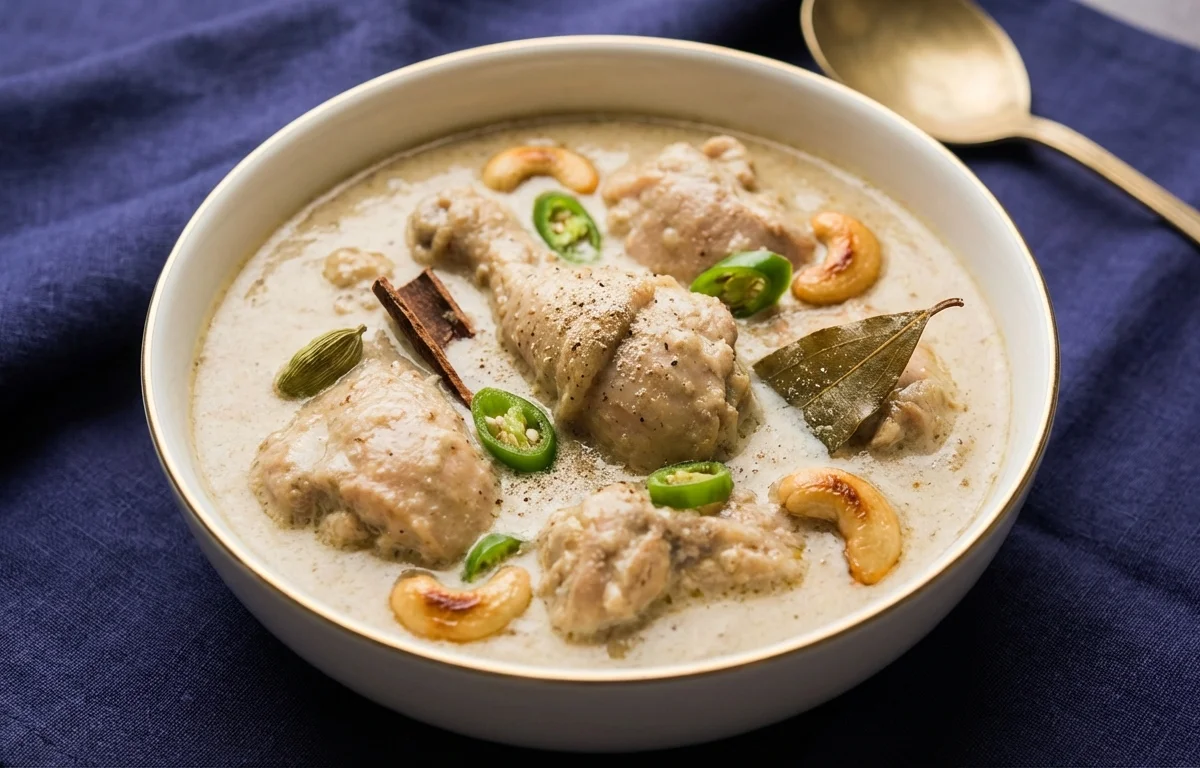
Bengali Chicken Rezala
A royal Bengali delicacy featuring tender chicken simmered in a fragrant, creamy white gravy enriched with yogurt, poppy seeds, and cashews. Unlike heavy red curries, this one shines with the gentle aroma of whole garam masala, kewra water, and a silky-smooth texture. Perfect for a festive lunch, it pairs beautifully with soft rumali roti or fragrant basmati rice.
For 4 servings
- prep · ~20 min
Soak and prepare the white paste.
1.Soak cashews and poppy seeds in warm water for 20 minutes.2.Drain and blend to a very smooth, silky paste with 2-3 tbsp water. Set aside.TIPThe paste must be absolutely smooth. A coarse paste will make the gravy grainy. - prep · ~15 min
Marinate the chicken pieces.
1.In a mixing bowl, whisk the yogurt until smooth with no lumps.2.Add chicken pieces, coat well, and set aside for 15 minutes.TIPBring yogurt to room temperature before whisking to prevent curdling when added to the hot pan. - temper · ~3 min
Temper the whole garam masala in ghee.
1.Heat ghee in a heavy-bottomed pan over medium-low heat until it melts completely.2.Add bay leaves, crushed cardamom, cinnamon, cloves, and mace.3.Sauté gently for 30-40 seconds until they release their aroma and the spices begin to crackle softly.TIPKeep the heat low. Burning the spices introduces bitterness and ruins the delicate white color of the gravy. - saute · ~7 min
Sauté the sliced onions until translucent.
1.Add the thinly sliced onions to the pan.2.Sauté on medium heat for 5-7 minutes, stirring frequently, until they turn soft and translucent.3.Do not let them brown — this is crucial for maintaining the light color of the rezala.TIPAdd a pinch of salt to help the onions soften faster without browning. - saute · ~3 min
Add ginger and garlic paste.
1.Add ginger paste and garlic paste to the softened onions.2.Cook for 2-3 minutes, stirring continuously, until the raw smell disappears completely.TIPIf the mixture sticks to the bottom of the pan, add a splash of water to deglaze it. - mix · ~8 min
Incorporate the marinated chicken.
1.Add the marinated chicken (with all the yogurt mixture) to the pan.2.Stir gently to coat every piece with the onion-spice base.3.Cook on medium heat for 5-8 minutes, stirring occasionally, until the chicken pieces turn opaque and the yogurt is well blended with the base.TIPKeep moving the chicken to prevent the yogurt from splitting due to the heat. - simmer · ~30 min
Add the white paste, salt, sugar, and simmer.
1.Pour in the smooth cashew-poppy seed paste and stir well to combine.2.Add salt, sugar, and 1 cup of water. Mix gently.3.Bring the gravy to a gentle boil, then immediately lower the heat.4.Cover the pan with a lid and simmer on low heat for 25-30 minutes, or until the chicken is tender and cooked through.TIPStir once or twice during simmering to prevent the thick gravy from catching at the bottom. The oil will slowly separate, indicating it's well-cooked. - mix · ~3 min
Finish with green chilies and kewra water.
1.Gently stir in the slit green chilies and kewra water.2.Simmer uncovered for another 2-3 minutes to let the flavors meld.3.Check the consistency — it should be thick, creamy, and coating the chicken. Adjust with a splash of warm water if needed.TIPNever cover the pan after adding kewra water, as its delicate floral scent is volatile and dissipates quickly. - garnish
Garnish with cilantro and serve hot.
1.Transfer the rezala to a serving bowl.2.Sprinkle generously with freshly chopped cilantro.
What to keep in mind.
6 tips from the recipe — small details that make a real difference to the final dish.
- 1Blend the soaked cashew and poppy seed paste until absolutely silky smooth, or the gravy will turn grainy.
- 2Do not brown the onions — keep them soft and translucent to preserve the signature white color of the rezala.
- 3Always bring the yogurt to room temperature and whisk it smooth before marinating to prevent curdling.
- 4Use low heat when tempering whole garam masala; burnt spices ruin the delicate flavor and color.
- 5Add the kewra water only at the very end and never cover the pan after, as its floral aroma dissipates quickly.
- 6Stir the gravy gently during simmering to prevent the thick paste from sticking to the bottom of the pan.
Adapt it for your goals.
Mutton Rezala
Substitute chicken with 500g bone-in mutton or lamb. Increase simmering time to 45-50 minutes until the meat is fork-tender. The rich flavor of mutton pairs beautifully with the creamy white gravy.
Vegetable RezalaVegetable Rezala
Replace chicken with a mix of paneer, potatoes, cauliflower, and green peas. Skip the marination step and add vegetables directly after the onion base. A great option for vegetarians who want the same luxurious gravy.
Dairy Free RezalaDairy-Free Rezala
Substitute yogurt with thick, unsweetened coconut yogurt and ghee with coconut oil. Use 1 tbsp more cashew paste for body. Perfect for those avoiding dairy without compromising the creamy texture.
Low Fat RezalaLow-Fat Rezala
Reduce ghee to 1 tbsp, replace cashews with 2 tbsp melon seeds (magaz), and use low-fat yogurt. The gravy stays lighter but still creamy. A great everyday version for calorie-conscious cooks.
Why this is on our healthy list.
Rich in Bone-Healthy Minerals
Chicken (especially bone-in) provides calcium, phosphorus, and collagen from slow simmering, supporting joint and bone health.
Good Source of Probiotics
Yogurt in the marinade adds live cultures that aid digestion and gut health when used fresh and not overheated.
Protein-Packed Main Course
Chicken offers complete protein essential for muscle repair and satiety, making this a satisfying, balanced meal.
Heart-Friendly Fats from Nuts
Cashews provide unsaturated fats and magnesium, which support heart health and help regulate blood pressure.
Antioxidants from Aromatic Spices
Cloves, cardamom, and cinnamon are rich in antioxidants and anti-inflammatory compounds that support overall immunity.
Frequently asked questions
Yes, but bone-in chicken adds more flavor and keeps the meat juicier. If using boneless, reduce the simmering time to 15-18 minutes and check for doneness.



-curry.webp)
.webp)