
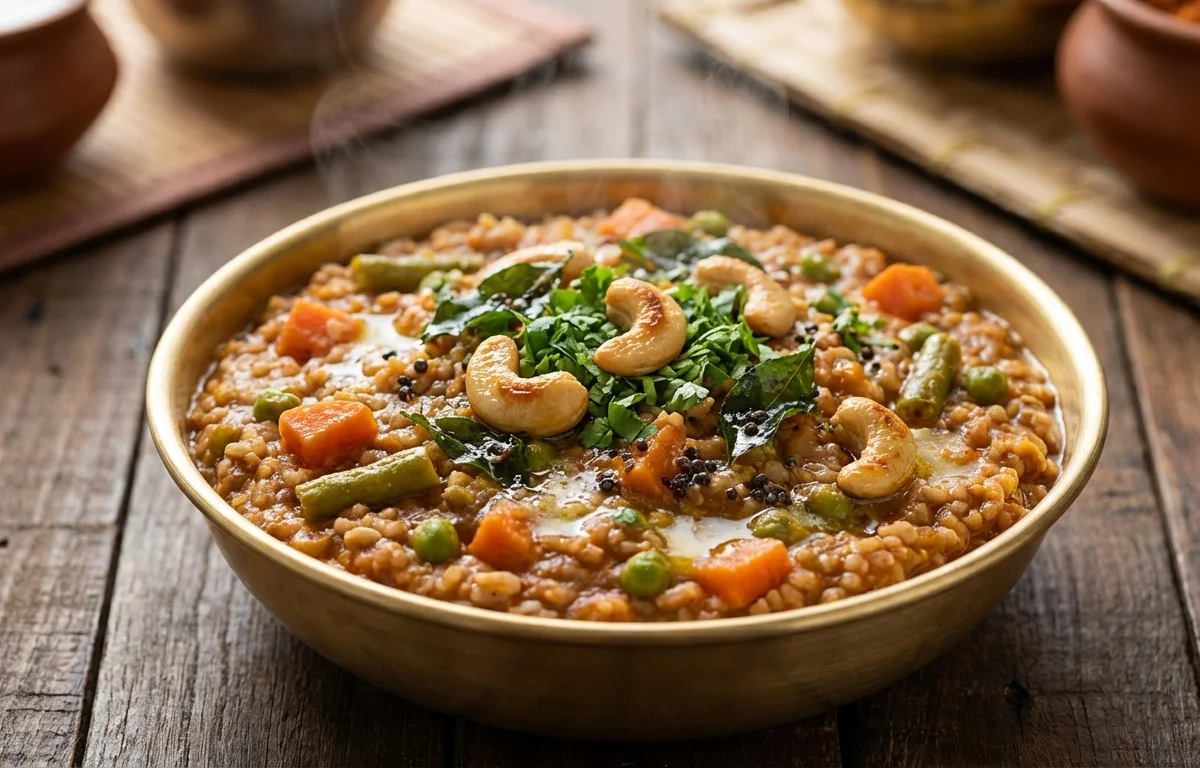
Bisi Bele Bath
A comforting Karnataka one-pot rice and lentil dish packed with vegetables, tamarind, and warm spices. It cooks down to a soft, spoonable texture and tastes especially good with a little ghee on top.
For 4 servings
- prep · ~20 min
Soak the rice and dal.
Wash the rice and toor dal well in separate bowls. Soak them for 20 minutes, then drain.
TIPA short soak helps the rice and dal cook down to the soft texture this dish needs. - pressure cook · ~25 min
Pressure cook the rice, dal, and vegetables.
1.Add the drained rice, toor dal, carrot, green beans, potato, green peas, turmeric powder, salt, and 4 cups water to a pressure cooker.2.Mix once and close the lid.3.Cook on medium heat for 4 whistles, then let the pressure release naturally.4.Open and mash the mixture lightly with the back of a ladle.TIPDo not keep the grains separate here; Bisi Bele Bath should be soft and well blended. - saute · ~12 min
Cook the onion and tomato base.
1.Heat 1 tablespoon ghee in a pan over medium heat.2.Add the sliced onion and cook until soft and light golden, 5 to 6 minutes.3.Add the tomato and cook until soft and pulpy, 4 to 5 minutes.4.Stir in the tamarind paste, jaggery, and bisi bele bath powder. - simmer · ~10 min
Combine and simmer the bath.
1.Add the cooked rice and dal mixture to the pan.2.Pour in 2 cups water and mix well to loosen the mixture.3.Simmer on low heat, stirring often, until thick, smooth, and spoonable, 8 to 10 minutes.4.Adjust with a splash of water if it thickens too much.TIPThe dish thickens quickly as it sits, so keep it slightly looser than you want when it leaves the stove. - temper · ~2 min
Make the tempering.
1.Heat the remaining 1 tablespoon ghee in a small pan.2.Add mustard seeds and let them splutter.3.Add cumin seeds, dried red chili, curry leaves, asafoetida, and cashews.4.Cook until the cashews turn light golden and the spices smell fragrant.TIPKeep the heat medium so the spices bloom without burning. - assemble · ~1 min
Pour the tempering over the bath.
Pour the hot tempering over the simmered Bisi Bele Bath and mix gently so the flavor spreads through the dish.
- garnish
Garnish with cilantro.
- serve
Serve hot.
What to keep in mind.
7 tips from the recipe — small details that make a real difference to the final dish.
- 1Mash the pressure-cooked rice, dal, and vegetables while still hot so the bath turns creamy without needing extra cooking.
- 2Cook the onions only to light golden, not deep brown, so they melt into the base instead of making it taste too sweet.
- 3Simmer the tamarind, jaggery, and spice powder with the onion-tomato base for a minute before adding the rice mixture to remove any raw edge.
- 4Keep extra hot water nearby while simmering; Bisi Bele Bath should flow off a spoon, not sit like plain khichdi.
- 5Add the final tempering just before serving for the best contrast between the soft bath and crunchy cashews.
- 6If reheating leftovers, loosen with hot water first, then warm gently; it thickens considerably once cooled.
- 7Let the pressure release naturally so the dal finishes softening and the rice grains break down into the classic spoonable texture.
Adapt it for your goals.
Vegan
Replace ghee with coconut oil or a neutral oil and skip the butteriness while keeping the same tempering method.
jainJain
Omit onion and potato, add more beans and peas, and build the base with tomatoes, tamarind, and spice powder instead.
milletMillet
Swap the rice for little millet or foxtail millet for a nuttier taste and a whole-grain style version.
no cashewNo-cashew
Leave out the cashews if serving someone with nut allergies; the tempering still brings plenty of flavor.
Why this is on our healthy list.
Balanced One-Pot Meal
Rice and toor dal provide satisfying carbohydrates and plant protein, while the mixed vegetables add variety and bulk.
Vegetable-Rich Comfort Food
Carrot, beans, peas, tomato, and potato add fiber and a range of plant nutrients to an otherwise soft, hearty dish.
Protein From Lentils
Toor dal makes the dish more filling and nourishing than plain rice-based meals, with added body and creaminess.
Digestive Spice Support
Cumin, asafoetida, curry leaves, and tamarind are traditional flavoring ingredients that also make this rich dish feel lighter.
Frequently asked questions
This dish naturally thickens as it simmers and even more as it cools. Stir in hot water a little at a time until it is soft and spoonable again.


