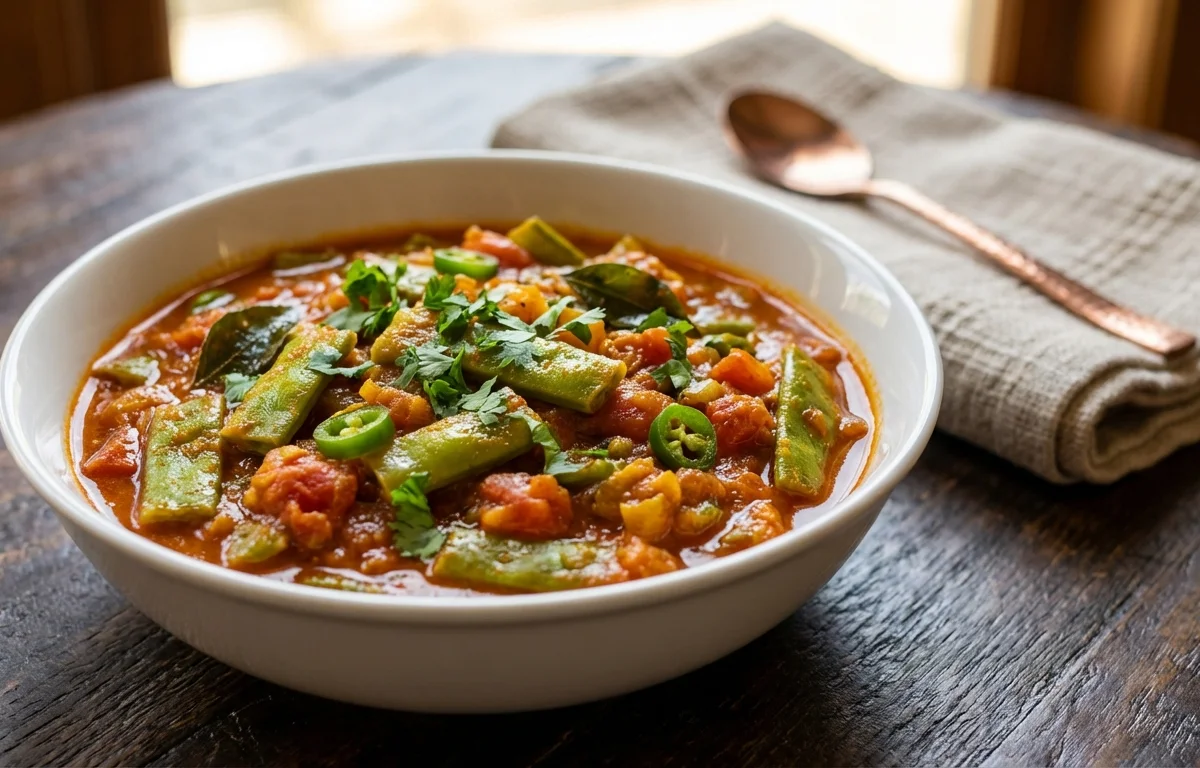
Chikkudukaya Tomato Kura
Tender cluster beans simmered in a tangy tomato gravy with warming Indian spices. A classic Andhra-style dry curry that brings together earthy beans and juicy tomatoes. Perfect as a side with steamed rice and dal.
For 4 servings
- prep · ~6 min
Steam the cluster beans.
Wash the trimmed cluster beans. Steam them in a steamer basket over boiling water for 5-6 minutes until just tender but still firm. Set aside.
TIPDon't overcook the beans - they should retain a slight crunch. - temper · ~2 min
Make the tempering.
1.Heat oil in a kadai over medium heat until shimmering.2.Add mustard seeds and let them splutter (30 sec).3.Add cumin seeds and urad dal, fry until dal turns golden (30 sec).4.Add curry leaves and let them crackle (15 sec). - saute · ~9 min
Build the aromatic base.
1.Add chopped onion, green chili, ginger, and garlic.2.Sauté until onions turn soft and translucent (4-5 min).3.Add chopped tomatoes and cook until they break down and turn mushy (4-5 min).TIPMash the tomatoes with the back of the spatula to help them break down quickly. - saute · ~2 min
Bloom the dry spices.
Add turmeric powder, red chili powder, coriander powder, and salt to the onion-tomato mixture. Stir well and cook for 1-2 minutes until the spices smell fragrant and the oil begins to separate.
- simmer · ~7 min
Simmer the beans in the gravy.
1.Add the steamed cluster beans to the pan and stir to coat with the spice mixture.2.Pour in the water and bring to a gentle simmer.3.Cover and cook on low heat for 5-7 minutes, stirring once, until the beans soak up the flavors and the curry is semi-dry. - garnish · ~1 min
Finish and garnish.
Turn off the heat. Sprinkle garam masala over the top and fold in gently. Garnish with chopped coriander leaves. Serve warm with steamed rice or roti.
What to keep in mind.
6 tips from the recipe — small details that make a real difference to the final dish.
- 1Steam the cluster beans just until tender-crisp to prevent them from turning mushy in the gravy.
- 2Slit the green chilies lengthwise to infuse heat without making the dish overwhelmingly spicy.
- 3Cook the onion-tomato base until the oil visibly separates from the masala for deeper flavor.
- 4Use a heavy-bottomed pan or kadai to ensure even cooking and prevent the spices from burning.
- 5Add garam masala only after turning off the heat to preserve its delicate aroma.
- 6This curry thickens as it cools; add a splash of warm water while reheating if needed.
Adapt it for your goals.
Low-oil
Reduce oil to 1 tablespoon and dry-roast the urad dal and cumin before adding a splash of water to sauté the onions. Ideal for those watching their fat intake.
protein boostProtein boost
Add 1/2 cup of boiled chana dal or paneer cubes along with the beans for a heartier, protein-rich version that works as a one-dish meal.
veganVegan
This recipe is naturally vegan as written — just ensure your garam masala contains no hidden animal-based additives.
without urad dalWithout urad dal
Skip the urad dal if unavailable; the curry will still taste authentic. Add a pinch of asafoetida (hing) with the mustard seeds to mimic the lentil's savory depth.
Why this is on our healthy list.
Rich in Dietary Fiber
Cluster beans and tomatoes provide a good amount of fiber, supporting healthy digestion and promoting a feeling of fullness.
Packed with Plant-Based Iron
Cluster beans are a source of non-heme iron, and the vitamin C from tomatoes helps improve its absorption.
Low in Calories and Fat
With only 2 tablespoons of oil and no heavy cream or coconut, this dry curry is a light, waistline-friendly side dish.
Anti-Inflammatory Spices
Turmeric, ginger, and garlic are known for their anti-inflammatory compounds, which may support overall wellness.
Frequently asked questions
Yes, you can use frozen cluster beans. Thaw them completely and pat dry before steaming to avoid excess water in the gravy.



.webp)