Dal Fry with Egg Tadka
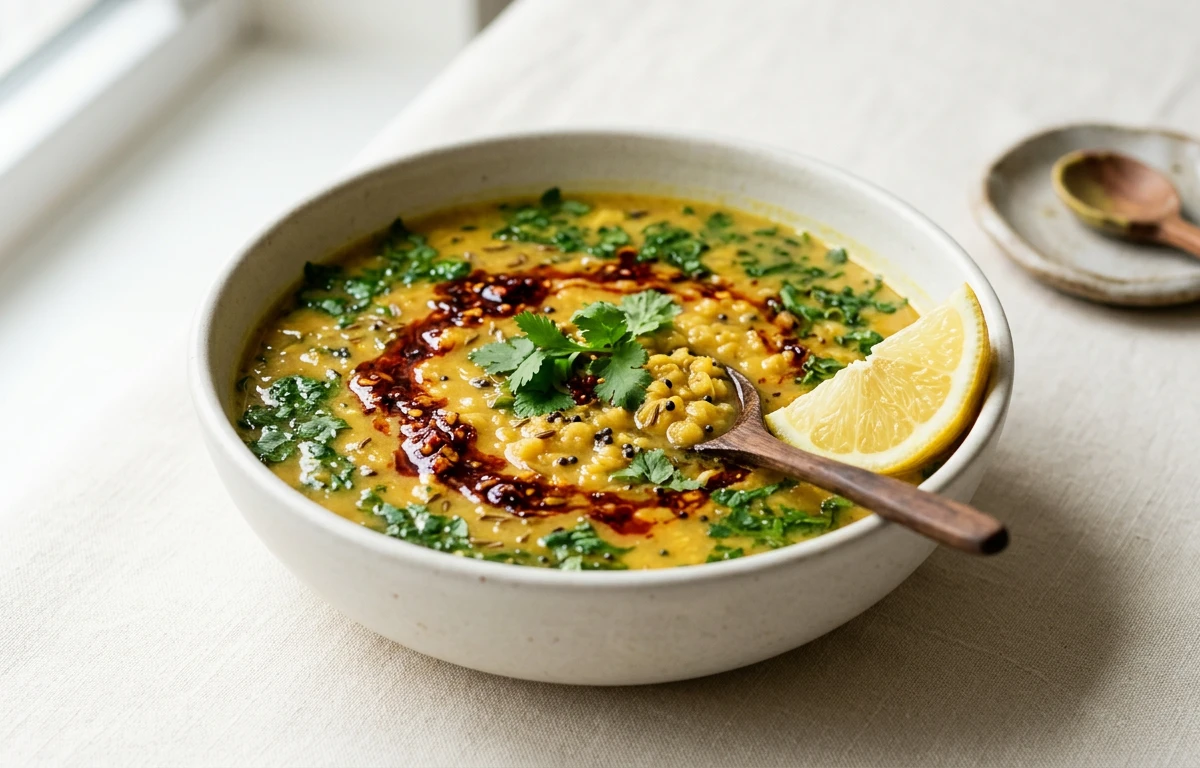
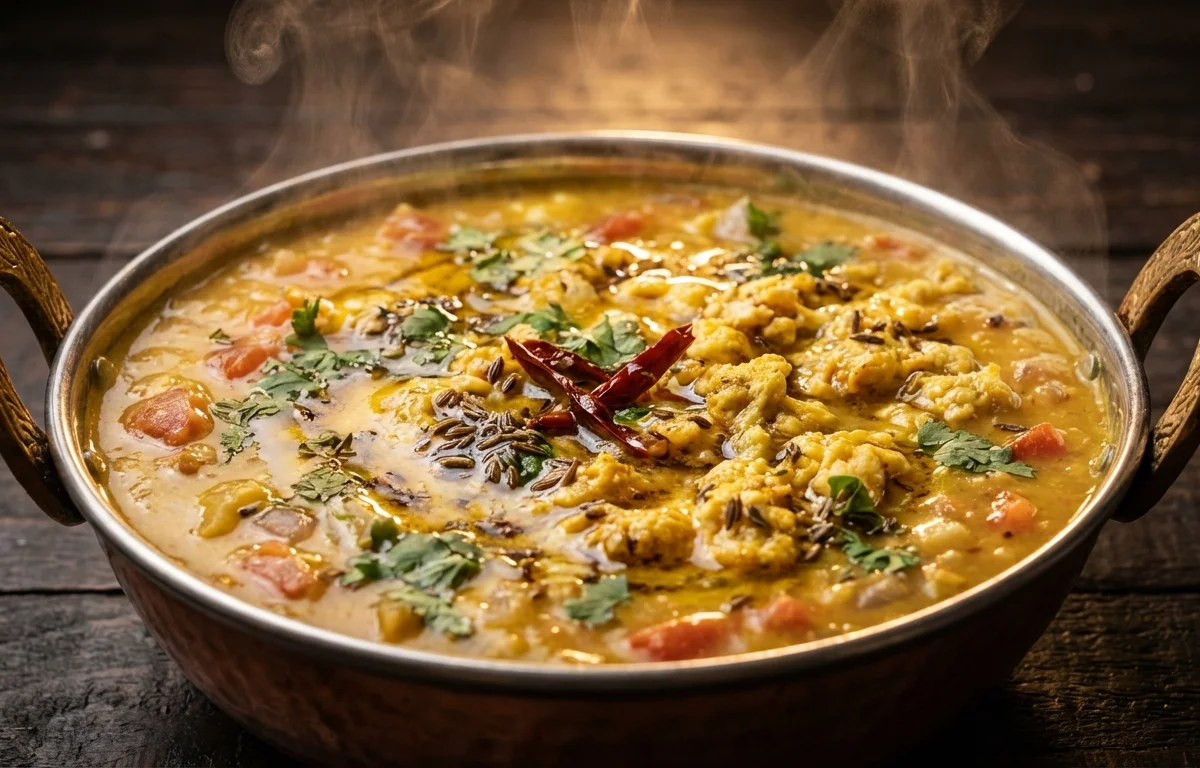
A comforting bowl of cooked lentils finished with a sizzling onion, garlic, and egg tempering. The eggs add richness and extra protein, while the dal stays light enough to pair with rice or roti.
For 4 servings
- prep · ~30 min
Wash and soak the dal.
Rinse the toor dal well until the water runs clearer. Soak it in fresh water for 30 minutes, then drain.
- pressure cook · ~20 min
Pressure cook the dal until soft.
1.Add the soaked toor dal to a pressure cooker with water, turmeric powder, and salt.2.Close the cooker and cook on medium heat for 3 to 4 whistles.3.Let the pressure release naturally before opening.4.Mash the cooked dal lightly with the back of a ladle.TIPA lightly mashed dal gives the fry a creamy texture without needing cream or butter. - temper · ~8 min
Make the onion and spice tadka.
1.Heat ghee in a pan over medium heat.2.Add cumin seeds and let them crackle for 20 to 30 seconds.3.Add onion and cook until soft and light golden, about 5 minutes.4.Add garlic, ginger, and green chili, then cook for 1 minute until fragrant.5.Add tomato, red chili powder, coriander powder, and garam masala.TIPKeep the heat medium so the garlic cooks sweet and fragrant instead of turning bitter. - saute · ~5 min
Cook the masala until the tomatoes soften.
Cook the tomato mixture for 4 to 5 minutes, stirring often, until it turns pulpy and the ghee starts to show at the edges.
- saute · ~2 min
Add the eggs and scramble them into the tadka.
Pour in the beaten eggs and stir gently over low to medium heat until they are softly scrambled and coated with the masala.
TIPDo not overcook the eggs here; they will finish cooking once mixed into the hot dal. - simmer · ~7 min
Mix the cooked dal into the egg tadka.
Add the cooked dal to the pan and mix well. Simmer for 5 to 7 minutes until the flavors come together and the dal reaches a medium pouring consistency.
- garnish · ~1 min
Stir in lemon juice and coriander leaves.
- serve · ~1 min
Serve hot.
Serve the dal fry with egg tadka hot with rice, jeera rice, or roti.
What to keep in mind.
7 tips from the recipe — small details that make a real difference to the final dish.
- 1Soaking the toor dal for the full 30 minutes helps it cook evenly and mash smoothly after pressure cooking.
- 2After 3 whistles, check the dal texture; it should crush easily between fingers before you mash it lightly.
- 3Cook the onion only to light golden, not dark brown, so the tadka stays sweet and doesn't overpower the dal.
- 4Let the tomato masala cook until ghee peeks out at the edges; this removes raw tomato taste and deepens the base.
- 5Keep the heat low when adding the beaten eggs so they form soft curds instead of turning rubbery.
- 6If the dal thickens on standing, loosen it with a splash of hot water before reheating to keep the pourable texture.
- 7Add lemon juice only after switching off the heat to keep its fresh tang bright in the finished dal.
Adapt it for your goals.
Low-oil
Use less ghee and add a splash of water while cooking the onion-tomato masala for a lighter everyday version.
high proteinHigh-protein
Add one extra egg to the tadka for a more filling dal that works well as a simple one-bowl meal.
spicierSpicier
Increase green chilies or red chili powder if you want the richness of the egg and dal balanced by more heat.
moong dalMoong-dal
Swap toor dal with yellow moong dal for a softer, quicker-cooking version with a lighter texture.
Why this is on our healthy list.
Balanced Protein Mix
Toor dal and eggs together make the dish more satisfying and add both plant and animal protein.
Fiber From Lentils
The cooked dal contributes fiber, which helps make this comforting dish filling alongside rice or roti.
Aromatic Digestive Ingredients
Ginger, cumin, garlic, and coriander are traditional flavorings that also make the dal feel warming and lively.
Frequently asked questions
Yes. Simmer the soaked toor dal in a pot until completely soft, then mash lightly before mixing it into the egg tadka.