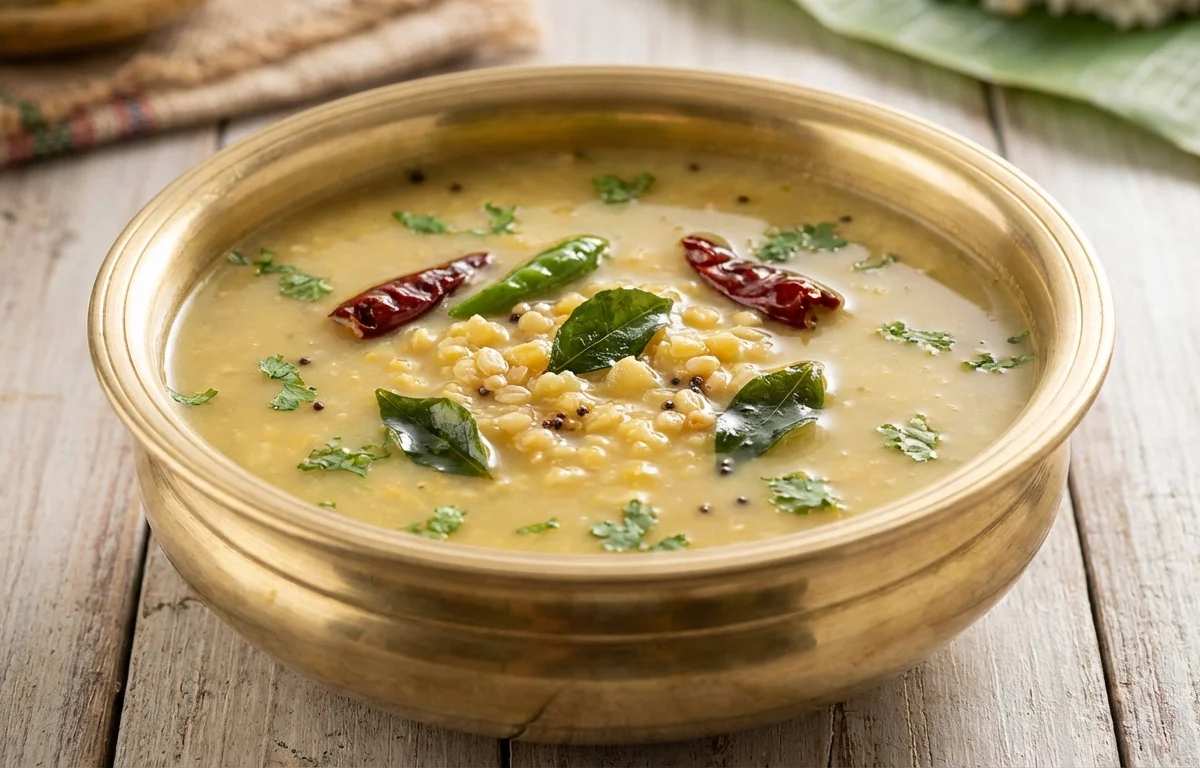
Dal Thoy
A gentle coastal lentil dish from the Konkan belt, Dal Thoy is light, smooth, and deeply comforting. Cooked to a soft texture and finished with a simple tempering, it is perfect with rice and a vegetable side.
For 4 servings
- prep · ~30 min
Rinse and soak the dal.
Wash the toor dal well until the water runs clearer. Soak it in fresh water for 30 minutes, then drain.
- pressure cook · ~20 min
Cook the dal until very soft.
1.Add the soaked toor dal to a pressure cooker with water, green chili, and turmeric powder.2.Cook on medium heat for 4 whistles, then let the pressure drop naturally.3.Open the cooker and mash the dal lightly until smooth.TIPDal Thoy should be soft and pourable, so mash it more than you would for a chunky dal. - simmer · ~5 min
Adjust the dal and season it.
Pour the cooked dal into a pot if needed and add salt. Simmer for 4 to 5 minutes, adding a little more water if it looks too thick.
- temper · ~2 min
Make the tempering.
1.Heat ghee in a small pan over medium heat.2.Add mustard seeds and let them splutter.3.Add garlic, dried red chili, and curry leaves.4.Cook for 30 to 40 seconds until the garlic smells fragrant and turns lightly golden.TIPDo not let the garlic get dark brown or the tempering will taste bitter. - assemble · ~1 min
Pour the tempering over the dal.
Add the hot tempering to the simmering dal and mix gently. Let it bubble for 1 minute so the flavors come together.
- serve
Serve hot with rice.
What to keep in mind.
7 tips from the recipe — small details that make a real difference to the final dish.
- 1Mash the pressure-cooked toor dal while still hot for the smooth, pourable texture Dal Thoy is known for.
- 2If the dal thickens as it sits, loosen it with hot water while reheating so it stays light rather than pasty.
- 3Let the pressure drop naturally; quick-releasing can leave the dal less creamy and slightly unevenly cooked.
- 4Add salt only after the dal is cooked soft, which helps it break down more easily during cooking.
- 5Pour the tempering over actively simmering dal so the ghee, garlic, and curry leaf aroma spreads through the whole pot.
- 6Keep the garlic just lightly golden in the tadka; darker garlic will overpower this otherwise delicate dal.
- 7Serve it fresh with plain rice and a dry vegetable side, since Dal Thoy is meant to be mild and fluid.
Adapt it for your goals.
Vegan
Replace the ghee with coconut oil for a plant-based version that still suits the coastal South Indian flavor profile.
no garlicNo-garlic
Skip the garlic in the tempering for a simpler, satvik-style finish that lets curry leaves and chilies stand out.
spicierSpicier
Add one extra green chili while pressure-cooking or increase the dried red chilies in the tadka for more heat.
thinner rice pairingThinner-rice-pairing
Add extra hot water at the simmering stage for a looser, more traditional pour-over-rice consistency.
Why this is on our healthy list.
Plant Protein from Toor Dal
The split pigeon peas make this dish satisfying and nourishing while fitting naturally into a simple vegetarian meal.
Easy, Light Comfort Food
With soft-cooked lentils, mild seasoning, and a fluid texture, this dal is gentle and easy to enjoy as a everyday meal.
Digestive Aromatics
Garlic, curry leaves, and chilies add flavor depth while keeping the ingredient list simple and traditional.
Frequently asked questions
Yes, but it may take longer to cook and may not turn as silky. Soaking helps the dal soften faster and mash more smoothly.