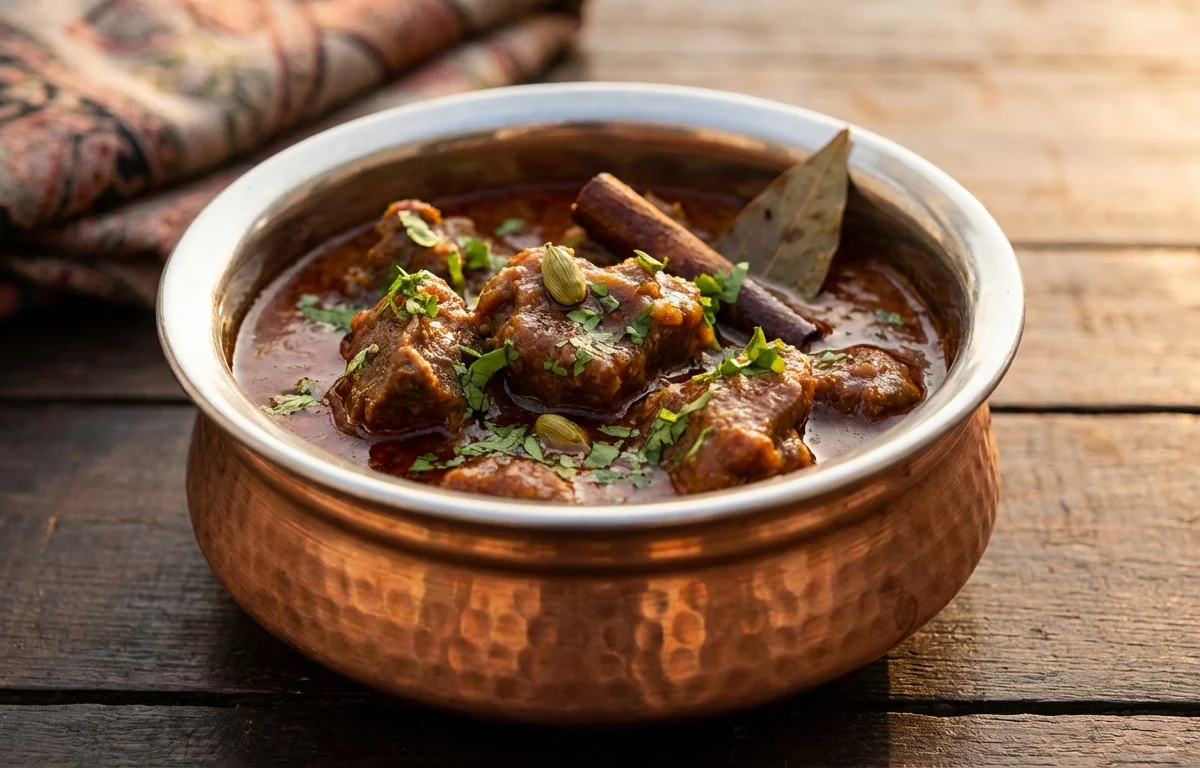
Dhaas Gosht
A fiery, robust mutton curry from the royal kitchens of Rajasthan where tender chunks of meat swim in a deeply smoky, scarlet-red gravy. The heat builds from Mathania chilies and cracked black pepper, balanced by a slow-cooked yogurt base. Best mopped up with bajra roti or steamed rice.
For 4 servings
- prep · ~15 min
Make the chili paste.
Soak mathania chilies in hot water for 15 minutes until softened. Drain, reserving the water, and grind to a smooth paste using a little soaked water. Set the paste aside.
- saute · ~15 min
Brown the onions in ghee.
1.Heat ghee in a heavy-bottomed pan over medium heat.2.Add bay leaves, cloves, black cardamom, and green cardamom. Sauté for 30 seconds until fragrant.3.Add sliced onions and sauté until deep golden brown, stirring occasionally (12-15 minutes).TIPTake your time with the onions — the deep caramelization is key to the smoky color and flavor. - saute · ~10 min
Cook the mutton with spices.
1.Add minced garlic and julienned ginger to the browned onions. Sauté for 1 minute until the raw smell disappears.2.Add the mutton pieces and sear on high heat, turning them until browned on all sides (4-5 minutes).3.Lower the heat. Add the chili paste, Kashmiri red chili powder, turmeric, coriander powder, cumin powder, and black pepper powder.4.Sauté continuously for 3-4 minutes until the oil separates from the masala. - saute · ~9 min
Incorporate the yogurt.
1.Take the pan off the heat and let it cool slightly for 1 minute.2.Pour in the whisked yogurt, stirring vigorously and continuously to prevent curdling.3.Return the pan to low heat and cook, stirring often, until the yogurt is fully absorbed and the gravy looks glossy (6-8 minutes).TIPAlways whisk yogurt smooth and add off the heat — this prevents it from splitting in the fiery masala. - pressure cook · ~35 min
Pressure cook until tender.
1.Pour in the hot water and add salt. Stir well and bring to a boil.2.Transfer everything to a pressure cooker. Close the lid and cook on high heat until the first whistle.3.Reduce heat to low and cook for another 25-30 minutes (4-5 whistles).4.Let the pressure release naturally. Open the lid and check that the mutton is fork-tender. - simmer · ~10 min
Simmer to thicken the gravy.
1.Return the curry to the heavy-bottomed pan if using a pressure cooker.2.Simmer on medium heat uncovered, stirring occasionally, until the gravy thickens to your liking (8-10 minutes).3.Sprinkle garam masala and stir in lemon juice. Simmer for 1 more minute.TIPThe gravy should coat the back of a spoon and leave a clean trail when you run a finger through it. - garnish
Garnish with fresh coriander and serve hot.
TIPRest the curry for 5 minutes off the heat before serving — the flavors deepen beautifully.
What to keep in mind.
7 tips from the recipe — small details that make a real difference to the final dish.
- 1Bone-in mutton is essential — the marrow and connective tissue melt during pressure cooking, enriching the gravy and adding depth.
- 2Use full-fat yogurt at room temperature and whisk it until perfectly smooth to avoid curdling when it hits the hot masala.
- 3For the deepest color, toast the Kashmiri red chili powder in a dry pan for a few seconds before adding it to the pot.
- 4Make the mathania chili paste a day ahead and refrigerate — the flavor mellows and the paste blends more easily.
- 5Let the pressure release naturally for at least 15 minutes; forced release can toughen the mutton and splash hot gravy.
- 6If the gravy is too thin after pressure cooking, simmer uncovered for another 10 minutes, mashing a few pieces of mutton against the pot to thicken it naturally.
- 7Store leftover Dhaas Gosht in the fridge for up to 4 days; reheat gently on the stovetop, adding a splash of water if needed.
Adapt it for your goals.
Kebab-or-snake name e.g. 'low-oil', 'high-protein', 'jain', 'vegan'
For a lighter version, substitute half the ghee with mustard oil and use low-fat yogurt; the mustard oil adds an earthy pungency typical of Rajasthani home cooking.
kebab or snake name e.g. 'low oil', 'high protein', 'jain', 'vegan'Kebab-or-snake name e.g. 'low-oil', 'high-protein', 'jain', 'vegan'
Swap bone-in mutton for boneless goat shoulder or lamb leg; reduce pressure cooking time to 20-22 minutes (3 whistles) to avoid overcooking.
kebab or snake name e.g. 'low oil', 'high protein', 'jain', 'vegan'Kebab-or-snake name e.g. 'low-oil', 'high-protein', 'jain', 'vegan'
Use chicken (drumsticks or thighs) instead of mutton; skip the initial searing for browning, sauté the onion-spice base, then add chicken and only 1/2 cup water. Cook normally in a covered pan for 25-30 minutes instead of pressure cooking.
kebab or snake name e.g. 'low oil', 'high protein', 'jain', 'vegan'Kebab-or-snake name e.g. 'low-oil', 'high-protein', 'jain', 'vegan'
A vegan version can be made by substituting mutton with large diced potatoes, carrots, and cauliflower; replace yogurt with thick coconut cream thinned with a splash of lemon juice.
Why this is on our healthy list.
High in Protein from Mutton
This dish provides a substantial amount of animal protein from bone-in mutton, essential for muscle repair and maintaining strong bones.
Rich in Iron and Zinc
Mutton is a natural source of easily absorbable heme iron and zinc, both crucial for immune function and energy metabolism.
Anti-inflammatory Spices
Turmeric, ginger, garlic, and black pepper all contain compounds with mild anti-inflammatory and antioxidant properties.
Probiotic Support from Yogurt
The yogurt base introduces beneficial lactic acid bacteria (when added off the heat) that can aid digestion.
Frequently asked questions
Yes, but use 4-5 dried Kashmiri or Byadgi chilies for color and 2 dried red chilies (like Guntur) for heat. Soak and grind them the same way.