
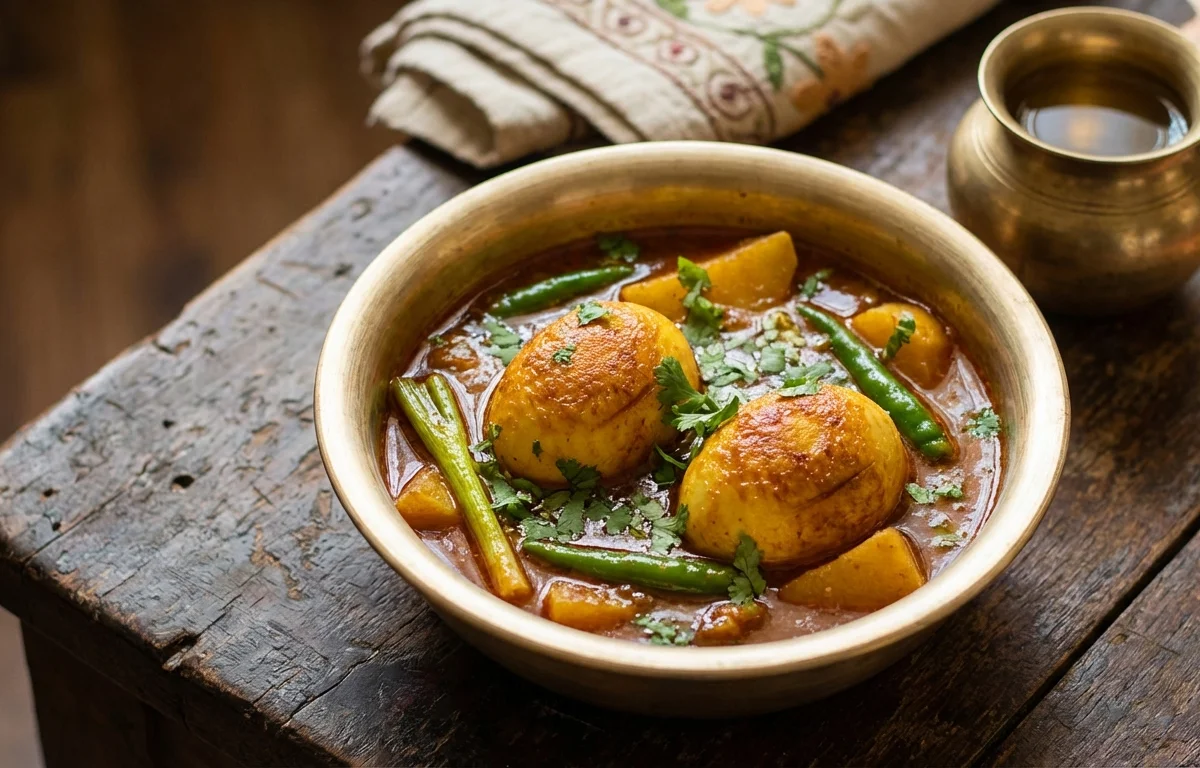
Dimer Jhol with Peyajkoli
A soulful, rustic Bengali egg curry where boiled eggs are simmered in a light, soupy gravy with the delicate sweetness of spring onion stalks. The warmth of ginger and green chilies makes this comforting dish perfect with steamed rice.
For 4 servings
- prep · ~15 min
Boil the eggs and potatoes.
1.Place eggs and quartered potatoes in a saucepan with enough water to cover them.2.Add 0.25 tsp salt and bring to a rolling boil.3.Boil for 10 minutes, then remove eggs and place in cold water. Continue boiling potatoes until fork-tender.4.Peel the cooled eggs and lightly prick them with a fork. - temper · ~8 min
Temper the spices and sauté onions.
1.Heat mustard oil in a kadai over medium heat until it reaches its smoking point, then reduce heat.2.Add cumin seeds and bay leaf, letting them crackle for 30 seconds.3.Add sliced onions and sauté until golden brown, about 5 to 7 minutes.TIPLetting the mustard oil smoke briefly removes its raw pungency and adds a characteristic flavour. - saute · ~8 min
Build the curry base.
1.Add ginger paste and slit green chilies. Cook for 1 minute until the raw aroma disappears.2.Add chopped tomatoes, turmeric powder, and red chili powder. Cook until tomatoes are soft and oil separates slightly, about 5 minutes.3.Add the chopped peyajkoli stalks and sauté for 2 minutes until they wilt slightly. - simmer · ~10 min
Add water and simmer the potatoes.
1.Pour in 3 cups of water and add the remaining 0.25 tsp salt.2.Add the boiled potato quarters.3.Bring to a boil, then reduce heat and simmer for 8 minutes to let the potatoes absorb the flavours. - simmer · ~3 min
Add the boiled eggs and finish with garam masala.
1.Gently slide the boiled eggs into the simmering gravy.2.Sprinkle garam masala on top and simmer for another 2 to 3 minutes.3.Adjust consistency with hot water if needed—the jhol should be thin and soupy. - garnish
Garnish with fresh cilantro and serve hot.
What to keep in mind.
7 tips from the recipe — small details that make a real difference to the final dish.
- 1Lightly prick boiled eggs with a fork before adding them to the gravy so they absorb the spiced broth.
- 2Smoke the mustard oil until it just begins to haze to tame its pungency and deepen the flavor.
- 3Cut peyajkoli (spring onion stalks) into uniform 1-inch pieces for even wilting and a pleasant bite.
- 4Use boiled potato quarters that are just fork-tender so they hold their shape during simmering.
- 5Keep the jhol thin and soupy—add extra hot water if it reduces too much during simmering.
- 6Temper the cumin seeds and bay leaf on medium heat to avoid burning, which turns the gravy bitter.
- 7Let the curry rest for 5 minutes off the heat before serving to let flavors meld without overcooking eggs.
Adapt it for your goals.
Vegetarian
Replace the boiled eggs with boiled paneer cubes or chickpeas for a protein-rich vegetarian version that still soaks up the light, soupy gravy.
low oilLow-oil
Skip the tempering step with mustard oil; instead, sauté onions in 1 teaspoon of oil or a non-stick cooking spray, and reduce the final oil to just 1 teaspoon—perfect for those watching their fat intake.
veganVegan
Replace eggs with boiled tofu cubes and use a vegan-friendly oil like avocado or coconut oil instead of mustard oil to keep the dish entirely plant-based.
extra spicyExtra-spicy
Increase the green chilies to 5 and add a teaspoon of finely chopped fresh green chili at the end for an extra punch of heat that complements the sweetness of peyajkoli.
with fishWith fish
Substitute the eggs with small pieces of firm white fish like tilapia or bhetki, adding them in the last 5 minutes of simmering for a seafood twist on this classic Bengali jhol.
Why this is on our healthy list.
Rich in Protein from Eggs
Eggs provide high-quality protein that supports muscle repair and keeps you full, making this curry a satisfying meal in a light broth.
Source of Dietary Fiber from Peyajkoli
Spring onion stalks add a mild sweetness and contribute fiber that aids digestion and promotes gut health.
Low in Saturated Fat
Made with a small amount of mustard oil (2 tbsp) and no heavy creams, this is a heart-friendly curry with minimal saturated fat.
Contains Anti-inflammatory Spices
Turmeric, ginger, and cumin offer natural anti-inflammatory properties that can support joint health and reduce oxidative stress.
Frequently asked questions
Yes, you can use the green stalks of regular spring onions (scallions) if peyajkoli is unavailable, though the flavor will be slightly milder.



-curry.webp)
.webp)