
Loading...
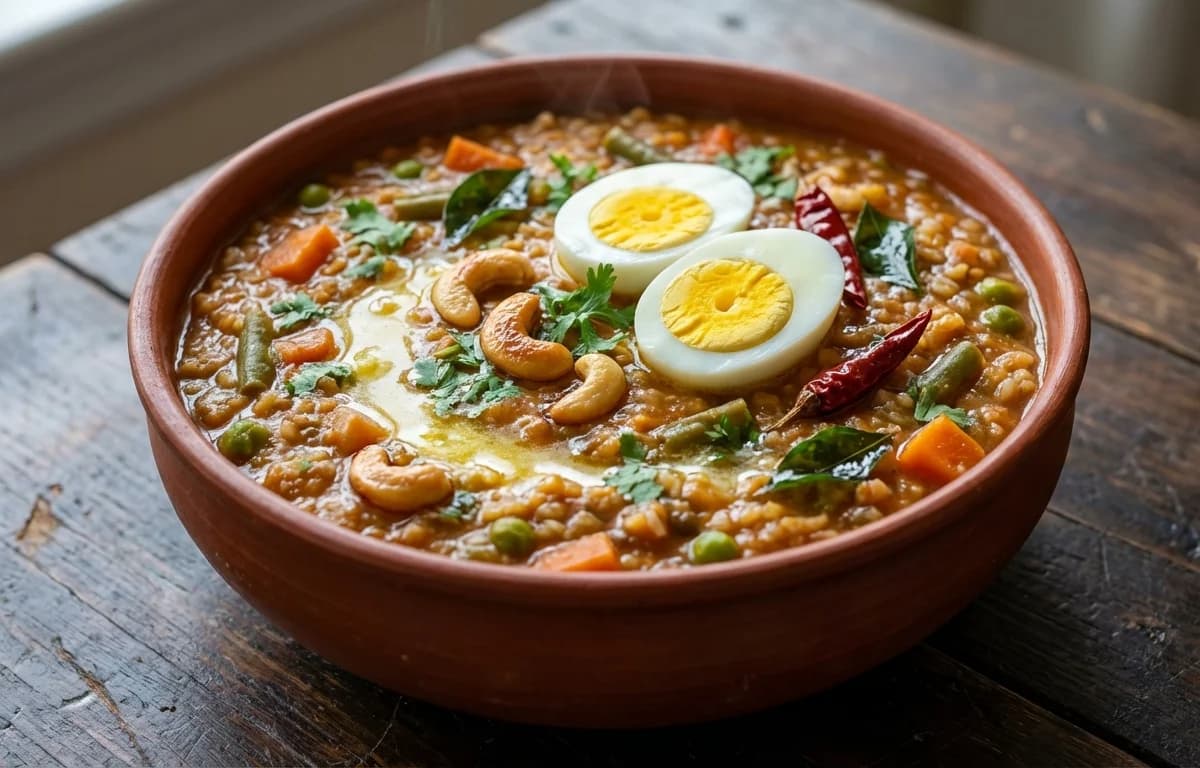
A hearty and flavorful twist on the classic Karnataka one-pot meal. This version features fluffy rice and creamy lentils cooked with vegetables and a fragrant spice blend, enriched with perfectly boiled eggs for a complete and satisfying meal.
For 4 servings
Prep Rice, Dal & Eggs
Pressure Cook Rice & Dal
Cook Vegetables & Masala
Crisp green beans stir-fried with mustard seeds, lentils, and fresh coconut. This simple South Indian side dish, known as poriyal, is light, flavorful, and comes together in just 15 minutes.
A classic Karnataka one-pot meal, reimagined for a low-glycemic diet. This version uses wholesome foxtail millet instead of rice, combined with lentils and vegetables in a fragrant, spicy tamarind broth. It's comfort food that's both hearty and healthy.
A wholesome and savory South Indian pancake made with a low-glycemic blend of millets, brown rice, and mixed lentils. Packed with fiber and protein, this diabetic-friendly adai is a delicious and guilt-free choice for breakfast or dinner.
Crispy, golden crepes made from a fermented rice and lentil batter, filled with a savory spiced potato mixture. A beloved South Indian classic, perfect for a hearty breakfast or light dinner, best served with sambar and coconut chutney.
A hearty and flavorful twist on the classic Karnataka one-pot meal. This version features fluffy rice and creamy lentils cooked with vegetables and a fragrant spice blend, enriched with perfectly boiled eggs for a complete and satisfying meal.
This south_indian recipe takes 60 minutes to prepare and yields 4 servings. At 616.73 calories per serving with 24.9g of protein, it's a moderately challenging recipe perfect for lunch or dinner.
Combine & Simmer
Prepare Tempering (Tadka)
Garnish & Serve
To make this recipe vegan, simply omit the eggs and replace the ghee with a neutral vegetable oil or coconut oil.
For a healthier twist, replace the white rice with brown rice, quinoa, or millets like foxtail millet. Adjust the water quantity and cooking time accordingly.
Incorporate traditional vegetables used in Bisi Bele Bath like drumsticks, brinjal (eggplant), chayote squash (chow chow), or yellow pumpkin for more complex flavors and textures.
The combination of toor dal and eggs makes this dish rich in high-quality protein, which is essential for muscle repair, growth, and overall body function.
With lentils and a variety of vegetables, this dish is high in dietary fiber, which aids in digestion, promotes gut health, and helps you feel full and satisfied for longer.
The complex carbohydrates from rice and lentils provide a steady release of energy, preventing sudden spikes and crashes in blood sugar levels.
One serving of Egg Bisi Bele Bath contains approximately 550-600 calories. This can vary based on the specific vegetables used and the amount of ghee.
Yes, it is a well-balanced and nutritious meal. It provides a good mix of complex carbohydrates from rice, protein from dal and eggs, fiber from vegetables, and healthy fats from ghee and nuts. It's a complete meal in one pot.
Absolutely. To make it vegan, omit the boiled eggs and substitute the ghee with a neutral-flavored vegetable oil or coconut oil for the cooking and tempering steps.
You can use a variety of vegetables like drumsticks, pumpkin, brinjal (eggplant), chayote squash, and bell peppers. Traditionally, a mix of root and gourd vegetables is used.
Yes, you can. Cook the soaked rice and dal in a large, heavy-bottomed pot with 5-6 cups of water. It will take longer, about 30-40 minutes, to become soft and mushy. You may need to add more hot water as it cooks.