Egg Puli Munchi
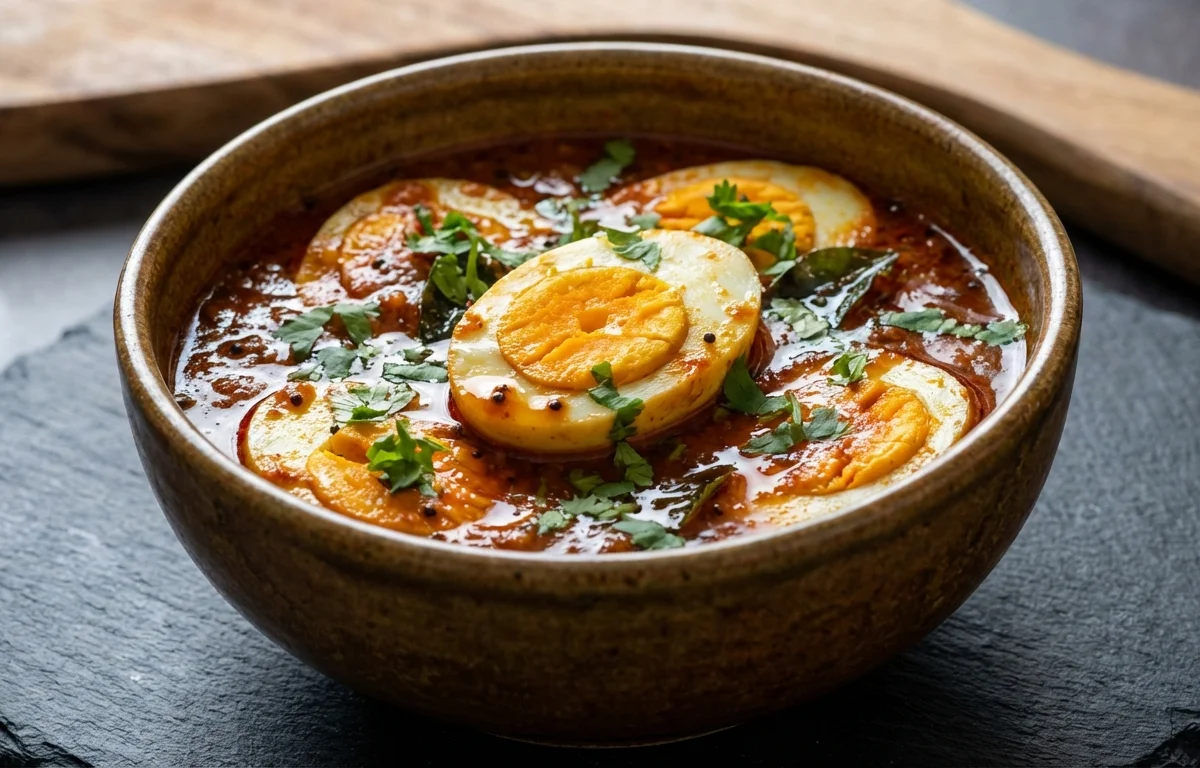
A fiery, tangy Mangalorean egg curry made with boiled eggs and a bold red chili-tamarind masala. It is rich, sharp, and deeply comforting, with just enough coconut to round out the heat.
For 4 servings
- prep · ~15 min
Soak the tamarind and chilies.
1.Soak the tamarind in a little warm water for 15 minutes.2.Soak the dry red chilies in warm water for 15 minutes to soften.3.Boil the eggs if not already done, then peel them and keep aside.TIPSoftened chilies grind smoother and give the curry its deep red color. - mix · ~4 min
Grind the puli munchi masala.
1.Squeeze the soaked tamarind and collect the pulp.2.Add soaked chilies, tamarind pulp, grated coconut, garlic, cumin seeds, and 0.5 cup water to a blender.3.Grind to a smooth, thick masala paste. - temper · ~1 min
Make the tempering.
1.Heat oil in a kadai over medium heat.2.Add mustard seeds and let them splutter.3.Add curry leaves and let them crackle for a few seconds.TIPKeep the heat medium so the mustard seeds pop without burning. - saute · ~11 min
Cook the onion and tomato base.
1.Add the sliced onion and cook until lightly golden, 5 to 6 minutes.2.Add chopped tomato and turmeric powder.3.Cook until the tomato softens and turns pulpy, 4 to 5 minutes. - simmer · ~5 min
Cook the masala.
Add the ground masala paste to the pan and cook for 4 to 5 minutes, stirring often, until the raw smell fades and the oil begins to show at the edges.
TIPStir often once the masala goes in, because coconut and chili paste can catch at the bottom. - simmer · ~7 min
Add water and season the curry.
Pour in the remaining water and add salt. Mix well and bring the curry to a gentle simmer until slightly thick and glossy.
- simmer · ~6 min
Simmer the eggs in the curry.
1.Make small slits on the boiled eggs so they absorb more flavor.2.Add the eggs to the simmering curry.3.Coat them gently in the masala and cook for 5 to 6 minutes. - rest · ~5 min
Let the curry rest for 5 minutes.
- serve
Serve hot with rice or neer dosa.
What to keep in mind.
7 tips from the recipe — small details that make a real difference to the final dish.
- 1Make 2-3 shallow slits in each boiled egg so the puli munchi masala seeps in without breaking the eggs.
- 2Use Byadagi chilies for the classic deep red color and rounded heat; hotter chilies can make the curry harsh.
- 3Cook the ground masala until the raw tamarind smell disappears and oil dots appear at the edges for a fuller taste.
- 4Keep the gravy at a gentle simmer after adding eggs; a hard boil can toughen the egg whites.
- 5If the curry tastes too sharp at first, let it rest 5-10 minutes before serving; the tamarind, chili, and coconut settle beautifully.
- 6For make-ahead cooking, prepare the masala paste a day in advance and refrigerate it; the curry comes together faster the next day.
- 7Store leftovers chilled and reheat on low heat with a splash of water so the coconut-based gravy stays smooth.
Adapt it for your goals.
Extra-spicy
Add a few hotter dried red chilies along with Byadagi if you want more heat while keeping the traditional red color.
thicker gravyThicker-gravy
Use a little more grated coconut and slightly less water for a richer curry that pairs especially well with neer dosa.
onion garlic freeOnion-garlic-free
Skip the onion and garlic for a simpler version; let the chili-tamarind-coconut masala be the main flavor driver.
fish styleFish-style
Use the same puli munchi masala with firm fish instead of eggs for a more traditional coastal variation.
Why this is on our healthy list.
Protein-Rich Main Dish
Eggs make this curry filling and satisfying, helping turn a simple rice meal into a more balanced one.
Spice and Aromatic Benefits
Garlic, cumin, curry leaves, and dried red chilies bring strong flavor along with beneficial plant compounds.
Moderate Coconut Body
A small amount of fresh coconut adds richness and texture without making the dish overwhelmingly heavy.
Frequently asked questions
Whole soaked chilies are best here because they give both texture and the traditional deep red color. Chili powder will change the taste and body of the masala.