Eral Thokku
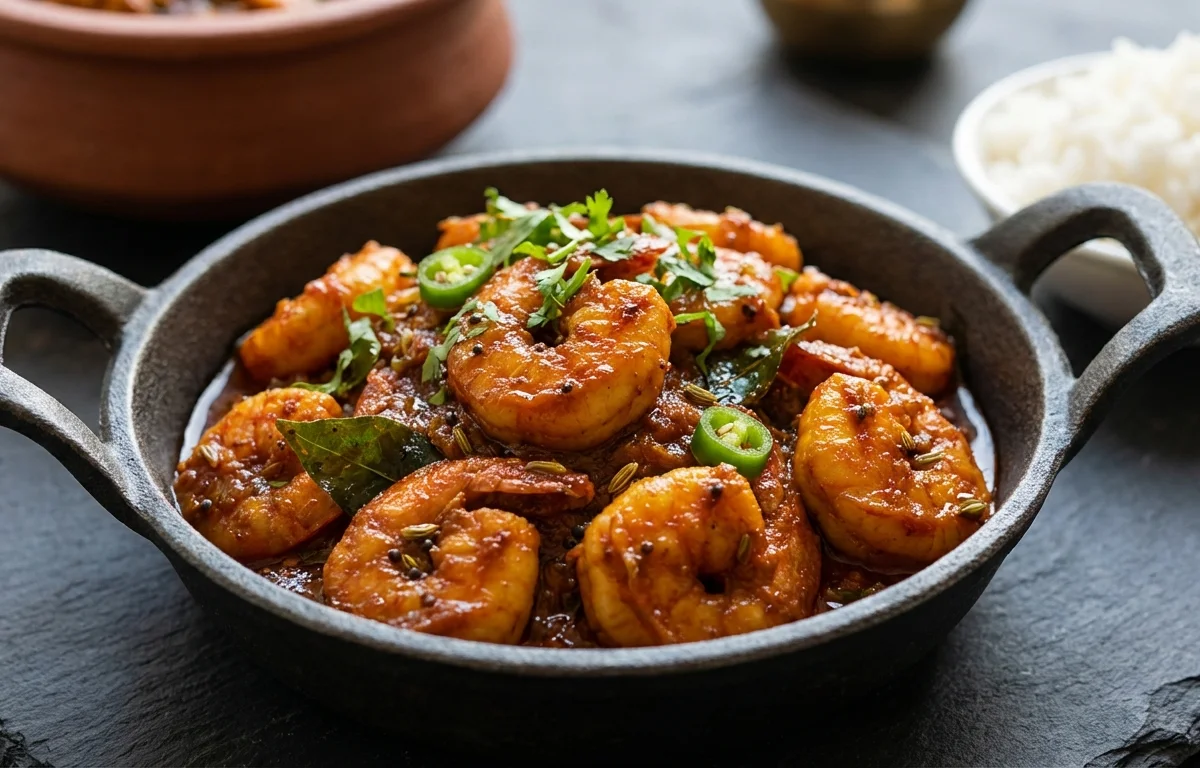
A spicy Tamil-style prawn thokku with onions, tomatoes, ginger, garlic, and bold masalas cooked down to a thick, clingy coating. It is rich, punchy, and perfect in small portions with rice, dosa, or chapati.
For 4 servings
- prep · ~10 min
Prep the prawns and aromatics.
1.Rinse the prawns well and pat them dry.2.Chop the onion and tomato finely for a thick thokku texture.3.Chop the ginger and garlic, slit the green chili, and keep the curry leaves ready. - temper · ~2 min
Make the tempering.
1.Heat oil in a wide pan over medium heat.2.Add mustard seeds and let them splutter.3.Add fennel seeds and curry leaves and cook for a few seconds until fragrant.TIPUse a wide pan so the masala reduces faster and coats the prawns evenly. - saute · ~7 min
Cook the onion base.
1.Add onion and green chili to the pan.2.Cook until the onion softens and turns light golden.3.Add ginger and garlic and sauté until the raw smell fades. - saute · ~8 min
Cook down the tomatoes and spices.
1.Add tomato and cook until soft and pulpy.2.Add turmeric powder, red chili powder, coriander powder, black pepper, garam masala, and salt.3.Mix well and cook until the masala thickens and the oil starts to show at the edges.TIPKeep the heat medium to avoid burning the spice powders while the tomatoes break down. - saute · ~5 min
Cook the prawns in the masala.
Add the prawns and mix well so they are fully coated in the masala. Cook on medium heat until the prawns turn pink, curl, and release some moisture.
TIPDo not overcook the prawns or they will turn rubbery; they need only a few minutes. - simmer · ~5 min
Reduce to a thick thokku.
Cook uncovered, stirring often, until the moisture cooks off and the masala becomes thick, glossy, and clings to the prawns. Stir in lemon juice at the end.
- garnish
Finish with cilantro.
- serve
Serve hot with rice, dosa, or chapati.
What to keep in mind.
7 tips from the recipe — small details that make a real difference to the final dish.
- 1Pat the prawns very dry before cooking so the masala clings instead of turning watery.
- 2Finely chop the onions and tomatoes; larger pieces will keep the thokku chunky rather than jammy.
- 3Wait for the tomatoes to fully break down and for oil to show at the edges before adding prawns.
- 4Use a wide kadai or skillet so the prawn juices evaporate quickly and the thokku thickens faster.
- 5Add lemon juice only after switching off or at the very end to keep its brightness fresh.
- 6Prawns are done when they turn pink and gently curl; tight curls usually mean they have overcooked.
- 7This tastes even better after a short rest, when the pepper, fennel, and curry leaf flavors settle into the masala.
Adapt it for your goals.
Extra-spicy
Increase green chili and black pepper for a sharper Tamil-style heat that pairs especially well with curd rice or dosa.
dry thokkuDry-thokku
Reduce a little longer after the prawns cook for a drier, clingier finish that works well as a side for chapati or as a stuffing.
squid thokkuSquid-thokku
Swap prawns for cleaned squid rings for a different seafood version with the same bold onion-tomato masala.
no garam masalaNo-garam-masala
Skip garam masala to keep the flavor more coastal and let fennel, pepper, curry leaves, and chili lead the dish.
Why this is on our healthy list.
Good Seafood Protein
Prawns provide lean protein, making this thokku satisfying even when served in small portions with rice or dosa.
Aromatic Spice Benefits
Ginger, garlic, black pepper, and curry leaves add strong flavor while bringing traditional digestive and warming ingredients to the dish.
Tomato and Onion Base
The masala uses tomatoes, onions, and herbs for body and flavor instead of cream, keeping the dish rich without being heavy.
Frequently asked questions
Usually the prawns were not dried well, the pan was too crowded, or the tomatoes were not cooked down enough before the prawns went in.