
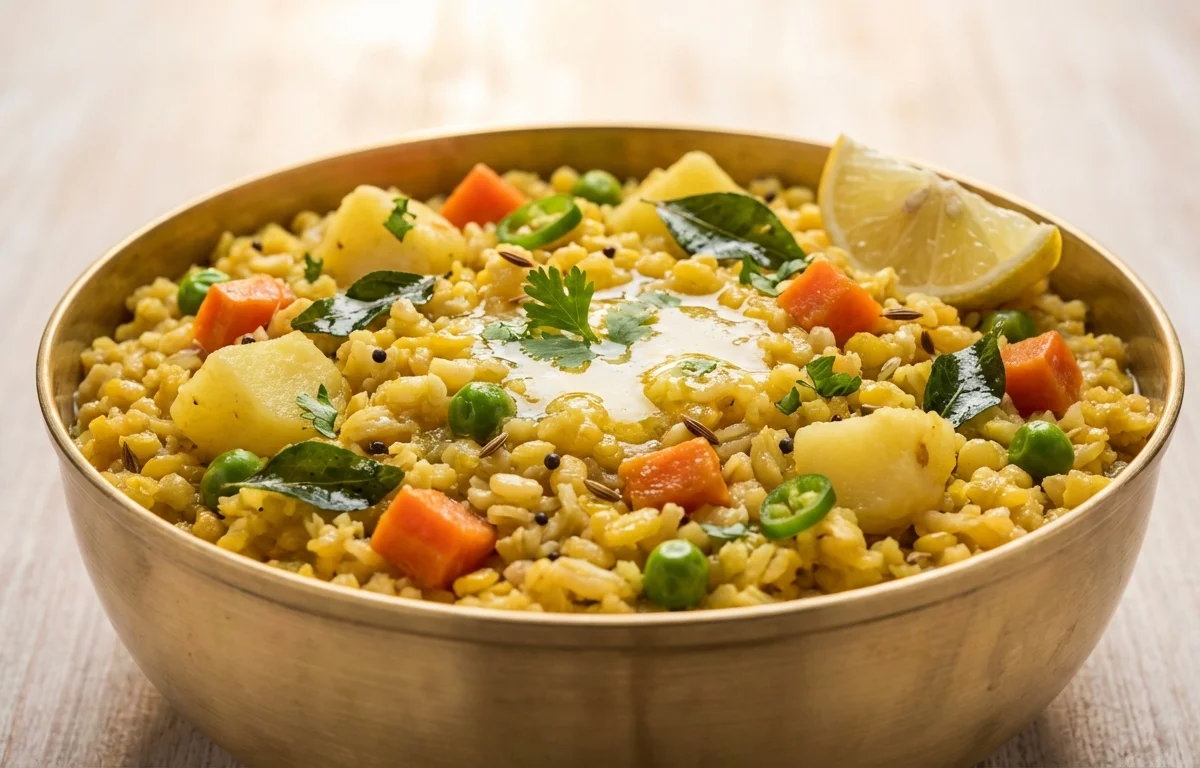
Fada ni Khichdi
A warm, comforting one-pot Gujarati khichdi made with broken wheat and yellow moong dal. Tempered with cumin, cinnamon, and cloves in ghee, this soft, porridge-like dish is lightly spiced and perfect with a dollop of ghee and a bowl of kadhi or yogurt on the side.
For 4 servings
- prep
Wash and drain the broken wheat and moong dal.
Rinse broken wheat and split yellow moong dal together under running water until water runs clear. Drain well and set aside.
- temper · ~5 min
Make the tempering in the pressure cooker.
1.Heat ghee in a pressure cooker over medium heat until shimmering.2.Add cumin seeds and let them crackle (30 sec).3.Add cinnamon stick, cloves, and asafoetida. Sauté until fragrant (20 sec).4.Add chopped onion, green chili, and ginger. Cook until onion turns translucent (3-4 min).5.Add turmeric powder and stir briefly (10 sec).TIPDon't brown the onions too much — Fada ni Khichdi stays pale golden, not dark. - pressure cook · ~20 min
Pressure cook the khichdi until soft.
1.Add the washed broken wheat and moong dal mixture to the pressure cooker.2.Add salt and 3 cups of water. Stir well.3.Close the lid and cook for 4-5 whistles on medium-high heat.4.Turn off the heat and let the pressure release naturally (10 min).TIPLetting the pressure release naturally gives the khichdi its characteristic soft, creamy texture. - mix · ~2 min
Mash and adjust consistency.
Open the cooker and mash the khichdi lightly with the back of a ladle. If it feels too thick, stir in a splash of hot water to reach a soft, porridge-like consistency. Check salt and adjust.
- garnish
Garnish with coriander and serve warm.
Spoon into bowls, top with a small dollop of ghee if desired, and garnish with chopped coriander leaves. Serve hot with kadhi or yogurt.
What to keep in mind.
6 tips from the recipe — small details that make a real difference to the final dish.
- 1Rinse the broken wheat and moong dal until the water runs clear to remove excess starch and prevent stickiness.
- 2Use a heavy-bottomed pressure cooker for even heat distribution and to avoid scorching the tempering.
- 3For a richer flavor, substitute half the water with full-fat coconut milk or light cream.
- 4If the khichdi is too thick after cooking, stir in hot water a little at a time until it reaches a smooth, porridge-like consistency.
- 5Let the pressure release naturally for at least 10 minutes — this allows the grains to absorb remaining steam and become perfectly creamy.
- 6For a vegan version, replace ghee with coconut oil or neutral oil and skip the ghee drizzle at the end.
Adapt it for your goals.
Low-oil
Reduce ghee to 1 tablespoon and skip the final ghee dollop. The khichdi remains soft and flavorful thanks to the tempering spices.
high proteinHigh-protein
Increase moong dal to 1/2 cup (and decrease broken wheat to 1/2 cup) for a higher protein-to-carb ratio, while keeping the same cooking time and water quantity.
veganVegan
Replace ghee with coconut oil or a neutral oil in the tempering, and serve with coconut yogurt or simply with kadhi made without yogurt.
jainJain
Omit onion and garlic completely. Use asafoetida generously (1/4 tsp) to mimic the savory depth, and add a pinch of black salt for extra flavor.
with veggiesWith veggies
Add 1/2 cup finely chopped carrots, peas, or bottle gourd (lauki) along with the grains for added nutrition and a subtle sweetness.
Why this is on our healthy list.
Good Source of Plant Protein
Yellow moong dal is a high-quality legume protein that complements the broken wheat, making this a complete protein when combined with a grain.
Rich in Dietary Fiber
Broken wheat (bulgur) is a whole grain that provides soluble and insoluble fiber, aiding digestion and promoting satiety.
Low in Fat and Cholesterol-Free
The dish uses heart-healthy ghee in moderation and is naturally free of cholesterol when made with plant-based oils.
Contains Anti-Inflammatory Spices
Turmeric, ginger, and cloves are known for their anti-inflammatory properties and can support immune health.
Gentle on Digestion
Moong dal is one of the easiest legumes to digest, and asafoetida reduces gas and bloating, making this a soothing meal.
Frequently asked questions
No, whole wheat won't soften the same way. Broken wheat has a coarser texture that breaks down into a creamy porridge; regular wheat would stay chewy.


