Feijoada
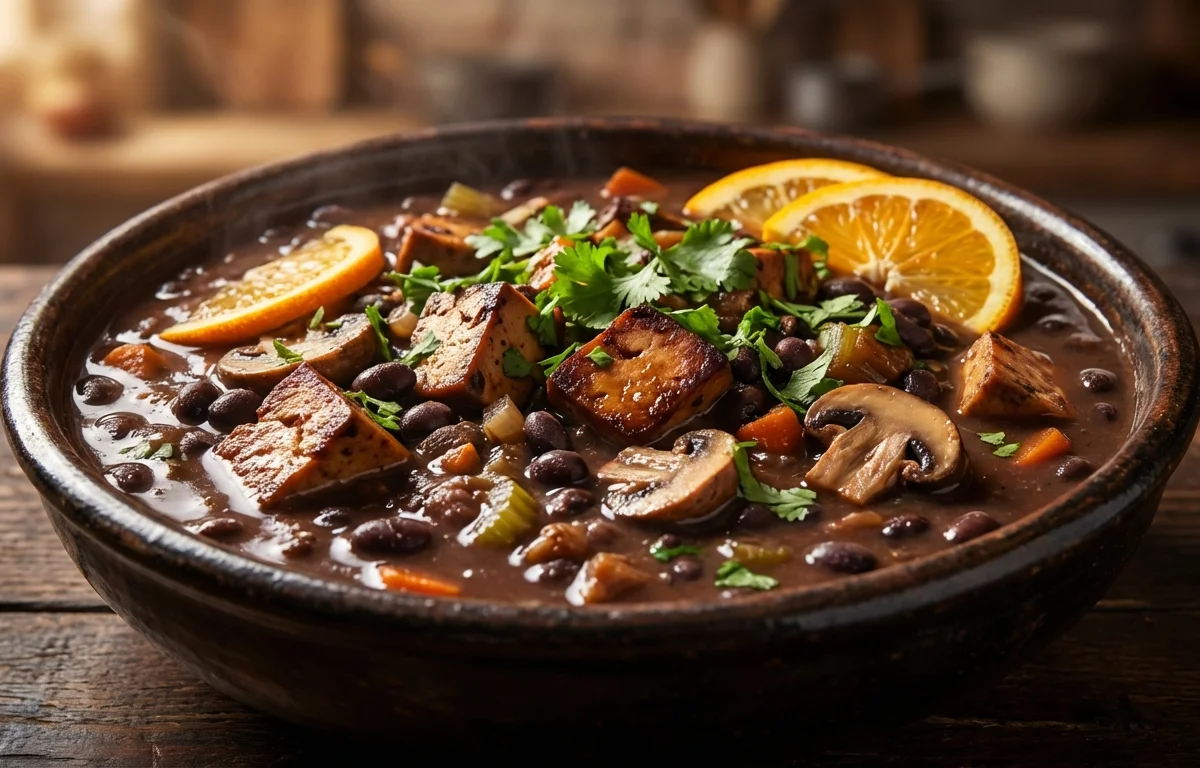
This slow-simmered Brazilian black bean stew is rich with pork, garlic, and warm spices. The beans turn silky and deeply savory as they cook, making a comforting pot that tastes even better after a short rest.
For 4 servings
- prep · ~20 min
Soak the beans and prepare the meats.
1.Rinse the black beans well, soak them overnight in plenty of water, and drain before cooking.2.Cut the pork shoulder into bite-size pieces.3.Slice the sausage into rounds and cut the bacon into small pieces.4.Chop the onion and mince the garlic.TIPSoaking helps the beans cook more evenly and shortens the simmering time. - saute · ~12 min
Brown the bacon, sausage, and pork.
1.Heat olive oil in a heavy pot over medium heat.2.Add the bacon and cook until it starts to render and lightly brown, about 4 minutes.3.Add the sausage and cook until lightly browned, about 3 minutes.4.Add the pork shoulder and cook until the edges lose their raw color and pick up some color, about 5 minutes.TIPDo not rush this step; browning the meats builds the deep flavor of the stew. - saute · ~5 min
Cook the onion and garlic.
Add the onion to the pot and cook until soft, about 4 minutes. Stir in the garlic and black pepper, and cook for 1 minute more until fragrant.
- boil · ~10 min
Add the beans and bring the stew to a boil.
Add the soaked black beans, bay leaf, salt, and water. Stir well, scrape up any browned bits from the bottom, and bring everything to a steady boil.
- simmer · ~100 min
Simmer until the beans are tender.
Lower the heat, cover partially, and simmer gently for 1 hour 30 minutes to 2 hours, stirring now and then, until the beans are soft and the broth is thick and glossy.
TIPIf the pot looks dry before the beans are tender, add a small splash of water and keep simmering gently. - rest · ~10 min
Let the feijoada rest for 10 minutes.
TIPA short rest helps the broth thicken and the flavors settle. - garnish
Garnish with cilantro.
Scatter the chopped cilantro over the top just before serving.
- serve
Serve the feijoada with orange wedges.
Spoon the stew into bowls and serve the orange wedges on the side for squeezing over each portion.
What to keep in mind.
6 tips from the recipe — small details that make a real difference to the final dish.
- 1Brown the bacon first and let it render before adding the other meats so the pot builds a richer base.
- 2Scrape up the browned bits when you add the water; that fond gives the broth much of its deep savory flavor.
- 3Keep the simmer gentle, not hard-boiling, so the beans turn creamy without splitting too much.
- 4If the stew looks thin at the end, mash a small spoonful of beans against the pot to thicken it naturally.
- 5Taste only near the end for extra salt, since the bacon and smoked sausage already add plenty of seasoning.
- 6Feijoada is even better the next day; chill it overnight and reheat slowly so the flavors meld fully.
Adapt it for your goals.
Low-sodium
Use reduced-salt smoked sausage, cut back the bacon slightly, and wait until the end to season; good if you want the same hearty feel with less saltiness.
spicySpicy
Add sliced fresh chili or a pinch of chili flakes with the garlic for a warmer, more assertive version.
beefyBeefy
Swap part of the pork shoulder for beef chuck to create a darker, meatier stew with a slightly different texture.
lighter porkLighter-pork
Use leaner pork loin plus less bacon for a lighter broth while keeping the smoked sausage for classic flavor.
Why this is on our healthy list.
Bean-Based Fiber
Black beans bring fiber and slow-digesting carbohydrates, which make this stew especially filling and satisfying.
Protein-Rich Meal
The combination of black beans, pork shoulder, bacon, and smoked sausage makes this a hearty dish with plenty of protein.
Garlic and Onion Depth
Garlic and onion add aromatic flavor along with plant compounds that make the stew more nutritious as well as savory.
Citrus Brightness at Serving
Serving with orange wedges adds freshness and vitamin-rich citrus that helps balance the richness of the meats.
Frequently asked questions
Yes, but the beans will usually take longer to cook and may soften less evenly. Overnight soaking gives the most reliable texture for this stew.