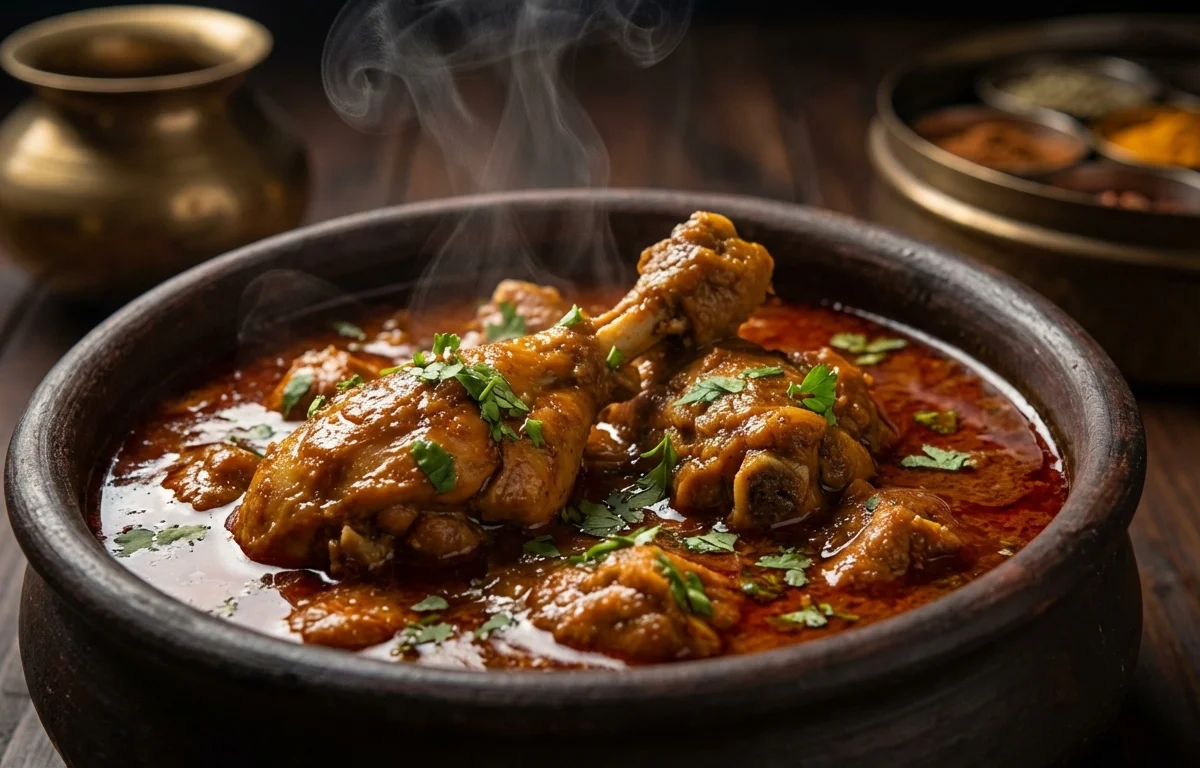
Gavran Kombdi Rassa
A fiery Maharashtrian country-style chicken curry with a deep roasted coconut and spice base. The gravy is thin yet full-bodied, making it perfect with bhakri, rice, or a simple meal spread.
For 4 servings
- prep · ~10 min
Prepare the chicken and masala ingredients.
1.Wash the chicken and keep it drained well.2.Slice the onions, chop the tomatoes, and roughly chop the ginger and garlic.3.Grate the fresh coconut and keep the dry coconut ready. - roast · ~8 min
Roast the coconut and whole spices.
1.Heat a pan on medium and dry roast the fresh coconut and dry coconut until deep golden.2.Add black peppercorns, cloves, cinnamon, dagad phool, and bay leaf.3.Roast for 1 to 2 minutes until fragrant, then cool slightly.TIPRoast the coconut evenly and do not burn it, or the rassa will taste bitter. - mix · ~3 min
Grind the roasted masala.
Transfer the roasted coconut and whole spices to a mixer jar. Add a little water and grind to a smooth, thick masala paste.
- saute · ~15 min
Cook the onion base.
1.Heat oil in a kadai or heavy pan over medium heat.2.Add the sliced onions and cook until nicely golden.3.Add ginger, garlic, and green chili and cook for 1 minute.4.Add tomatoes and cook until soft and pulpy. - saute · ~7 min
Add the powdered spices and chicken.
1.Add turmeric powder, red chili powder, coriander powder, and salt.2.Mix well for a few seconds so the spices bloom in the oil.3.Add the chicken pieces and cook on medium-high heat until they lose their raw color. - simmer · ~25 min
Cook the rassa with the ground masala.
Add the ground masala and mix well to coat the chicken. Pour in water, bring to a boil, then lower the heat and simmer until the chicken is cooked and the gravy turns flavorful and slightly oily on top.
TIPKeep the gravy on the thinner side, as gavran kombdi rassa is meant to be a flowing curry rather than a thick masala. - garnish · ~1 min
Finish with coriander leaves.
Stir in the chopped coriander leaves and simmer for 1 more minute.
- serve
Serve the gavran kombdi rassa hot.
What to keep in mind.
7 tips from the recipe — small details that make a real difference to the final dish.
- 1Roast the fresh and dry coconut to a deep golden brown, not just pale, for the signature earthy rassa flavour.
- 2Let the roasted coconut-spice mixture cool slightly before grinding so the paste turns smoother and less greasy.
- 3Brown the onions well; their sweetness balances the heat and deepens the thin curry without making it heavy.
- 4After adding the chicken, bhuno it until the pieces turn opaque and pick up the masala before adding water.
- 5Keep the gravy flowing rather than thick; Gavran Kombdi Rassa should coat rice lightly, not sit like a dense curry.
- 6Simmer until a faint layer of oil appears on top, which is the best cue that the coconut masala has cooked through.
- 7The rassa tastes even better after 20 to 30 minutes of resting, as the roasted spice and coconut flavours settle.
Adapt it for your goals.
Spicier
Increase green chili and red chili powder for a hotter, more rustic village-style rassa.
low oilLow-oil
Use less oil and sauté onions on lower heat with a splash of water; good if you want a lighter everyday curry.
thicker gravyThicker-gravy
Reduce the water slightly for a richer curry that pairs better with bhakri than with rice.
muttonMutton
Use the same roasted coconut masala with mutton, but simmer much longer for a robust country-style rassa.
Why this is on our healthy list.
Protein-Rich Main Dish
Bone-in chicken provides satisfying protein, making this curry filling and suitable as the centre of a meal.
Spice-Based Flavour Depth
Ginger, garlic, pepper, cloves, and coriander add strong flavour without relying on heavy cream or butter.
Coconut Adds Satiety
Fresh and dry coconut give the rassa body and richness, helping the dish feel satisfying even with a thinner gravy.
Frequently asked questions
The coconut or whole spices were likely over-roasted. Roast only until deep golden and fragrant, not dark brown or black.


.webp)