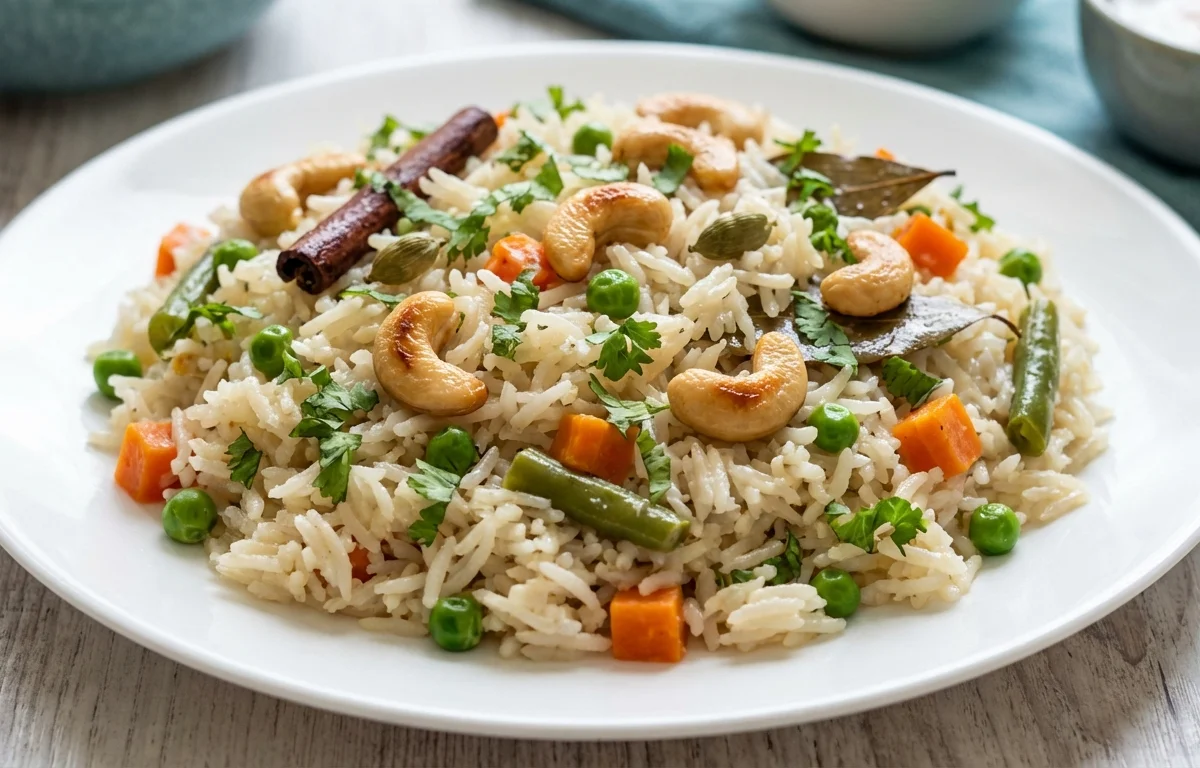
Goan Vegetable Pulao
Fragrant basmati rice cooked with mixed vegetables, warm whole spices, and a gentle Goan touch from coconut and green chilies. It is light, flavorful, and works beautifully as part of a festive or everyday meal.
For 4 servings
- prep · ~20 min
Prepare the rice and vegetables.
1.Wash the basmati rice until the water runs mostly clear.2.Soak the rice for 20 minutes, then drain well.3.Slice the onion, chop the tomato, and dice the potato and carrot.4.Cut the green beans, slit the green chilies, and chop the ginger and garlic.TIPDrained rice cooks up fluffier and keeps the grains separate. - saute · ~6 min
Cook the whole spices and onion.
1.Heat the oil and ghee in a heavy pan over medium heat.2.Add cinnamon, cloves, green cardamom, bay leaf, and black peppercorns.3.Cook for 30 seconds until fragrant.4.Add the sliced onion and cook until lightly golden, 5 to 6 minutes.TIPKeep the heat medium so the spices release flavor without burning. - saute · ~8 min
Build the vegetable base.
1.Add the ginger, garlic, and green chilies and cook for 1 minute.2.Add the tomato and turmeric powder and cook until the tomato softens, 3 to 4 minutes.3.Add the potato, carrot, green beans, green peas, and grated coconut.4.Mix well and cook for 3 minutes so the vegetables are lightly coated with the masala. - mix · ~1 min
Stir in the rice.
Add the drained basmati rice and gently mix for 1 minute so the grains are coated with the spiced oil and vegetables.
- boil · ~5 min
Add water and bring to a boil.
Pour in the water and add the salt. Stir once, then bring everything to a gentle boil over medium-high heat.
- steam · ~15 min
Cover and cook the pulao.
Lower the heat, cover tightly, and cook for 12 to 15 minutes until the rice is tender and the water is absorbed.
TIPDo not stir while the rice cooks or the grains may break and turn sticky. - rest · ~5 min
Rest the pulao for 5 minutes.
- garnish
Fluff with coriander leaves.
Open the pan, gently fluff the rice with a fork, and fold in the chopped coriander leaves.
- serve
Serve the Goan Vegetable Pulao hot.
What to keep in mind.
7 tips from the recipe — small details that make a real difference to the final dish.
- 1Drain the soaked basmati thoroughly before adding it, or the extra surface water can make the pulao gummy.
- 2Let the onion turn lightly golden, not deeply brown, so the Goan-style pulao stays delicate rather than heavy.
- 3Cut the potato, carrot, and beans into small even pieces so they finish cooking in the same time as the rice.
- 4After adding water, stir only once; repeated stirring breaks the soaked rice grains and makes the texture sticky.
- 5Resting the pulao for 5 minutes off the heat is key for firm, separate grains and even moisture distribution.
- 6If using frozen peas, add them straight from the freezer with the other vegetables so they stay bright and tender.
- 7For leftovers, cool the pulao quickly and refrigerate; reheat covered with a spoonful of water to loosen the grains.
Adapt it for your goals.
Vegan
Replace the ghee with more oil or coconut oil for a fully plant-based version that still suits the coconut-forward Goan flavor profile.
jainJain
Skip onion, garlic, ginger, and potato; use extra beans, carrots, and peas, and rely on whole spices, chili, and coconut for flavor.
low oilLow-oil
Use only 1 tablespoon oil total and sauté on slightly lower heat; the pulao stays light while still carrying the whole-spice aroma.
coconut richerCoconut-richer
Add a little more fresh grated coconut or finish with a spoon of lightly toasted coconut for a more distinctly Goan character.
Why this is on our healthy list.
Vegetable-Rich Main Dish
Carrot, beans, peas, tomato, and potato add a mix of fiber, color, and everyday nutrients to the rice.
Digestive Spice Support
Ginger, garlic, black pepper, cloves, and cardamom bring aromatic compounds that make the dish flavorful and warming.
Balanced Energy
Basmati rice provides satisfying carbohydrates, while vegetables and coconut help make the pulao feel more rounded and filling.
Frequently asked questions
Usually the rice was not drained well enough, got stirred too much after adding water, or cooked with too much moisture. Resting it after cooking also helps separate the grains.