Gongura Kodi Guddu Kura
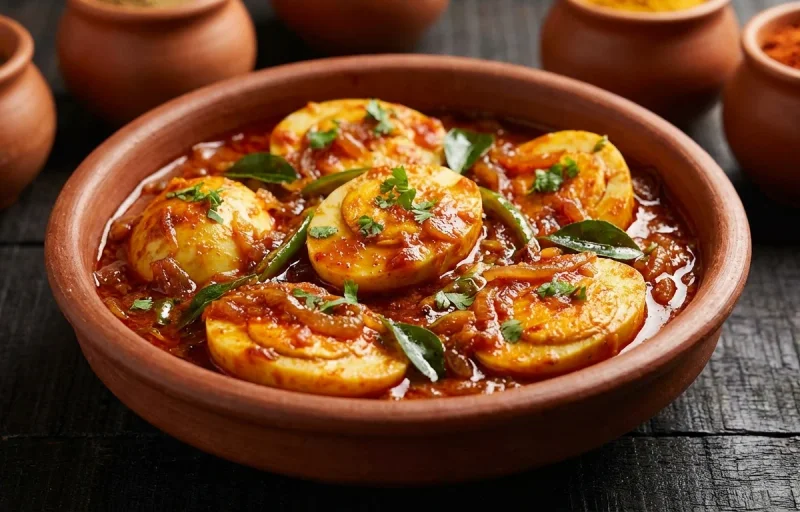
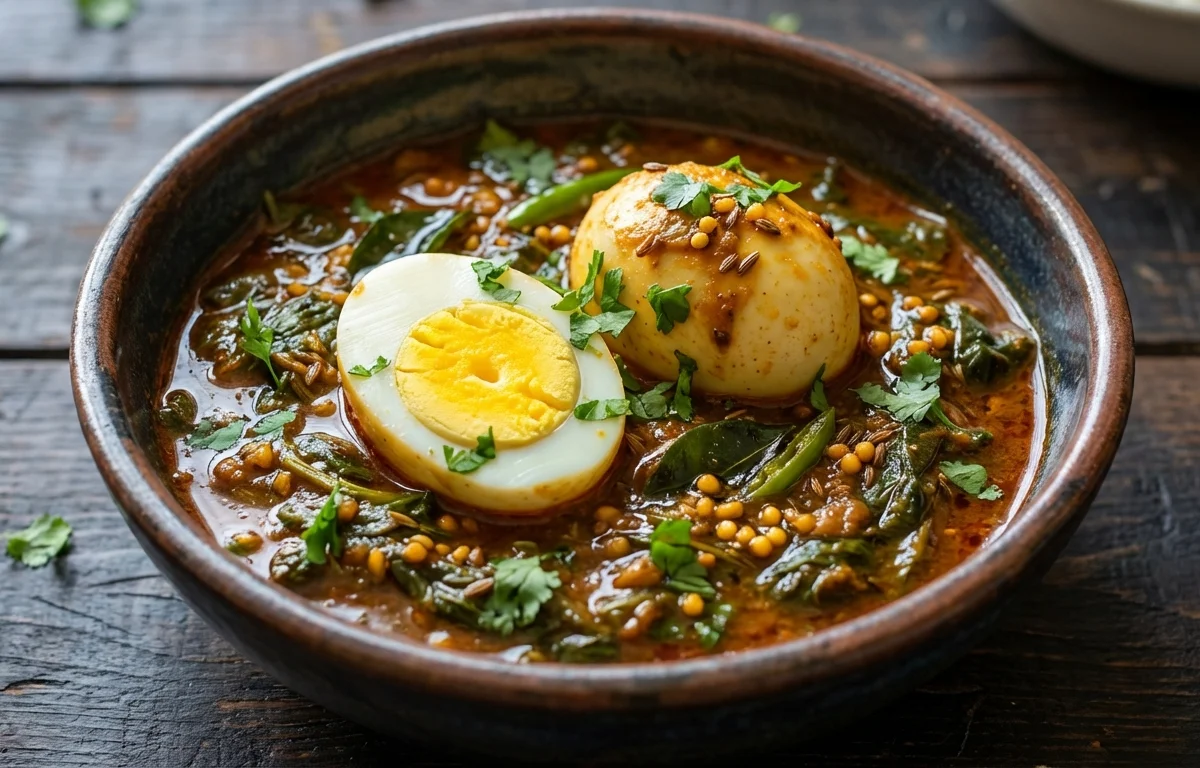
A bold Andhra-style curry where chicken, eggs, and tangy gongura come together in a deeply savory masala. The sorrel leaves cut through the richness beautifully, making this a satisfying side for rice or roti.
For 4 servings
- boil · ~12 min
Boil and peel the eggs.
Place the eggs in water, bring to a boil, and cook until hard-boiled. Cool, peel, and keep them whole or make light slits so they absorb the masala better.
TIPCooling the eggs before peeling helps the shells come off cleanly. - prep · ~10 min
Prepare the chicken and gongura.
Wash and drain the chicken well. Clean the gongura leaves, remove any tough stems, and roughly chop them so they cook down quickly in the pan.
- temper · ~1 min
Make the tempering.
1.Heat oil in a wide pan over medium heat.2.Add mustard seeds and let them splutter.3.Add cumin seeds and curry leaves.4.Stir for a few seconds until fragrant.TIPKeep the heat medium so the seeds crackle without burning. - saute · ~7 min
Cook the onion base.
1.Add chopped onion and slit green chili to the pan.2.Cook until the onion turns soft and light golden.3.Add ginger-garlic paste and sauté until the raw smell disappears. - saute · ~6 min
Add tomato and spices.
1.Add chopped tomato and cook until soft.2.Add turmeric powder, red chili powder, coriander powder, black pepper, and salt.3.Mix well and cook until the masala looks thick and glossy.TIPCook the tomato mixture well before adding chicken so the curry gets a deeper flavor. - simmer · ~15 min
Cook the chicken in the masala.
Add the chicken pieces and coat them well in the masala. Cover and cook on medium-low heat, stirring now and then, until the chicken starts releasing its juices and is mostly cooked.
- saute · ~8 min
Cook down the gongura leaves.
Add the chopped gongura leaves to the pan and mix well. Cook uncovered until the leaves wilt fully and blend into the chicken, giving the curry its tangy taste.
TIPGongura shrinks a lot as it cooks, so keep stirring until its raw sharpness mellows. - simmer · ~10 min
Finish the curry with eggs.
Pour in the water, add garam masala, and mix. Nestle in the boiled eggs, cover, and simmer until the chicken is tender and the masala clings to the meat and eggs.
TIPMake small slits in the eggs before adding them so the tangy masala flavors the inside too. - garnish
Garnish with cilantro.
- serve
Serve hot with rice or roti.
What to keep in mind.
7 tips from the recipe — small details that make a real difference to the final dish.
- 1Make 2-3 shallow slits in the boiled eggs so the gongura masala seeps in while simmering.
- 2Drain the chicken well before cooking; excess water will thin the masala and delay browning.
- 3Cook the onion-tomato base until oil starts to show slightly, or the curry can taste raw and sharp.
- 4Remove thick gongura stems before chopping, since they stay stringy even after simmering.
- 5Add gongura only after the chicken is mostly cooked so its tang stays bright instead of turning muddy.
- 6Keep the final gravy on the thicker side; this curry is best when the masala clings to the chicken and eggs.
- 7This tastes even better after a short rest, as the sour gongura and spices settle into the chicken.
Adapt it for your goals.
Spicier-andhra
Increase green chilies and red chili powder for a hotter, more fiery version that stands up especially well with plain rice.
bonelessBoneless
Use boneless chicken for faster cooking and easier serving, especially if making this for lunch boxes or weeknight meals.
dry styleDry-style
Skip most of the added water and cook longer at the end for a thicker, almost semi-dry gongura chicken egg masala.
egg heavyEgg-heavy
Add extra boiled eggs and slightly reduce the chicken for a more economical version with plenty of masala-coated egg halves.
Why this is on our healthy list.
Protein-Rich Main Dish
Chicken and eggs together make this curry filling and satisfying, helping turn it into a substantial meal rather than just a side.
Leafy Greens From Gongura
Gongura adds more than tang; as a leafy green, it brings plant compounds and variety to the dish.
Moderate Oil Cooking
The curry gets most of its richness from the masala, chicken, and eggs rather than relying on a large amount of oil.
Frequently asked questions
Yes. Boneless chicken works well, but it cooks faster, so reduce the simmering time to keep it tender and prevent the curry from drying out.

.webp)