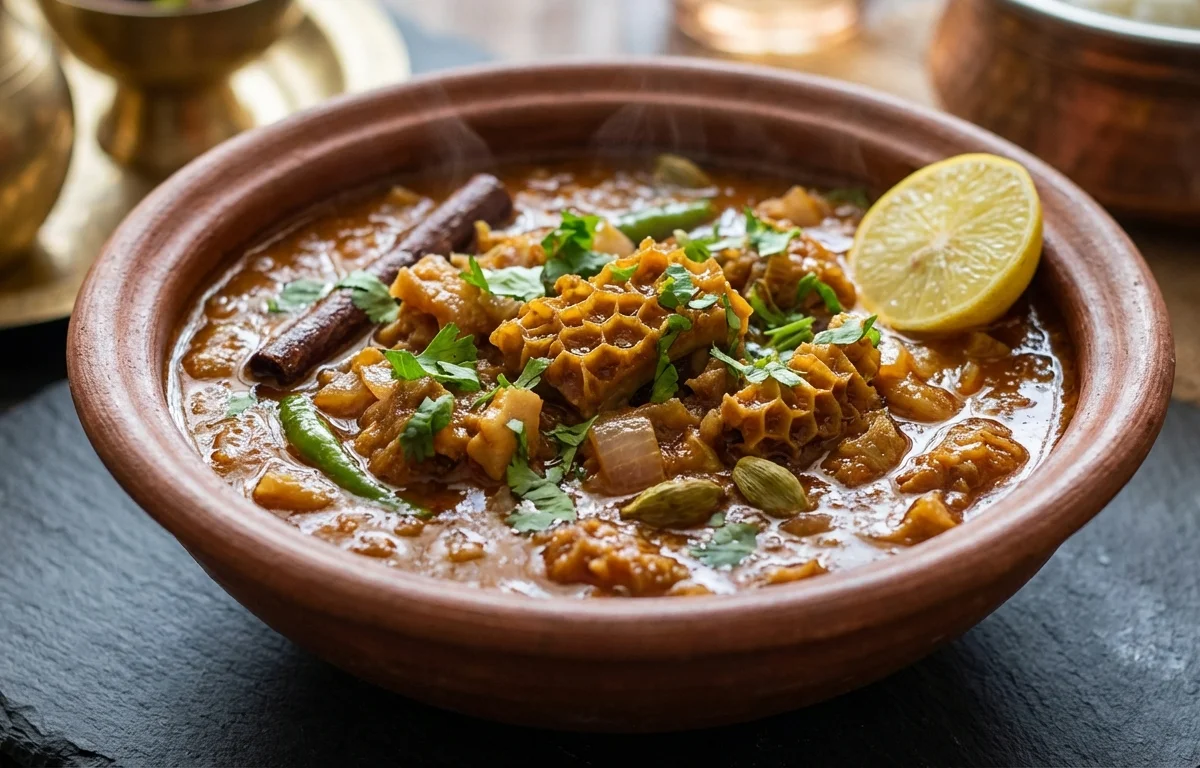
Hyderabadi Chakna
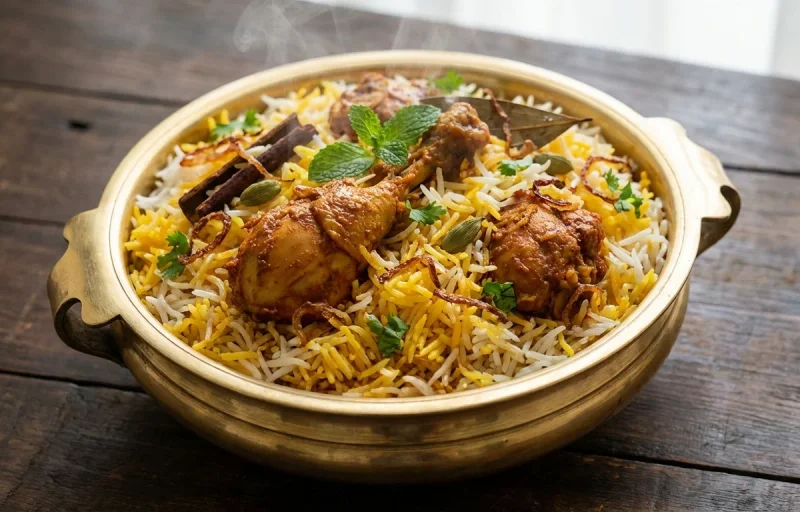
A rich Hyderabadi offal curry made with tender goat tripe simmered in a spiced onion and coconut gravy. Deeply savory and warming, this old-city specialty is usually enjoyed with naan, pav, or bagara rice.
For 4 servings
- prep · ~10 min
Clean and cut the tripe.
Wash the goat tripe very well under running water and cut it into small bite-size pieces. Keep it ready for boiling.
- boil · ~60 min
Boil the tripe until tender.
1.Place the goat tripe in a deep pot with 1 l water and a pinch of turmeric powder.2.Bring it to a boil over medium-high heat.3.Lower the heat and cook until the tripe turns tender but not falling apart, about 45-60 minutes.4.Keep the tripe and 2 cups of its cooking liquid aside.TIPSkim off any foam in the first few minutes for a cleaner-tasting curry. - roast · ~5 min
Roast the coconut and nuts.
1.Heat a dry pan over low heat.2.Roast the grated coconut until lightly golden.3.Add the sesame seeds and peanuts and roast until fragrant.4.Cool the mixture slightly.TIPKeep the heat low so the coconut browns evenly and does not turn bitter. - mix · ~3 min
Grind the masala paste.
Blend the roasted coconut, sesame seeds, peanuts, and a little of the reserved cooking liquid into a smooth paste.
- saute · ~10 min
Cook the whole spices and onions.
1.Heat oil in a heavy pot over medium heat.2.Add bay leaf, cloves, green cardamom, and cinnamon.3.Add the sliced onion and cook until golden brown, 8-10 minutes. - saute · ~7 min
Build the masala base.
1.Add ginger-garlic paste and green chili and cook for 1 minute.2.Add tomato and cook until soft and pulpy, 4-5 minutes.3.Add red chili powder, coriander powder, cumin powder, and the remaining turmeric powder.4.Cook the spices for 1 minute, stirring well. - simmer · ~3 min
Add the tripe and coconut paste.
Add the boiled goat tripe and the ground coconut paste to the pot. Mix well so the masala coats the tripe evenly.
- simmer · ~25 min
Simmer the chakna.
1.Pour in the reserved cooking liquid and the remaining water as needed for a curry consistency.2.Add salt and bring the curry to a gentle simmer.3.Cover and cook on low heat until the gravy thickens and the flavors come together, 20-25 minutes.4.Stir in garam masala during the last 2 minutes.TIPThe gravy should be rich and spoon-coating, not watery. - garnish · ~1 min
Finish with lemon juice and coriander leaves.
- serve · ~1 min
Serve hot.
Serve Hyderabadi Chakna hot with naan, pav, or rice.
What to keep in mind.
8 tips from the recipe — small details that make a real difference to the final dish.
- 1Skim the foam while boiling the tripe so the final gravy tastes cleaner and less gamey.
- 2Do not overboil the tripe in the first stage; it should be tender with a slight chew, not mushy.
- 3Roast the coconut, peanuts, and sesame only until lightly golden, because dark browning can make the masala bitter.
- 4Blend the coconut-nut mixture very smooth so the chakna gets its signature rich, velvety body.
- 5Brown the onions deeply but evenly; this gives the gravy much of its color and old-city style depth.
- 6If the curry tightens too much as it simmers, loosen it with reserved tripe stock rather than plain water for better flavor.
- 7Add the lemon juice only after turning off the heat so its brightness stays fresh against the rich gravy.
- 8Chakna tastes even better after a few hours' rest, once the tripe absorbs the masala and the gravy settles.
Adapt it for your goals.
Pressure-cooker
Pressure-cook the cleaned tripe until tender to cut down cooking time while still getting a full-bodied chakna.
spicierSpicier
Increase green chilies and red chili powder for a hotter old-city style version that pairs especially well with pav.
lighter gravyLighter-gravy
Reduce peanuts and coconut slightly for a less heavy curry while keeping the same onion-spice base.
bagara rice pairingBagara-rice pairing
Keep the gravy a bit looser if serving with bagara rice so it soaks in better and feels more like a main curry.
Why this is on our healthy list.
Rich in Protein
Goat tripe contributes substantial animal protein, making this curry filling and satisfying when served as a main dish.
Mineral-Dense Ingredients
Offal, sesame seeds, and peanuts bring a range of naturally occurring minerals along with the robust flavor.
Digestive Spice Support
Ginger, garlic, cumin, coriander, and cloves add aroma while traditionally helping make rich dishes feel more balanced.
Balanced Fats From Nuts and Coconut
The coconut, peanuts, and sesame add richness and body, helping the spices bloom and making the curry more satiating.
Frequently asked questions
It should be tender enough to bite through easily but still slightly chewy. If it is rubbery, it needs more boiling; if it shreds apart, it has gone too far.