Hyderabadi Marag
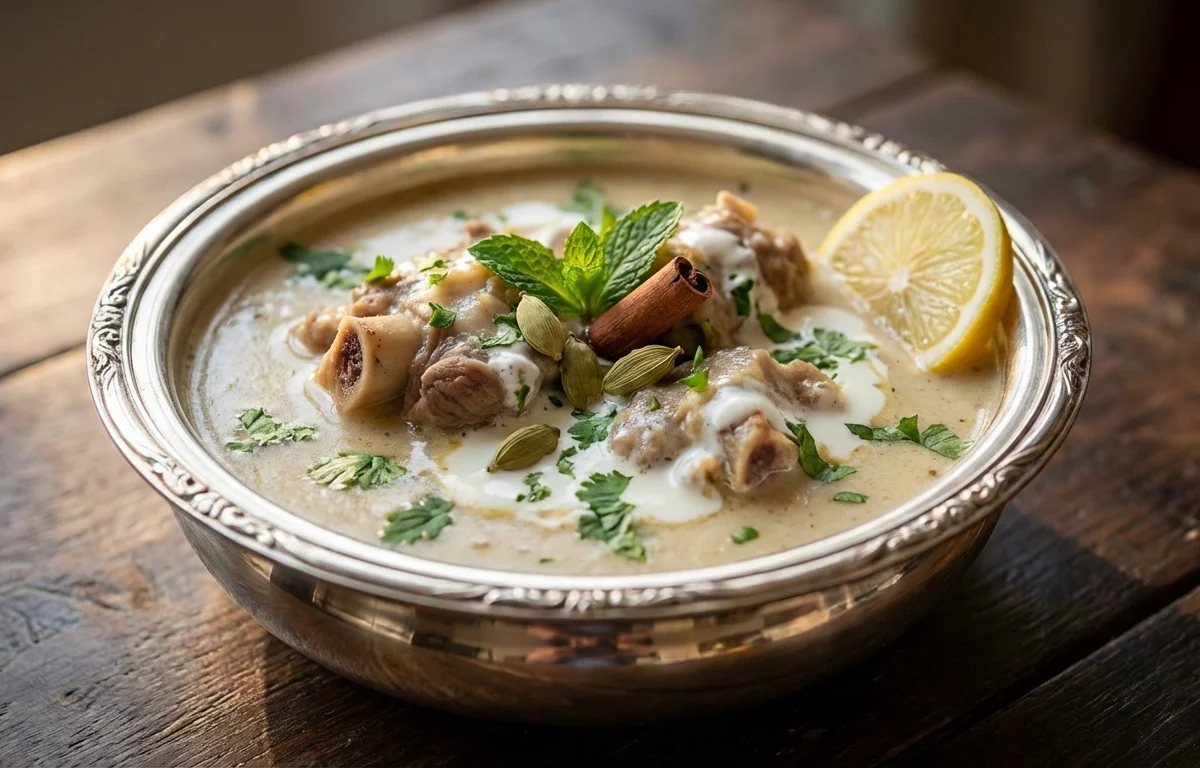
A light yet deeply flavored mutton soup from Hyderabad, marag is gently simmered with bones, spices, herbs, and a creamy nut paste. It is rich without feeling heavy and is often served as a festive starter alongside wedding-style meals.
For 4 servings
- prep · ~30 min
Prepare the nut paste.
1.Soak the cashews in water for 30 minutes.2.Drain and grind the cashews with grated coconut and a little water to a smooth paste.3.Whisk the yogurt in a bowl until smooth.TIPKeep the paste very smooth so the soup stays silky instead of grainy. - saute · ~7 min
Cook the onions and aromatics.
1.Heat ghee in a heavy pot over medium heat.2.Add sliced onion and cook until soft and lightly golden, about 6 minutes.3.Add ginger-garlic paste and sauté until the raw smell fades, about 1 minute. - boil · ~10 min
Add the mutton and whole spices.
1.Add the mutton pieces and stir for 2 to 3 minutes until lightly coated in the ghee and onions.2.Add green chili, cinnamon, green cardamom, cloves, black peppercorns, coriander seeds, cumin seeds, bay leaf, turmeric powder, and salt.3.Pour in the water and bring the pot to a boil. - simmer · ~60 min
Simmer the marag gently.
Lower the heat, cover partially, and simmer until the mutton is very tender and the broth turns rich and fragrant, about 60 minutes. Skim any foam from the top for a cleaner soup.
TIPA gentle simmer keeps the broth clear; a hard boil can make it cloudy. - mix · ~10 min
Stir in the yogurt and nut paste.
1.Reduce the heat to low.2.Add the whisked yogurt and stir well.3.Add the cashew-coconut paste and mix until fully blended into the broth.4.Add chopped mint and cook gently for 8 to 10 minutes without boiling hard.TIPLow heat helps stop the yogurt from splitting. - garnish
Finish with coriander leaves and lemon juice.
- serve
Serve the marag hot.
Ladle into katoris, making sure each serving gets some broth and tender mutton. Serve as a starter or alongside a Hyderabadi meal.
What to keep in mind.
7 tips from the recipe — small details that make a real difference to the final dish.
- 1Use a few marrow bones along with the mutton; they give marag its signature body without needing cream.
- 2Keep the onions only lightly golden, not deeply browned, so the broth stays pale and delicate.
- 3After adding yogurt, keep the flame low and stir continuously for a minute to prevent splitting.
- 4Blend the cashew-coconut paste very smooth and strain it if needed for a silkier, wedding-style texture.
- 5Simmer gently rather than boiling hard; rolling boils can toughen the meat and cloud the broth.
- 6If making ahead, chill the soup and lift off any solidified fat before reheating for a cleaner finish.
- 7Add the lemon juice only at the end so the broth stays bright and the dairy doesn't curdle.
Adapt it for your goals.
Pressure-cooker
Cook the mutton and whole spices under pressure first to shorten the simmering time, then add yogurt and nut paste after pressure drops.
extra pepperyExtra-peppery
Increase black peppercorns and add a few freshly crushed peppercorns at the end for a sharper, more warming broth.
bonelessBoneless
Use boneless mutton for easier serving, but include a few bones separately while simmering so the broth still gets depth.
dairy lightDairy-light
Reduce the yogurt slightly and lean on the cashew-coconut paste for body if you want a milder tang and softer finish.
Why this is on our healthy list.
Protein-Rich Starter
Mutton provides substantial protein, making this soup filling and useful as a nourishing first course.
Collagen-Rich Bone Broth Base
Bone-in pieces and marrow bones enrich the broth with natural gelatin, which gives the soup body and a satisfying mouthfeel.
Digestive Aromatics
Ginger, garlic, cumin, coriander, mint, and pepper add layered flavor while traditionally supporting easier digestion in rich meat dishes.
Frequently asked questions
Yes. Lamb works well, though it may cook faster or render a slightly richer broth than goat depending on the cut.