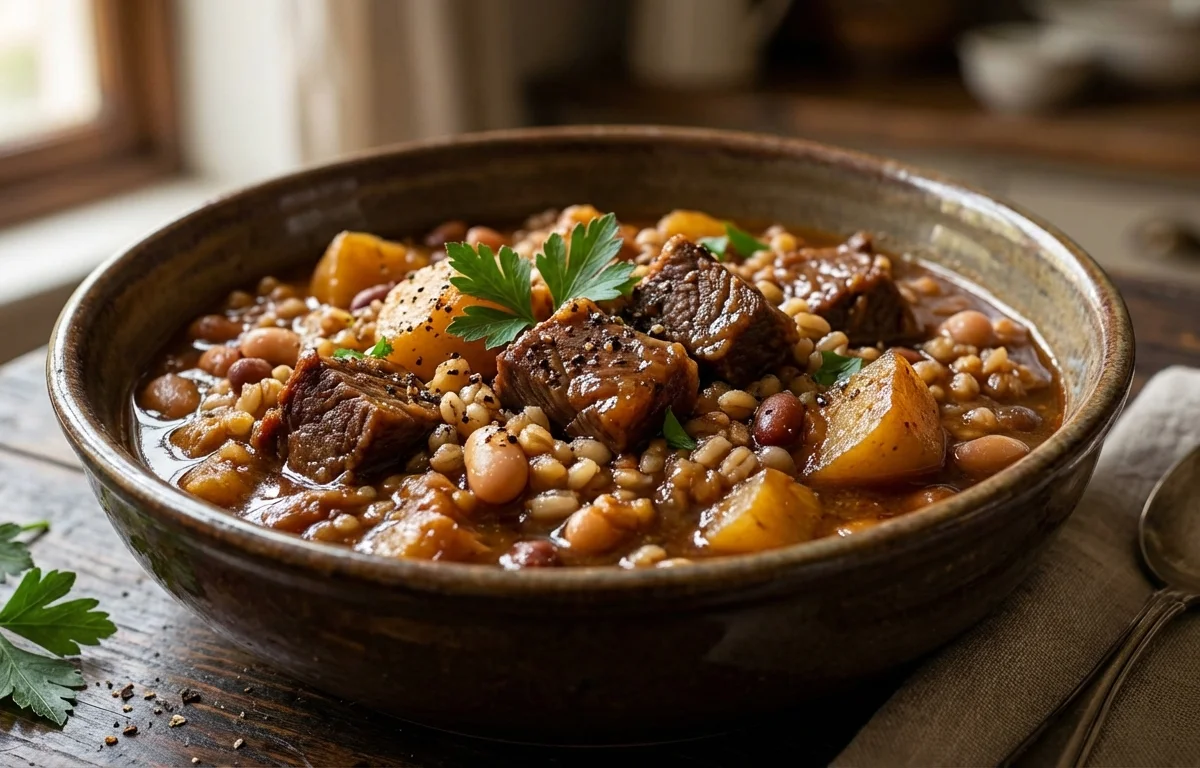
Jewish Cholent
A deeply savory, slow-cooked Sabbath stew that fills the house with an irresistible aroma. Beef, beans, barley, and potatoes meld together overnight in one pot, emerging as a rich, thick, and comforting dish that's been a Jewish tradition for centuries.
For 8 servings
- prep
Soak the beans overnight.
The night before cooking, place the dried kidney beans and chickpeas in a large bowl. Cover with cold water by at least 3 inches. Let soak at room temperature for at least 8 hours or overnight. Drain before using.
- prep
Preheat the oven and prep ingredients.
Preheat your oven to 225°F (107°C). Rinse the barley under cold water until the water runs clear. Chop the onions, mince the garlic, peel and halve the potatoes, and cut the beef into uniform 2-inch cubes.
- saute · ~12 min
Brown the beef in batches.
Heat the oil in a large dutch oven over medium-high heat. Pat the beef cubes dry with a paper towel. Sear the beef in a single layer, working in 2-3 batches to avoid crowding, until deeply browned on all sides, about 3-4 minutes per batch. Transfer browned beef to a plate.
TIPDon't skip the browning step — the dark crust on the beef creates the deep, savory foundation of the stew. - saute · ~7 min
Sauté the onions and garlic.
In the same pot, reduce the heat to medium. Add the chopped onions and cook, scraping up the browned bits from the bottom of the pot, until softened and translucent, about 5-6 minutes. Add the minced garlic and sauté for 30 seconds more until fragrant.
- assemble
Layer the cholent in the pot.
Remove the pot from the heat. Layer the ingredients in this order: spread half the soaked, drained beans on the bottom, then the barley, then the halved potatoes. Arrange the browned beef on top, then cover with the remaining beans. Sprinkle evenly with paprika, salt, and black pepper. Drizzle the honey over everything.
TIPLayering is key — beans on the bottom protect the meat from scorching, while the potatoes on top stay intact and don't get mushy. - simmer · ~10 min
Add water and bring to a simmer.
Carefully pour enough boiling water into the pot to cover all the ingredients by about 1 inch. Place the pot on the stove over high heat and bring to a rolling boil. Skim off any foam that rises to the surface.
- bake
Slow-cook the cholent overnight.
Once boiling, cover the dutch oven tightly with its lid or seal well with a layer of foil and then the lid. Transfer the pot to the preheated oven. Let it cook undisturbed for 12 to 16 hours, or overnight. The long, slow cook transforms the ingredients into a rich, thick stew.
TIPFor an authentic finish, leave the cholent in the oven until Shabbat lunch the next day — it only gets better with time. - serve
Check consistency and serve hot.
Before serving, carefully remove the lid. Stir the cholent gently — it should be thick and stew-like. If it's too dry, stir in a splash of boiling water; if too wet, let it sit uncovered for a few minutes. Spoon into deep bowls and serve piping hot.
What to keep in mind.
6 tips from the recipe — small details that make a real difference to the final dish.
- 1Sear the beef in batches to develop a deep brown crust for maximum flavor.
- 2Layer beans on the bottom to prevent scorching during the long overnight cook.
- 3Use a heavy Dutch oven with a tight-fitting lid to retain moisture and heat evenly.
- 4Check the liquid level after 8 hours; add a splash of boiling water if it looks dry.
- 5Let the cholent rest for 10 minutes after cooking to allow flavors to meld further.
- 6For a thicker consistency, remove the lid for the last 30 minutes of cooking.
Adapt it for your goals.
Vegetarian
Swap the beef for an extra 400g of mixed mushrooms (cremini and shiitake) and use vegetable broth. The mushrooms add umami and meaty texture for a meat-free Sabbath meal.
low carbLow-carb
Replace the barley and beans with 1 cup of cauliflower florets and 1 cup of turnip chunks. This reduces carbohydrates significantly while still providing a hearty, slow-cooked stew.
spicySpicy
Add 1 teaspoon of smoked paprika and 1/2 teaspoon of cayenne pepper with the paprika layer. It adds a warm, smoky heat that complements the beef and beans without overpowering.
Why this is on our healthy list.
Rich in Plant Protein
Kidney beans and chickpeas provide a hearty dose of plant-based protein and fiber, supporting digestive health and satiety.
Good Source of Iron
Beef and legumes both contribute heme and non-heme iron, which helps transport oxygen in the blood and reduce fatigue.
Packed with Soluble Fiber
Pearl barley and beans are rich in beta-glucan and other soluble fibers that can help lower cholesterol and stabilize blood sugar.
Mineral-Rich Base
Potatoes provide potassium and vitamin C, while onions and garlic offer prebiotic compounds that support gut health.
Frequently asked questions
Yes, but reduce the cooking time to 8–10 hours and add them only after the first 4 hours to prevent them from turning to mush.