
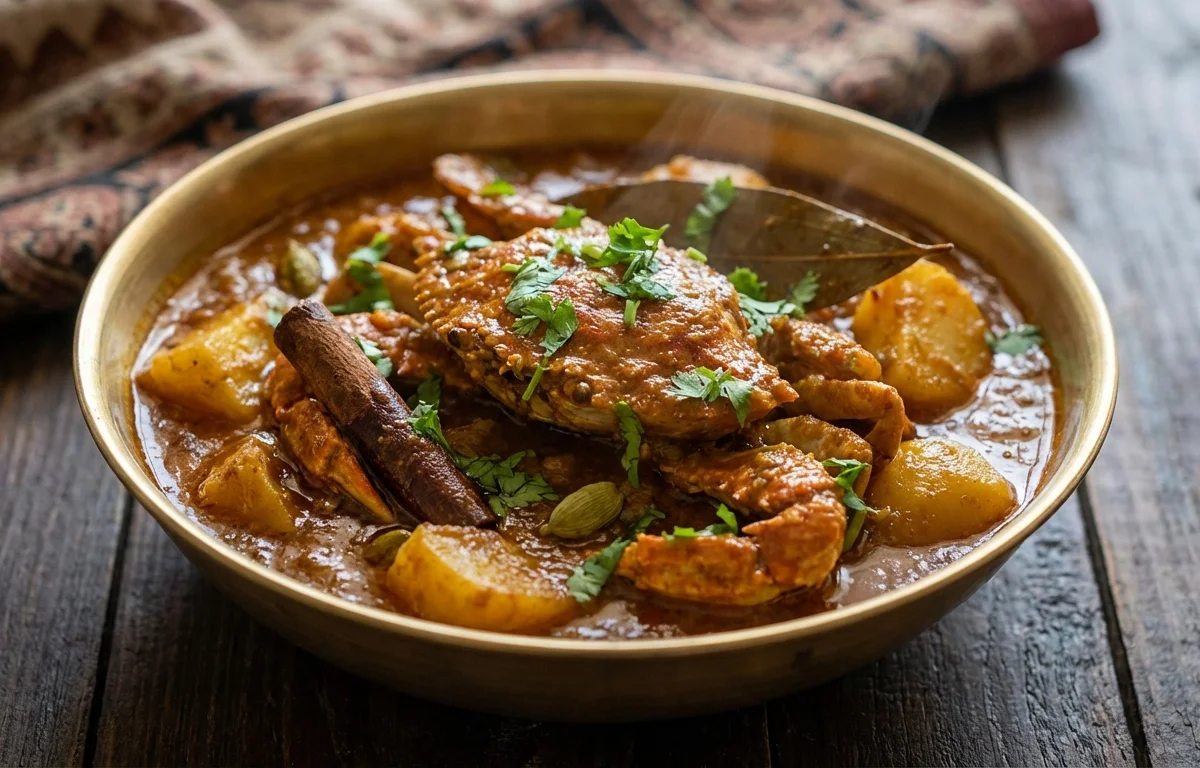
Kankada Kassa
A bold Bengali crab curry with a thick, dark masala and plenty of warming spices. The crab cooks right in the onion-tomato base, soaking up rich flavor while staying sweet and juicy inside the shell.
For 4 servings
- prep · ~10 min
Clean and season the crab.
1.Rinse the crab pieces well and drain fully.2.Rub in half the turmeric powder and a small pinch of the salt.3.Set aside for 10 minutes while you prepare the masala.TIPDrain the crab well so it fries lightly instead of releasing too much water in the pan. - fry · ~8 min
Fry the potatoes and crab.
1.Heat the mustard oil in a kadai until it reaches smoking point, then lower the heat slightly.2.Add the potato halves and fry until light golden on the edges, 4 to 5 minutes. Remove and keep aside.3.Add the crab pieces and fry for 2 to 3 minutes, turning once, just until the shells turn bright and fragrant. Remove and keep aside.TIPDo not fully cook the crab now; a brief fry seals in flavor and it will finish cooking in the gravy. - saute · ~11 min
Cook the whole spices and onions.
1.In the same oil, add bay leaf, cinnamon, green cardamom, and cloves.2.Stir for 20 to 30 seconds until aromatic.3.Add the sliced onion and cook over medium heat until deep golden, 8 to 10 minutes.TIPTake time with the onions; their deep color gives kassa its signature dark, rich masala. - saute · ~10 min
Build the masala base.
1.Add the ginger paste and garlic paste and cook for 1 minute.2.Add tomato and cook until soft and jammy, 4 to 5 minutes.3.Add the remaining turmeric powder, red chili powder, cumin powder, coriander powder, remaining salt, and sugar.4.Cook the masala, stirring often, until the oil begins to separate, 3 to 4 minutes.TIPIf the masala catches at the bottom, splash in 1 or 2 tablespoons of water and keep cooking. - simmer · ~12 min
Cook the crab in the thick gravy.
1.Return the fried potatoes and crab to the kadai and coat them well in the masala.2.Add the slit green chili and hot water.3.Cover and simmer over low heat until the potatoes are tender and the crab is cooked through, 10 to 12 minutes.TIPKeep the gravy thick, not watery; kassa is meant to cling to the crab and potatoes. - garnish · ~1 min
Finish with garam masala and coriander leaves.
Sprinkle garam masala and chopped coriander leaves over the curry. Cook uncovered for 1 more minute to bring everything together.
- serve
Serve hot.
Rest the curry for 5 minutes, then serve hot with steamed rice or luchi.
What to keep in mind.
7 tips from the recipe — small details that make a real difference to the final dish.
- 1Let the mustard oil smoke first, then reduce the heat to tame its raw sharpness before frying.
- 2Pat the crab dry after rinsing so it fries lightly and the masala does not turn watery.
- 3Brown the onions to a deep golden stage, not just soft, for the signature dark kassa color.
- 4Fry the crab only until the shells turn bright; overfrying now can make the meat tough later.
- 5Use hot water for simmering so the masala does not seize and the oil stays emulsified.
- 6Keep the final gravy thick and clingy; if it loosens too much, simmer uncovered for a few minutes.
- 7Rest the curry for 5 minutes before serving so the crab and potatoes absorb the masala better.
Adapt it for your goals.
Spicier
Add extra slit green chilies or a little more red chili powder for a hotter, more fiery Bengali-style kassa.
low oilLow-oil
Reduce the mustard oil slightly and cook the onions more slowly with small splashes of water; the curry will be lighter but still flavorful.
no potatoNo-potato
Skip the potatoes for a more crab-forward dish with a thicker, more concentrated masala.
coconut touchCoconut-touch
Add a few tablespoons of coconut milk at the end for a softer, slightly sweeter finish that balances the mustard oil and spices.
Why this is on our healthy list.
Protein-Rich Seafood
Crab provides high-quality protein, making this curry satisfying while keeping the focus on seafood rather than heavy cream.
Aromatic Spice Benefits
Ginger, garlic, turmeric, cumin, and coriander bring both strong flavor and beneficial plant compounds to the dish.
Vegetable-Based Masala
The onion-tomato base and potatoes add body, natural sweetness, and some fiber without relying on packaged sauces.
Frequently asked questions
The shells turn bright and vivid, the meat becomes opaque, and the crab should finish cooking during the covered simmer without needing a long boil.


-curry.webp)
.webp)