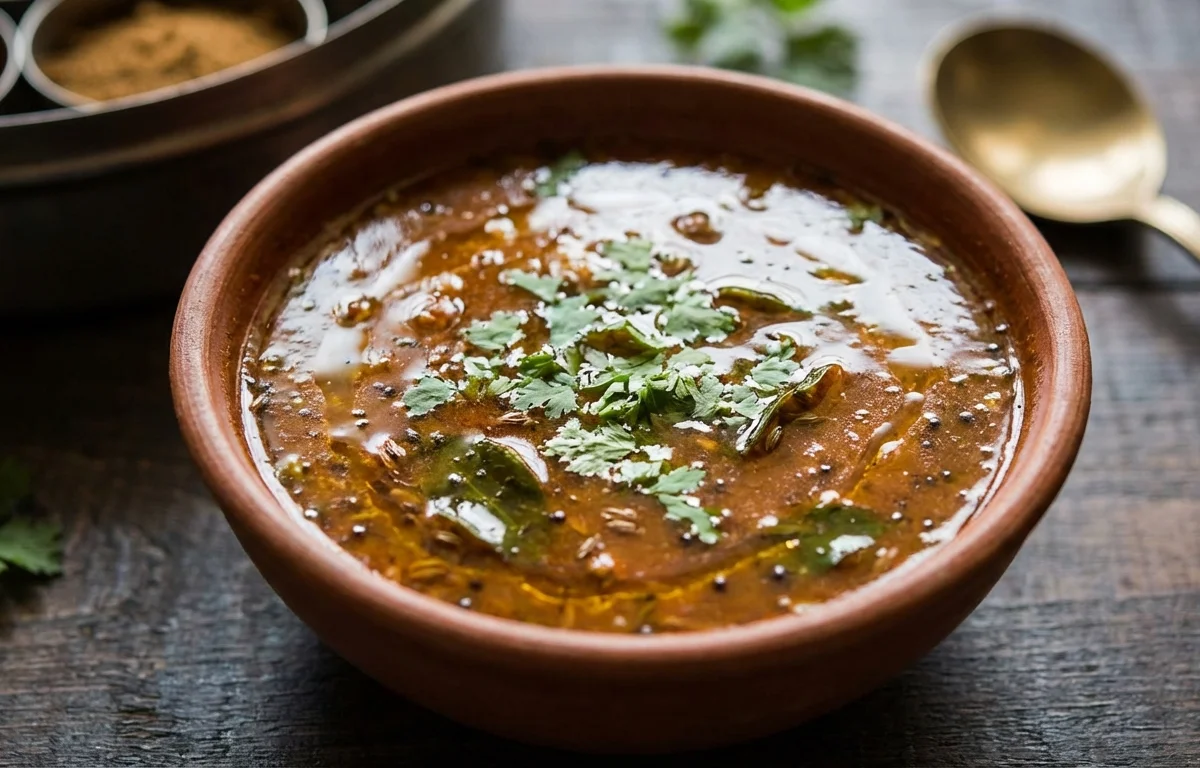
Katachi Amti
A thin, spicy Maharashtrian amti made from chana dal stock left over after cooking puran. Tangy tamarind, jaggery, and goda masala give it a warm, balanced flavor that tastes wonderful with rice.
For 4 servings
- prep · ~120 min
Soak the chana dal.
Rinse the chana dal well and soak it in enough water for 2 hours. Drain before cooking.
- pressure cook · ~15 min
Pressure cook the dal with water.
Add the soaked chana dal and 3 cups water to a pressure cooker. Cook until the dal is soft but still holds its shape, about 4 whistles.
TIPDo not mash the dal into the stock. Katachi Amti tastes best when the liquid stays light and thin. - prep · ~3 min
Separate the dal stock.
Strain or spoon out about 3 to 4 cups of the cooking liquid from the dal. Keep this dal stock for the amti and reserve the cooked dal for another use like puran.
- temper · ~2 min
Make the tempering.
1.Heat oil in a pot over medium heat.2.Add mustard seeds and let them splutter.3.Add cumin seeds, asafoetida, curry leaves, and crushed garlic.4.Cook for 30 to 40 seconds until the garlic smells fragrant.TIPKeep the heat medium so the garlic and spices do not burn and turn bitter. - saute
Add the spice powders and masala.
Add turmeric powder, red chili powder, and goda masala to the tempering. Stir quickly for a few seconds.
- simmer · ~15 min
Simmer the amti.
1.Pour in the reserved dal stock carefully and stir well.2.Add tamarind paste, jaggery, and salt.3.Bring the amti to a gentle boil, then lower the heat.4.Simmer for 12 to 15 minutes until the flavors blend and the amti looks slightly glossy. - garnish
Garnish with coriander leaves.
- serve
Serve hot with rice or puran poli.
What to keep in mind.
7 tips from the recipe — small details that make a real difference to the final dish.
- 1Strain the dal stock well if you want a classic light, thin katachi amti rather than a thicker dal.
- 2After adding goda masala, stir only for a few seconds before pouring in the stock so the spices do not scorch.
- 3Simmer gently, not on a rolling boil, or the garlic and tamarind notes can taste harsh instead of rounded.
- 4Taste at the end and balance the amti with tiny additions of jaggery or tamarind; it should be sweet, sour, and spicy together.
- 5If the stock reduces too much while simmering, add a splash of hot water to keep the traditional pourable consistency.
- 6This amti tastes even better after 20 to 30 minutes of resting, when the goda masala and tempering settle into the stock.
- 7Refrigerate leftovers for up to 2 days and reheat gently; the flavor deepens, but you may need a little water to loosen it.
Adapt it for your goals.
Spicier
Increase the red chili powder slightly or add a broken dried red chili to the tempering for a sharper, hotter amti.
no garlicNo-garlic
Skip the garlic and rely on asafoetida, curry leaves, and goda masala for a lighter, satvik-style version.
thickerThicker
Mash 1 to 2 tablespoons of the cooked chana dal into the stock if you prefer a slightly fuller texture with rice.
jainJain
Omit garlic and use a Jain-friendly asafoetida, keeping the sweet-tangy-spiced profile intact.
Why this is on our healthy list.
Legume-Based Nourishment
The chana dal stock carries some of the goodness of split chickpeas, making the amti more satisfying than a plain spiced broth.
Digestive Spice Support
Cumin, asafoetida, garlic, and curry leaves are traditional ingredients often used to make lentil-based dishes feel easier to digest.
Lighter Than Creamy Gravies
This amti gets its body from dal stock and tempering rather than cream or coconut milk, so it stays relatively light.
Frequently asked questions
Yes. Simmer the soaked chana dal in a pot until soft but not mushy, then use the cooking liquid as the stock for the amti.



.webp)