
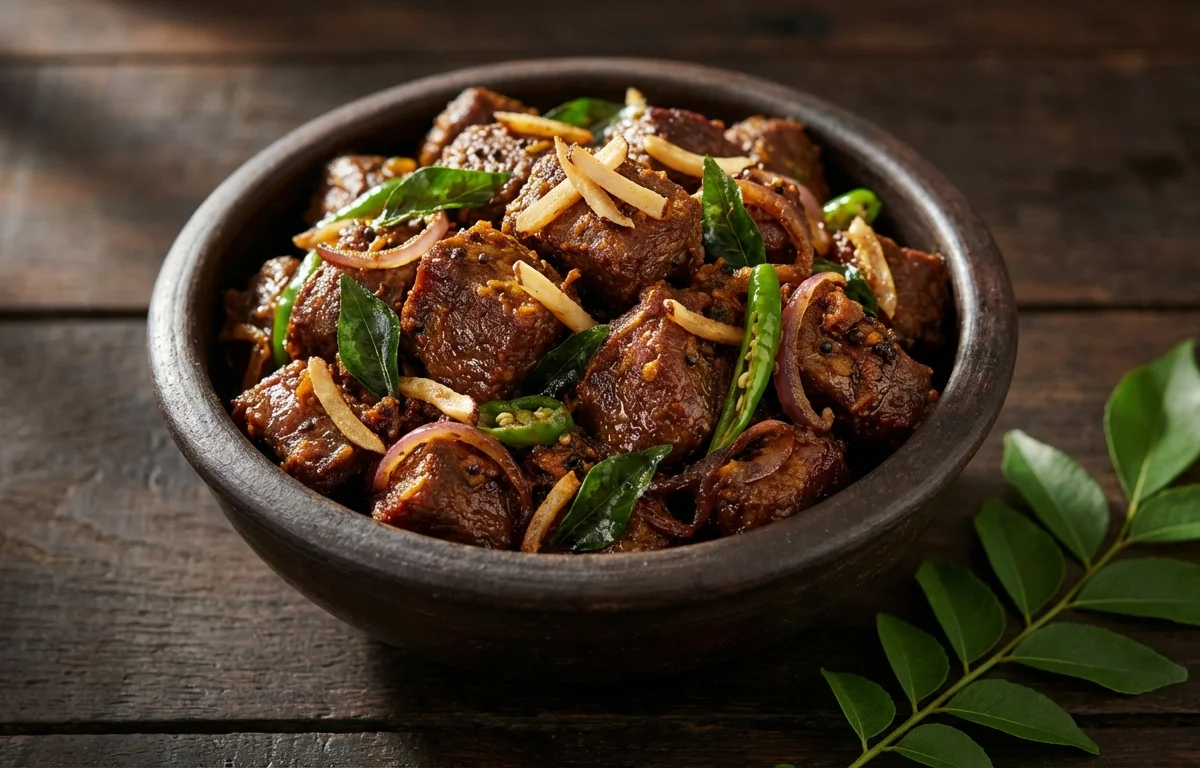
Kerala Beef Roast
A deeply spiced Kerala-style beef dish with tender pressure-cooked meat, caramelized onions, curry leaves, and black pepper. It turns dark, glossy, and rich as the masala clings to every piece.
For 4 servings
- prep · ~10 min
Season the beef.
1.Add beef to a bowl or pressure cooker.2.Mix in red chili powder, turmeric powder, salt, and vinegar.3.Rub well so the beef is evenly coated.4.Set aside for 10 minutes while you prepare the onions and aromatics.TIPA short rest helps the spices cling to the meat and seasons it more evenly. - pressure cook · ~30 min
Pressure cook the beef.
1.Add water to the seasoned beef and stir once.2.Cover and pressure cook until the beef is tender, about 20 to 25 minutes after full pressure.3.Let the pressure drop naturally.4.Open the cooker and keep the beef with any cooking juices.TIPThe beef should be tender but not falling apart, since it cooks again in the pan. - temper · ~1 min
Heat the coconut oil and fry the spices.
1.Heat coconut oil in a wide pan over medium heat.2.Add fennel seeds and half of the curry leaves.3.Let them sizzle for a few seconds until fragrant. - saute · ~12 min
Cook the onions and aromatics.
1.Add sliced onions and cook until soft and lightly golden, 8 to 10 minutes.2.Add ginger, garlic, and green chili.3.Cook until the raw smell fades, about 2 minutes.TIPTake time with the onions. Their sweetness balances the peppery heat of the roast. - saute · ~1 min
Add the spice powders.
Lower the heat and add coriander powder, garam masala, and crushed black pepper. Stir for 30 seconds so the spices bloom without burning.
- saute · ~15 min
Roast the beef with the masala.
1.Add the cooked beef along with its cooking juices to the pan.2.Mix well so the onion masala coats the meat.3.Cook uncovered over medium heat, stirring often, until the liquid reduces and the masala turns dark and glossy.4.Add the remaining curry leaves and keep roasting until the beef is well coated and semi-dry, 10 to 12 minutes more.TIPScrape the pan as it cooks. Those browned bits give Kerala beef roast its deep flavor. - serve
Serve the beef roast hot.
What to keep in mind.
7 tips from the recipe — small details that make a real difference to the final dish.
- 1Use a wide pan for the final roast so the cooking juices reduce quickly instead of steaming the beef.
- 2Stop pressure cooking when the beef is just tender; overcooked cubes can shred when you roast them with the masala.
- 3Slice the onions thin and evenly so they caramelize at the same rate and melt into the roast.
- 4Lower the heat before adding coriander, pepper, and garam masala to prevent the powders from scorching.
- 5Roast until the oil lightly separates and the masala clings to each piece; that dark glossy stage is the key doneness cue.
- 6Crush the black pepper fresh rather than using fine powder for a sharper Kerala-style finish and better texture.
- 7This dish tastes even better after a few hours of resting, as the beef absorbs the onion-pepper masala.
Adapt it for your goals.
Extra-peppery
Increase the crushed black pepper slightly and add part of it at the end for a bolder, more traditional pepper-forward roast.
low oilLow-oil
Use a little less coconut oil and rely on a nonstick or heavy pan; the roast will be slightly less glossy but still flavorful.
with coconut sliversWith-coconut-slivers
Fry coconut slices in the oil before the fennel and curry leaves, then toss them back in for a festive Kerala touch and crunch.
boneless muttonBoneless-mutton
Swap beef for boneless mutton or goat and adjust pressure-cooking time as needed for a similar spicy South Indian roast.
Why this is on our healthy list.
Rich in Protein
Beef makes this dish filling and provides substantial protein to support satiety and muscle maintenance.
Aromatic Spice Benefits
Ginger, garlic, black pepper, turmeric, and fennel bring flavorful plant compounds along with the heat and depth.
Lower-Carb Main Dish
This semi-dry roast is centered on meat, onions, and spices, making it a lower-carb option compared with gravy-heavy dishes.
Frequently asked questions
Use a boneless cut that becomes tender under pressure, such as chuck or shoulder. It should soften well but still hold cube shape during the final roast.

.webp)
.webp)