
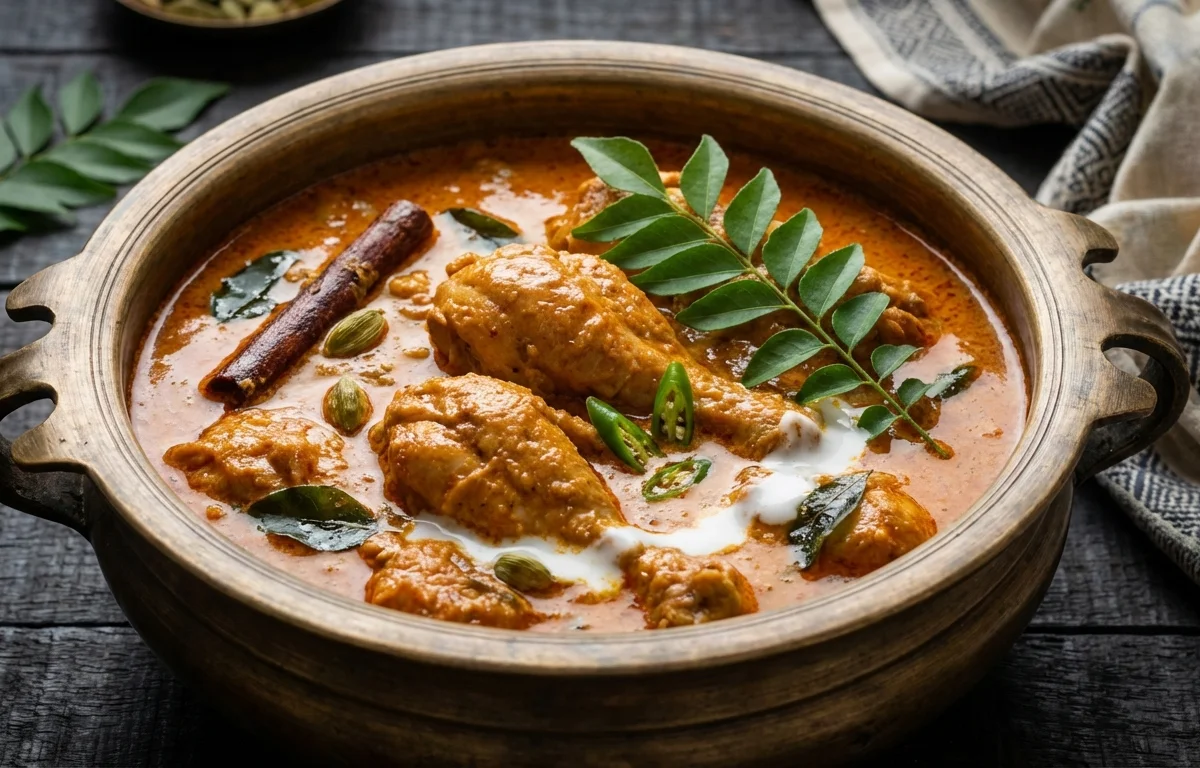
Kerala Chicken Curry
This homestyle Kerala chicken curry is rich with coconut, curry leaves, and warm spices. The gravy is gently spiced, deeply savory, and perfect with appam, rice, or parotta for a comforting South Indian meal.
For 4 servings
- prep
Prepare the chicken and aromatics.
1.Clean the chicken pieces and keep them ready.2.Slice the onions thinly.3.Chop the ginger and garlic.4.Chop the tomatoes and slit the green chilies. - temper · ~1 min
Make the tempering.
1.Heat coconut oil in a kadai over medium heat.2.Add mustard seeds and let them splutter.3.Add fennel seeds and curry leaves.4.Cook for a few seconds until fragrant.TIPKeep the heat medium so the spices smell fragrant and do not burn. - saute · ~8 min
Cook the onion base.
1.Add the sliced onions and green chilies.2.Cook until the onions turn soft and light golden.3.Add ginger and garlic.4.Cook until the raw smell disappears. - saute · ~6 min
Cook the tomatoes and spices.
1.Add the chopped tomatoes and salt.2.Cook until the tomatoes soften well.3.Add turmeric powder, red chili powder, coriander powder, black pepper, and garam masala.4.Mix well and cook for 1 minute. - saute · ~5 min
Coat the chicken in the masala.
Add the chicken pieces to the pan and mix well so they are coated evenly with the onion and spice mixture. Cook for 4 to 5 minutes, stirring often.
- simmer · ~20 min
Simmer the curry.
Pour in the water, mix, and bring the curry to a gentle boil. Cover and cook on low heat until the chicken is tender and cooked through.
TIPBone-in chicken gives the gravy better flavor and stays juicy as it cooks. - simmer · ~4 min
Add the coconut milk.
Lower the heat and stir in the coconut milk. Simmer gently for 3 to 4 minutes without boiling hard, until the gravy looks smooth and lightly thickened.
TIPDo not boil the curry vigorously after adding coconut milk or it can split. - serve
Serve the Kerala chicken curry hot.
What to keep in mind.
7 tips from the recipe — small details that make a real difference to the final dish.
- 1Let the mustard seeds fully splutter before adding fennel and curry leaves so the tempering perfumes the oil properly.
- 2Slice the onions thin and cook them to light golden, not dark brown, for a sweeter Kerala-style gravy.
- 3Cook the tomatoes until they turn jammy before adding powdered spices; this prevents a raw, sharp masala taste.
- 4After adding chicken, sauté it in the masala for a few minutes so the spices cling to the pieces before water goes in.
- 5Keep the simmer gentle after adding thick coconut milk, or the gravy can split and turn grainy.
- 6This curry tastes even better after 30 minutes of rest, when the coconut, pepper, and curry leaf flavors settle together.
- 7Reheat on low heat with a splash of water if needed, since coconut-based gravy thickens noticeably as it stands.
Adapt it for your goals.
Spicier
Add extra green chili and a little more black pepper for a sharper, more peppery Kerala-style heat.
thicker gravyThicker-gravy
Reduce the added water slightly and simmer uncovered a bit longer for a richer curry that clings well to parotta.
bonelessBoneless
Use boneless chicken for quicker cooking and easier eating, though the gravy will be a little lighter in flavor.
potato addedPotato-added
Add cubed potato along with the chicken to make the curry heartier and stretch it for more servings.
Why this is on our healthy list.
Protein-Rich Main Dish
Chicken makes this curry filling and satisfying, helping turn it into a balanced meal when served with rice or appam.
Contains Aromatic Spices
Ginger, garlic, black pepper, fennel, and curry leaves add flavor complexity along with traditional plant-based compounds.
Moderate Ingredient List
The curry gets much of its depth from onions, tomatoes, spices, and coconut milk rather than heavy cream or processed sauces.
Frequently asked questions
Yes. Boneless chicken works, but reduce the simmering time so it does not dry out, and expect a slightly less rich gravy.

.webp)
.webp)