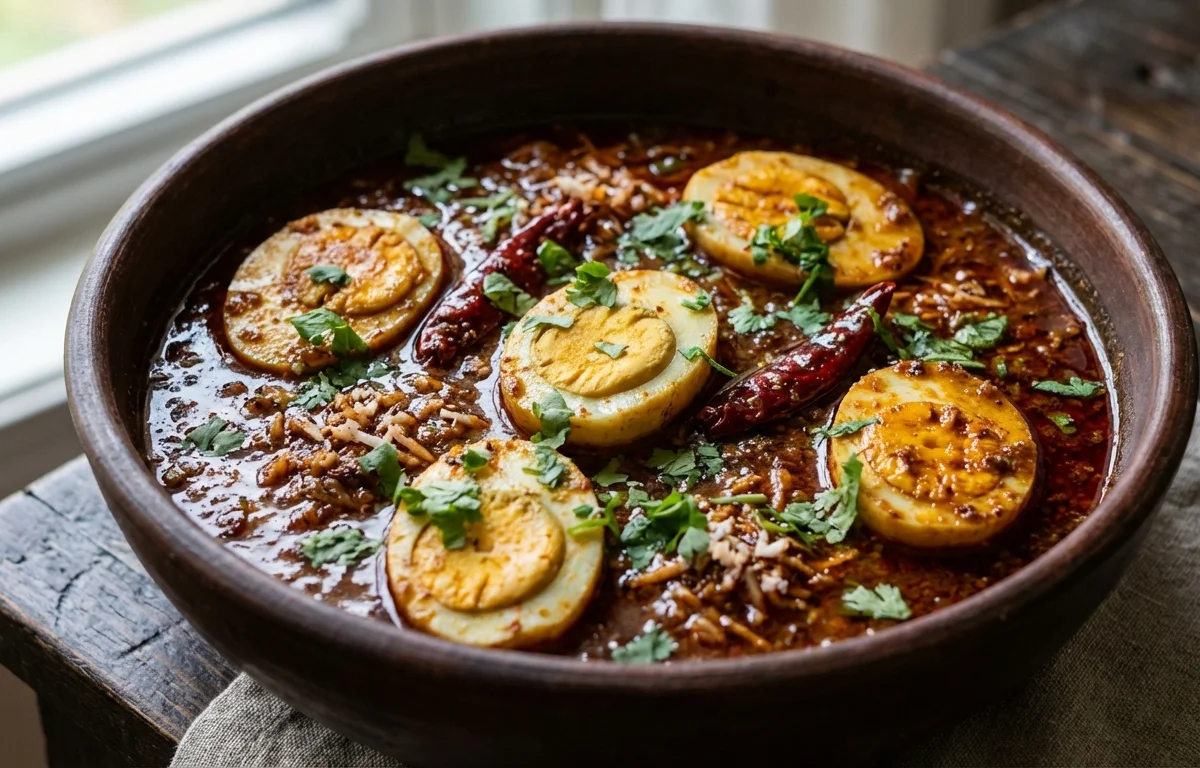
Kolhapuri Anda Masala
Hard-boiled eggs simmered in a bold Kolhapuri-style onion, coconut, and spice gravy. This fiery Maharashtrian curry is rich, deeply savory, and perfect with chapati, bhakri, or a small serving of rice.
For 4 servings
- boil · ~12 min
Boil and peel the eggs.
Place the eggs in water, bring to a boil, and cook until hard-boiled. Cool, peel, and keep them aside.
TIPA quick rinse under cold water helps the shells come off more easily. - roast · ~5 min
Roast the Kolhapuri masala ingredients.
1.Heat a small pan over low to medium heat.2.Dry roast coriander seeds, black peppercorns, cloves, cinnamon, and dried red chili until fragrant.3.Add sesame seeds, poppy seeds, and dry coconut and roast until the coconut turns lightly golden.4.Transfer everything to a plate and let it cool slightly.TIPKeep the heat moderate so the coconut and spices toast evenly without burning. - mix · ~2 min
Grind the masala paste.
Blend the roasted spices with the roasted coconut using a little of the water to make a smooth, thick paste.
- saute · ~10 min
Cook the onion base.
1.Heat oil in a kadai over medium heat.2.Add cumin seeds and bay leaf and let them sizzle for a few seconds.3.Add sliced onion and cook until deep golden brown.4.Add garlic, ginger, and green chili and cook until the raw smell fades.TIPTake the onions to a rich golden color for the deep, signature taste of this curry. - saute · ~7 min
Add tomatoes and ground spices.
Add tomato, turmeric powder, red chili powder, garam masala, and salt. Cook until the tomatoes soften and the masala looks glossy.
- simmer · ~10 min
Cook the gravy with the Kolhapuri paste.
Add the ground masala paste and cook for 2 to 3 minutes, stirring well. Pour in the remaining water and simmer until the gravy thickens slightly and the oil begins to show at the edges.
- simmer · ~5 min
Add the eggs and finish the curry.
Make light slits on the boiled eggs and add them to the gravy. Simmer gently so the eggs soak up the masala.
- garnish
Garnish with cilantro.
- serve
Serve hot with chapati, bhakri, or rice.
What to keep in mind.
7 tips from the recipe — small details that make a real difference to the final dish.
- 1Slit the boiled eggs lightly before adding them so the Kolhapuri gravy seeps in without breaking them apart.
- 2Roast the coconut only until light golden; if it gets too dark, the masala turns bitter quickly.
- 3Take the onions to a deep golden brown, not just soft, for the rich Maharashtrian-style base this curry needs.
- 4Grind the roasted spices with just enough water to make a thick paste; a watery paste weakens the gravy.
- 5After adding the ground masala, cook until oil shows at the edges to remove any raw coconut-spice taste.
- 6Let the curry rest 10 minutes before serving so the eggs absorb more heat and flavour from the gravy.
- 7This tastes even better the next day; reheat gently with a splash of water so the gravy loosens without splitting.
Adapt it for your goals.
Extra-spicy
Increase dried red chilies or add one more green chili for a more traditional fiery Kolhapuri kick.
low oilLow-oil
Use less oil and sauté onions more slowly with a splash of water; the curry will be lighter but still flavorful.
gravy styleGravy-style
Add a little more water for a thinner curry that pairs better with rice rather than chapati or bhakri.
dry anda masalaDry-anda-masala
Reduce the water and cook longer for a thicker masala coating that works well in tiffins with roti.
Why this is on our healthy list.
Protein from Eggs
Hard-boiled eggs make this curry filling and provide good-quality protein for a satisfying meal.
Spice-Rich Aromatics
Garlic, ginger, cumin, coriander, and chilies add flavour depth along with beneficial plant compounds.
Healthy Fats from Seeds and Coconut
Sesame seeds, poppy seeds, and dry coconut contribute richness that helps carry the spices and make the dish more satiating.
Frequently asked questions
Yes. Lightly pan-frying the boiled eggs after slitting them gives a firmer surface and adds extra flavour to the curry.



.webp)